AUO M170EG01 V2: A Technical Review of the 17-inch SXGA Industrial LCD
## AUO M170EG01 V2 17.0-inch SXGA Industrial LCD Module
The AUO M170EG01 V2 is a 17.0-inch a-Si TFT-LCD module delivering robust SXGA resolution, engineered for exceptional visual performance in industrial automation and medical imaging systems. Its balanced design prioritizes image clarity, color fidelity, and reliable operation, making it a crucial component for systems that require precise data visualization. This display serves as a key solution for maintaining and extending the operational life of critical equipment built around the classic 5:4 aspect ratio.
* **Core Specifications**: 1280×1024 SXGA | 800:1 Contrast Ratio | 50,000-Hour Backlight Lifetime
* **Key Advantages**: Delivers consistent image clarity from wide viewing angles. Ensures stable signal integrity through a standard LVDS interface.
* **Primary Application**: Serves as a direct-fit replacement for legacy industrial HMIs and medical devices, minimizing system rework and validation.
Download The Official M170EG01 V2 Datasheet (PDF)


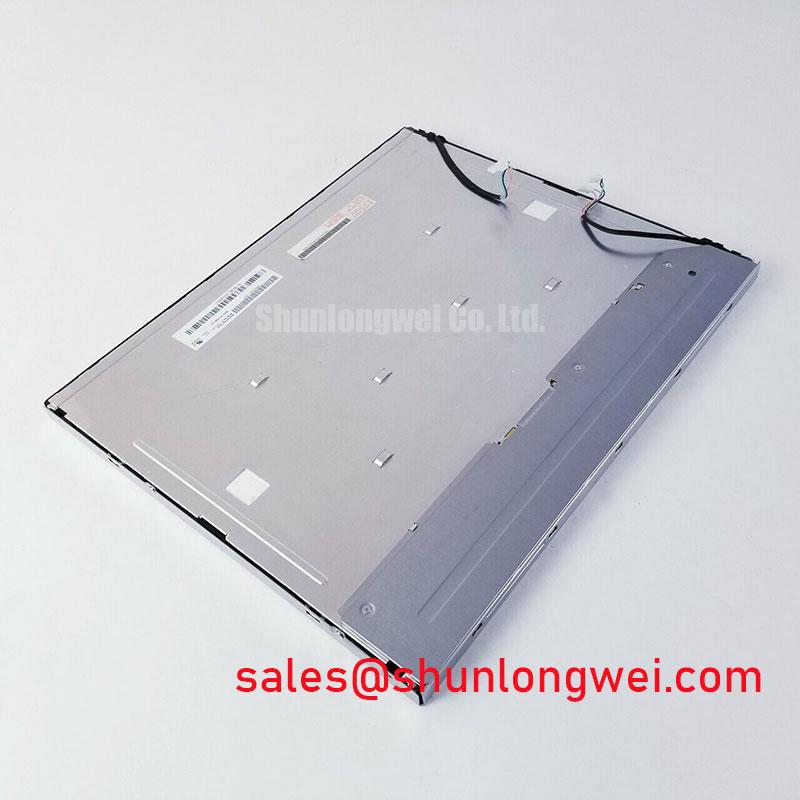
Technical Analysis for System Integration
The M170EG01 V2 is built around core specifications that directly address the challenges of industrial environments. Its typical contrast ratio of 800:1 ensures that complex user interfaces, detailed schematics, or subtle diagnostic images are displayed with distinct clarity and depth. This high contrast is essential for reducing operator error and improving analytical accuracy, especially in applications where differentiating between shades is critical. The display’s performance is further supported by a 72% NTSC color gamut, which allows for a rich and accurate palette of 16.2 million colors.
Effective thermal management is a cornerstone of long-term reliability in industrial components. The M170EG01 V2 is specified for operation in temperatures ranging from 0°C to 50°C. Think of this operating range as the component’s designated safe zone; operating within these thermal boundaries is crucial for achieving the projected 50,000-hour backlight lifespan. Adherence to these limits, as detailed in the datasheet, prevents premature degradation of the CCFL backlight and other internal components, safeguarding system uptime. For more information on environmental factors, see our guide on vibration and shock resistance for industrial displays.
Data connectivity is streamlined via a dual-channel, 8-bit LVDS (Low-Voltage Differential Signaling) interface. This industry-standard connection is engineered for high-speed data transmission with superior noise immunity—a significant advantage in electrically noisy factory settings. The differential nature of LVDS minimizes electromagnetic interference (EMI), which helps simplify the overall system-level EMC compliance process and ensures signal integrity over longer cable distances within a machine or enclosure.
Optimized Application Scenarios
The specific performance characteristics of the M170EG01 V2 make it a well-suited component for several key applications:
* **Industrial Human-Machine Interfaces (HMIs):** The 5:4 aspect ratio and SXGA resolution are a direct match for many legacy software systems, avoiding image distortion and UI scaling issues.
* **Medical Diagnostic Equipment:** High contrast and consistent viewing angles allow multiple users to view patient data or images from different positions without color shift.
* **Test and Measurement Systems:** The 1280×1024 resolution provides the pixel density needed to render fine waveforms and complex numerical data with precision.
* **Process Control Consoles:** The anti-glare surface treatment minimizes reflections from overhead factory lighting, ensuring excellent readability for operators monitoring critical processes.
Its proven LVDS interface, standard resolution, and robust optical characteristics make this module an optimal choice for sustaining systems that require verified, reliable display hardware.
Key Specifications of the M170EG01 V2
| Display & Optical Characteristics | |
|---|---|
| Screen Size | 17.0 inches |
| Resolution | 1280(RGB) x 1024, SXGA |
| Aspect Ratio | 5:4 (W:H) |
| Brightness | 300 cd/m² (Typ.) |
| Contrast Ratio | 800:1 (Typ.) |
| Viewing Angle (L/R/U/D) | 80/80/80/80 (Typ.) (CR≥10) |
| Display Colors | 16.2M (6-bit + FRC), 72% NTSC |
| Response Time | 3.5/1.5 ms (Typ.)(Tr/Td) |
| Surface Treatment | Antiglare, Hard coating (3H) |
| Interface & Electrical | |
| Signal Interface | LVDS (2 channel, 8-bit), 30 pins |
| Supply Voltage (Panel) | 5.0V (Typ.) |
| Backlight System | 4 pcs CCFL, 50,000 hours (Typ.) |
| Mechanical & Environmental | |
| Outline Dimensions (W x H x D) | 358.5 x 296.5 x 17.0 mm |
| Active Area (W x H) | 337.92 x 270.336 mm |
| Weight | 1.90 kg (Typ.) |
| Operating Temperature | 0°C to 50°C |
| Storage Temperature | -20°C to 60°C |
Engineer’s Frequently Asked Questions
**1. What are the key factors when using the M170EG01 V2 as a replacement for an older 17-inch display?**
When retrofitting, first verify the physical dimensions (358.5 x 296.5 x 17.0 mm) and mounting points. Second, confirm the signal interface is a 30-pin, 2-channel, 8-bit LVDS connector. Finally, ensure your system provides a compatible external CCFL backlight driver, as one is not integrated into the module.
**2. How can I ensure the M170EG01 V2 achieves its rated 50,000-hour backlight lifetime?**
To maximize operational life, the module must be operated strictly within its specified environmental ranges. Maintain an ambient operating temperature between 0°C and 50°C and avoid exceeding the storage temperature limits of -20°C to 60°C. Proper system ventilation to dissipate heat is also crucial. For more details on system longevity, explore our guide on the proactive management of industrial LCD backlight lifespan.
**3. Why does this model use a 5:4 aspect ratio instead of a modern widescreen format?**
The 5:4 aspect ratio with a 1280×1024 SXGA resolution is a legacy standard for which a vast amount of industrial control and medical diagnostic software was specifically designed. Using this display ensures that graphical user interfaces and data visualizations render correctly without distortion, which is a common issue when forcing legacy software onto widescreen displays.
**4. What is the benefit of the anti-glare surface?**
The anti-glare coating diffuses ambient light, reducing reflections from overhead lighting or nearby windows. This is critical in an industrial or clinical setting, as it improves screen readability, reduces operator eye strain, and minimizes errors caused by misinterpreting on-screen information due to glare. Understanding these details is part of a broader topic on LCD core technology.
This AUO display module provides the specific performance and physical form factor necessary to support the lifecycle of equipment where reliability and backward compatibility are non-negotiable. Its balanced optical characteristics and standard interface empower engineers to maintain system integrity with a verified component.