BSM75GB120DLC IGBT Module: A Technical Analysis for Power System Design
## BSM75GB120DLC IGBT Module: 1200V, 75A Technical Analysis
The Infineon BSM75GB120DLC is a half-bridge IGBT module engineered for reliable performance in industrial power conversion systems. It achieves a proficient balance between conduction and switching losses, utilizing established IGBT and diode technology. This module provides a robust solution for motor drives, uninterruptible power supplies (UPS), and other medium-frequency switching applications.
* **Core Specifications**: 1200 V | 75 A (Nominal) | VCE(sat) (typ) = 2.4 V
* **Key Advantages**: Low conduction losses at operating temperature, integrated NTC for thermal monitoring.
* **Application Focus**: Well-suited for systems where durable and consistent performance is a primary design criterion.
Download Official Datasheet (PDF)
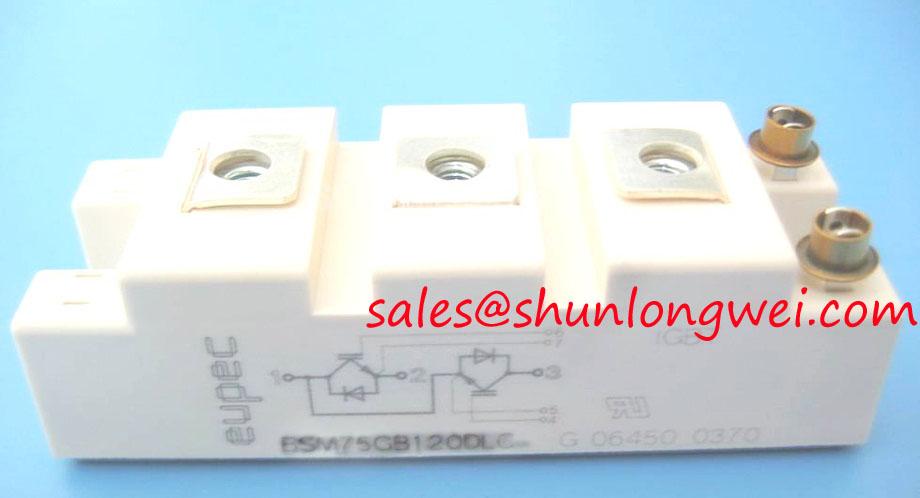
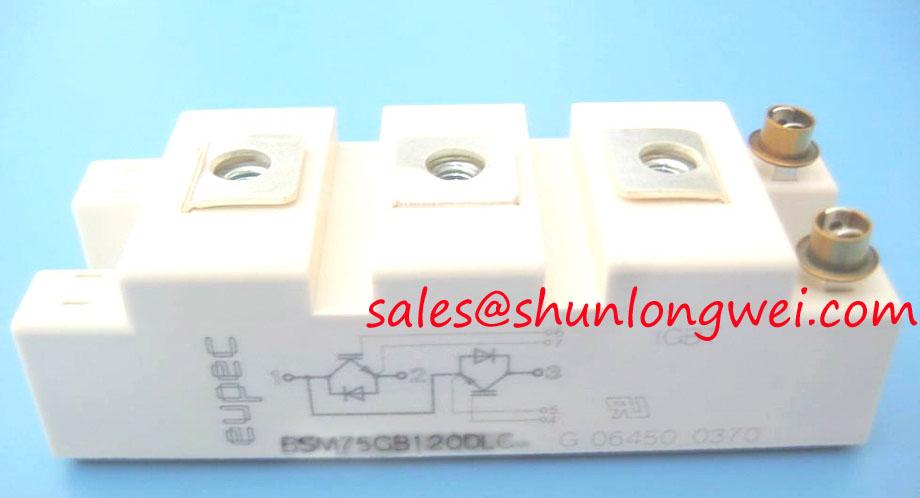

Technical Analysis for System Integration
The BSM75GB120DLC is designed to offer a practical trade-off between on-state voltage and switching energy, a critical factor for overall system efficiency. The collector-emitter saturation voltage (VCE(sat)) is specified as a typical 2.4 V at a junction temperature of 125°C and nominal current of 75 A. This parameter is a primary contributor to conduction losses, and its defined value under typical operating temperatures allows engineers to accurately model thermal performance. The positive temperature coefficient of VCE(sat) is also beneficial for paralleling multiple modules, as it naturally helps balance current sharing between devices.
Effective thermal management is crucial for the reliability of any power module. The junction-to-case thermal resistance (RthJC) of this module is specified at 0.18 K/W for each IGBT. Think of thermal resistance as the width of a pipe for heat; a lower value signifies a wider pipe, allowing heat to flow more easily from the active semiconductor to the heatsink. This efficient heat transfer is essential for preventing the device from exceeding its maximum junction temperature of 150°C and ensuring long-term operational stability. The integrated NTC thermistor provides a direct means of monitoring temperature for protection circuits.
Optimized Application Scenarios
The electrical and thermal characteristics of the BSM75GB120DLC make it a strong candidate for several industrial applications:
* **Industrial Motor Drives**: Its robust half-bridge configuration and balanced loss profile are well-suited for the variable load and frequency conditions in AC motor control systems.
* **Uninterruptible Power Supplies (UPS)**: The 1200 V blocking voltage provides a solid safety margin for battery-backed systems, while its efficiency helps minimize cooling overhead.
* **Welding Power Supplies**: The module can effectively handle the high-current, pulsed-power demands characteristic of advanced welding applications.
* **Solar Power Inverters**: In the DC-to-AC conversion stage, its reliable switching performance contributes to efficient and stable grid-tied or off-grid power generation.
For systems requiring a proven 1200V/75A half-bridge solution, this module provides a dependable and well-documented component choice.
Key Specifications of the BSM75GB120DLC
| Parameter | Value | Conditions |
|---|---|---|
| Absolute Maximum Ratings | ||
| Collector-Emitter Voltage (VCES) | 1200 V | Tvj = 25°C |
| DC Collector Current (IC,nom) | 75 A | TC = 80°C |
| Repetitive Peak Collector Current (ICRM) | 150 A | tP = 1 ms, TC = 80°C |
| Gate-Emitter Peak Voltage (VGES) | ±20 V | |
| Electrical & Thermal Characteristics (per IGBT) | ||
| Collector-Emitter Saturation Voltage (VCE(sat)) | 2.4 V (typ) / 2.9 V (max) | IC = 75 A, VGE = 15 V, Tvj = 125°C |
| Gate Threshold Voltage (VGE(th)) | 4.5 V to 6.5 V | IC = 3 mA, Tvj = 25°C |
| Thermal Resistance, Junction-to-Case (RthJC) | 0.18 K/W | Per IGBT |
| Maximum Junction Temperature (Tvj max) | 150 °C | |
Engineer FAQ
What is the recommended mounting torque for the BSM75GB120DLC and why is it important?
The datasheet specifies a mounting torque of 3 to 6 Nm for the M6 mechanical fastening screws. Applying the correct torque is critical. Insufficient torque leads to poor thermal contact between the module’s baseplate and the heatsink, increasing thermal resistance and junction temperature. Excessive torque can cause mechanical stress, potentially warping the baseplate and damaging the module.
How does the VCE(sat) of the BSM75GB120DLC change with temperature?
The collector-emitter saturation voltage (VCE(sat)) exhibits a positive temperature coefficient. According to the datasheet, the typical VCE(sat) at 75A is 2.1V at 25°C and increases to 2.4V at 125°C. This characteristic is useful for thermal modeling and is beneficial when operating modules in parallel.
Is this module suitable for high-frequency ( > 20 kHz) applications like some modern EV chargers?
The BSM75GB120DLC is optimized for low to medium switching frequencies. While it can operate at higher frequencies, its switching losses (Eon, Eoff) would increase significantly, leading to higher thermal dissipation and reduced efficiency. For applications requiring very high frequencies, newer technologies like SiC (Silicon Carbide) or specialized high-speed IGBTs might be more suitable.
What is the purpose of the integrated NTC thermistor?
The integrated NTC (Negative Temperature Coefficient) thermistor provides a means for real-time temperature monitoring close to the IGBT chips. Its resistance decreases predictably as temperature increases. This allows the gate driver or control system to implement over-temperature protection, reducing power or shutting down the system to prevent thermal damage to the module, which is a key aspect of ensuring IGBT module reliability.
Design and Integration
The BSM75GB120DLC module offers a direct path for implementing a half-bridge topology in industrial-grade power systems. Its well-defined electrical and thermal parameters, based on established technology, provide engineers with the data needed for effective thermal design, gate drive optimization, and reliable system performance.