DFA150BA80 Dual Diode Module: A Technical Review for High-Power Applications
DFA150BA80 Dual Diode Module | 800V 150A Rectifier
Introduction and Core Highlights
The Sanken DFA150BA80 is a dual diode module engineered for high-current rectification in demanding power systems. This device integrates two high-performance diodes into a single, compact package, delivering a robust solution centered on high electrical isolation and efficient thermal dissipation. Its core design simplifies system assembly and enhances operational reliability under substantial electrical loads.
- Core Specifications: 800V | 150A | 0.24 °C/W Rth(j-c)
- Key Engineering Advantages: Simplifies heatsink mounting with 2500V isolation and facilitates effective thermal management for improved system longevity.
- Design Consideration: The module’s high isolation voltage (Viso) of 2500V allows direct mounting to a grounded chassis or heatsink without requiring additional insulating materials, reducing both bill of materials (BOM) complexity and assembly time.
Download Official Datasheet (PDF)

Technical Analysis for System Integration
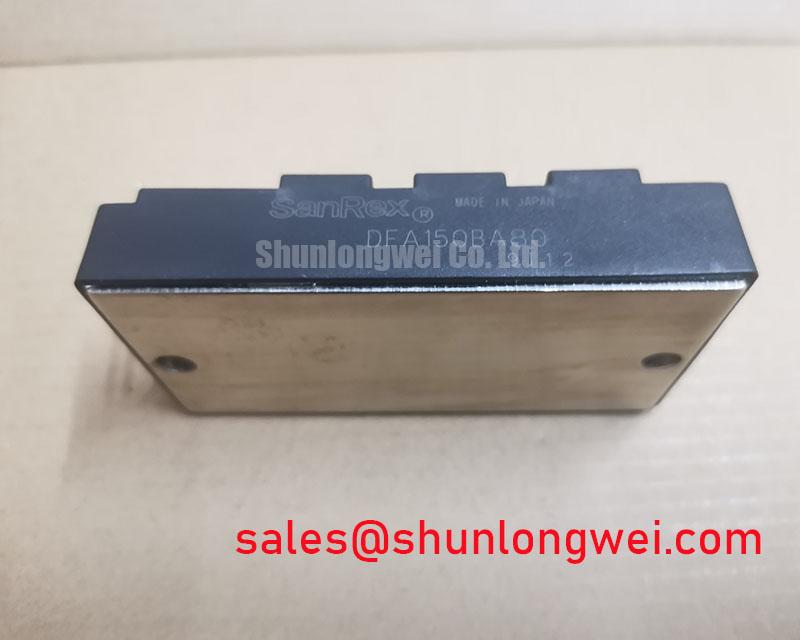
The DFA150BA80 is distinguished by features that directly address common challenges in power system design. Its specified 2500V AC isolation voltage between the terminals and the copper baseplate is a critical feature. This high level of isolation eliminates the need for external insulating pads or bushings when mounting the module, which streamlines the mechanical design and assembly process. This contributes to more predictable thermal performance, as there is one less interface material to account for in heat transfer calculations. For more information on this topic, see the foundation of high-voltage reliability.
Effective thermal management is paramount for reliability, and the module’s low junction-to-case thermal resistance (Rth(j-c)) of 0.24 °C/W per arm is central to its performance. This parameter can be imagined as the width of a pipeline for heat; a lower value signifies a wider, less restrictive path for thermal energy to move away from the active semiconductor junction to the heatsink. This efficiency in heat transfer is crucial for maintaining the junction temperature within safe operating limits during high-current operation, directly contributing to the device’s long-term stability.

Optimized Application Scenarios
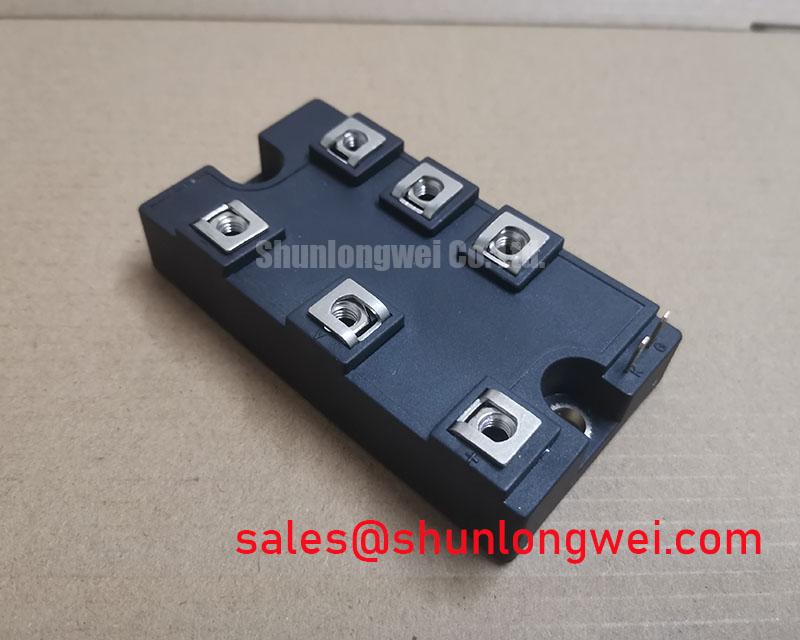
The electrical and thermal characteristics of the DFA150BA80 make it suitable for several high-power applications:
- Welding Power Supplies: The high average forward current rating of 150A and excellent surge current capability (2500A) are well-suited for the demanding, pulsed-load conditions found in welding equipment.
- Battery Charging Systems: Provides robust and efficient AC-DC rectification for industrial-scale battery chargers where high current throughput is a primary requirement.
- Uninterruptible Power Supplies (UPS): Serves as a reliable input rectifier, capable of handling significant current to ensure a stable DC bus for the inverter stage.
- DC Motor Controls: Can be used in rectifier circuits for DC motor drives, providing the necessary power conversion with high reliability.
This module is an optimal match for industrial systems requiring reliable, high-current rectification with straightforward thermal management and assembly.
Key Specification Parameters
| Key Parameters for DFA150BA80 | |
|---|---|
| Absolute Maximum Ratings | |
| Repetitive Peak Reverse Voltage (V-RRM) | 800 V |
| Average Forward Current (I-F(AV)) | 150 A |
| Peak Forward Surge Current (I-FSM) | 2500 A (50Hz, half-sine, 1 cycle) |
| Operating Junction Temperature (Tj) | -40 to +150 °C |
| Electrical & Thermal Characteristics (Per Arm, Tj=25°C) | |
| Maximum Forward Voltage (V-F) @ 150A | 1.30 V |
| Maximum Reverse Current (I-R) @ 800V | 50 µA |
| Maximum Thermal Resistance, Junction-to-Case (Rth(j-c)) | 0.24 °C/W |
| Isolation Voltage (Viso) | 2500 V (AC, 1 minute) |
| Recommended Mounting Torque (Heatsink) | 2.5 – 3.5 N·m |
Engineer’s FAQ
- What is the primary benefit of the DFA150BA80’s 2500V isolation rating?
- The 2500V isolation allows the module’s baseplate to be mounted directly onto a grounded heatsink or chassis without requiring additional, thermally-insulating hardware. This simplifies mechanical design, reduces assembly costs, and improves the consistency of thermal transfer from the module to the heatsink.
- How should I apply thermal compound for this module?
- For optimal heat transfer, a thin, uniform layer of thermal grease should be applied to the module’s baseplate before mounting. The heatsink surface must be clean and flat. Tighten the mounting screws to the recommended torque of 2.5 – 3.5 N·m to ensure proper contact without inducing mechanical stress.
- What is the peak non-repetitive surge current (IFSM) for this device?
- The DFA150BA80 is rated for a peak forward surge current of 2500A for a 50Hz half-sine wave, non-repetitive event. This high surge capability makes it resilient to inrush currents and fault conditions often encountered in industrial applications. A deeper dive into component failure can be found in our root cause analysis of failures.
- Does this module have a common cathode or common anode configuration?
- The datasheet indicates the DFA150BA80 is a dual diode module. The specific circuit diagram in the datasheet shows two diodes with separate anode and cathode terminals (terminals 1 & 3, and 2 & 3), allowing the user to configure it externally as needed for various circuit topologies, such as a center-tap rectifier.
Enabling Robust Power Conversion
The DFA150BA80 dual diode module provides the foundational components for building reliable, high-current power conversion stages. By integrating high electrical isolation with efficient thermal characteristics in an industry-standard package, it offers engineers a direct path to creating durable and simplified power systems for industrial applications.