EL320.256-FD6: High-Resilience TFEL Display for Demanding Industrial Environments
EL320.256-FD6 | Rugged Thin Film Electroluminescent (TFEL) Industrial Display
High-Resilience Visualization for Demanding Control Systems
The EL320.256-FD6 is a high-performance Thin Film Electroluminescent (TFEL) display module from Lumineq, specifically engineered for deployment in environments where conventional industrial display technologies often struggle. Leveraging solid-state electroluminescent technology, this module offers a unique value proposition (UVP): instantaneous response times and uncompromised clarity across extreme thermal gradients. Unlike liquid crystal-based screens, the EL320.256-FD6 does not rely on fluid alignment, making it immune to the “ghosting” or freezing common in standard displays at sub-zero temperatures.
- Core Specifications: 320 x 256 Resolution | 0.24 x 0.24 mm Pixel Pitch | Yellow (Amber) Emissive Color
- Key Advantage 1: Near-instantaneous response time (< 1 ms) eliminates motion blur in high-speed telemetry applications.
- Key Advantage 2: Exceptional viewing angles exceeding 160°, ensuring readability from off-axis perspectives without color inversion.
Download Official Datasheet (PDF)

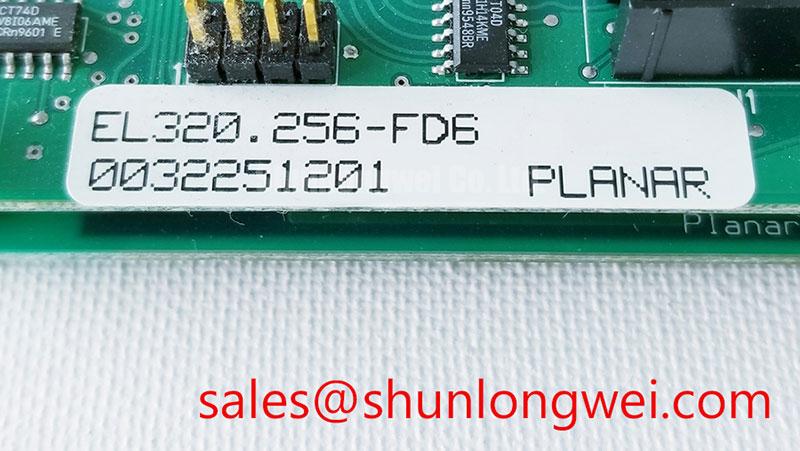
Engineering the Advantage: Beyond Conventional LCD Limitations
In the field of ruggedized display engineering, the EL320.256-FD6 stands out due to its emissive nature. Because each pixel is its own light source, the display achieves a contrast ratio and “true black” depth that backlit LCDs cannot match. To understand the significance of this, one can compare the TFEL technology to a lighthouse beacon in the fog; where a standard LCD is like a flashlight behind a shutter, the TFEL’s direct emission ensures the signal is sharp and distinct, even in high-vibration or low-light conditions.
The EL320.256-FD6 interface is designed for seamless integration into legacy and modern control architectures. Its physical robustness is further reinforced by a solid-state glass design that provides superior resistance to shock and vibration. For engineers concerned with system reliability in high-G environments, the absence of sensitive liquid components or delicate backlight arrays minimizes potential points of failure, extending the operational lifespan in military, maritime, and aerospace sectors.
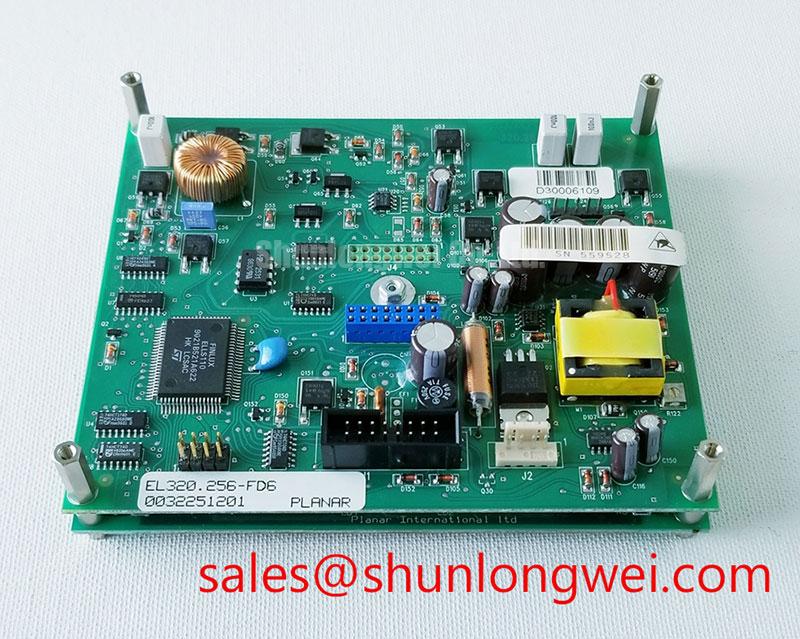

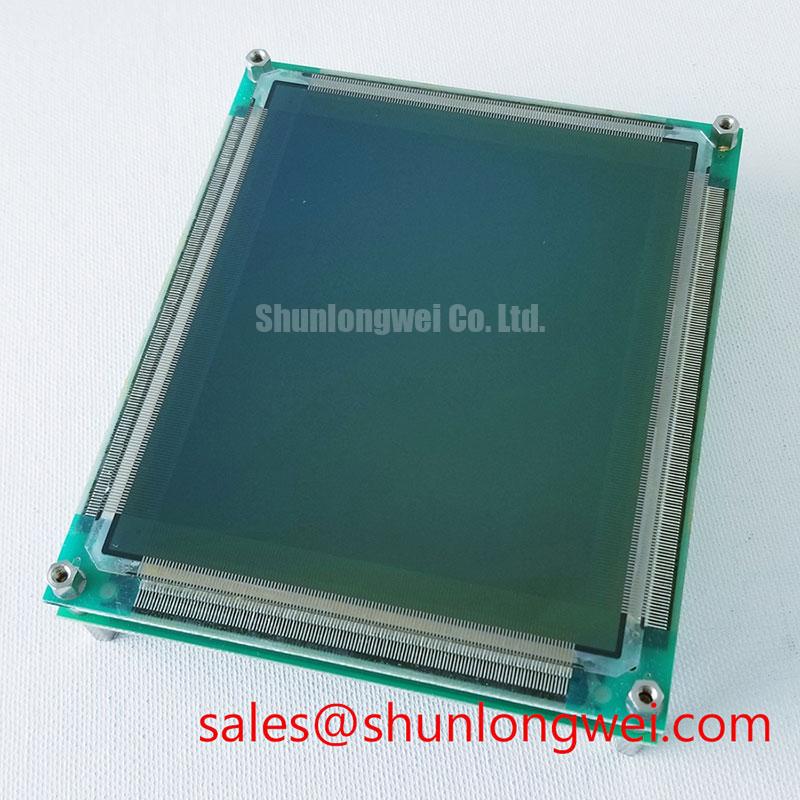
Optimized Application Scenarios
- Aerospace Instrumentation: Ideal due to its high G-force tolerance and wide operating temperature range that ensures performance at high altitudes.
- Maritime Navigation: The high-contrast amber output provides superior legibility in low-light bridge environments without causing operator eye fatigue.
- Medical Diagnostic Equipment: Benefit from the <1ms response time, which is critical for real-time wave monitoring and precision data visualization.
- Sub-Zero Industrial Control: Perfect for outdoor kiosks or cold-storage monitoring where standard LCDs would require expensive integrated heaters.
The EL320.256-FD6 is the technical benchmark for emissive displays where environmental resilience and high-speed data clarity are non-negotiable design requirements.
Key Technical Specifications
| Category | Parameter | Value |
|---|---|---|
| Display Metrics | Resolution | 320 x 256 Pixels |
| Active Area | 76.8 x 61.4 mm | |
| Viewing Angle | > 160° (Horizontal & Vertical) | |
| Electrical Data | Supply Voltage (Vcc) | +5 VDC / +12 VDC |
| Response Time | < 1 ms | |
| Environmental | Operating Temperature | -25°C to +65°C (Extended range variants available) |
| Technology Type | Thin Film Electroluminescent (TFEL) |
Engineer FAQ
Q: Does the EL320.256-FD6 require a separate backlight driver like a standard TFT?
A: No. As an emissive TFEL display, the pixels themselves generate light when excited by high voltage. The drive electronics are integrated into the module, simplifying the hardware footprint.
Q: How does this display perform in high-vibration aerospace environments?
A: The EL320.256-FD6 is built on a solid-state platform. Unlike LCDs, which have fluid layers that can ripple or leak under stress, the TFEL structure is inherently resistant to mechanical shock and high-frequency vibration, meeting stringent industrial vibration standards.
Q: What are the primary advantages of TFEL over OLED in industrial use?
A: While both are emissive, TFEL technology provides significantly higher durability and a longer half-life in harsh environments. TFEL does not suffer from the organic degradation issues (burn-in) that can affect OLEDs in 24/7 static industrial monitoring applications.
This Lumineq EL320.256-FD6 module empowers engineers to design interface systems that remain functional and readable in the most hostile conditions. By prioritizing physical durability and optical speed, it provides a reliable path for critical visualization needs where standard commercial solutions fail.