EL640.480-A3 TFEL Display: Engineered for Extreme Environments
EL640.480-A3 TFEL Display for Extreme Environment Use
Introduction to the EL640.480-A3 Electroluminescent Display
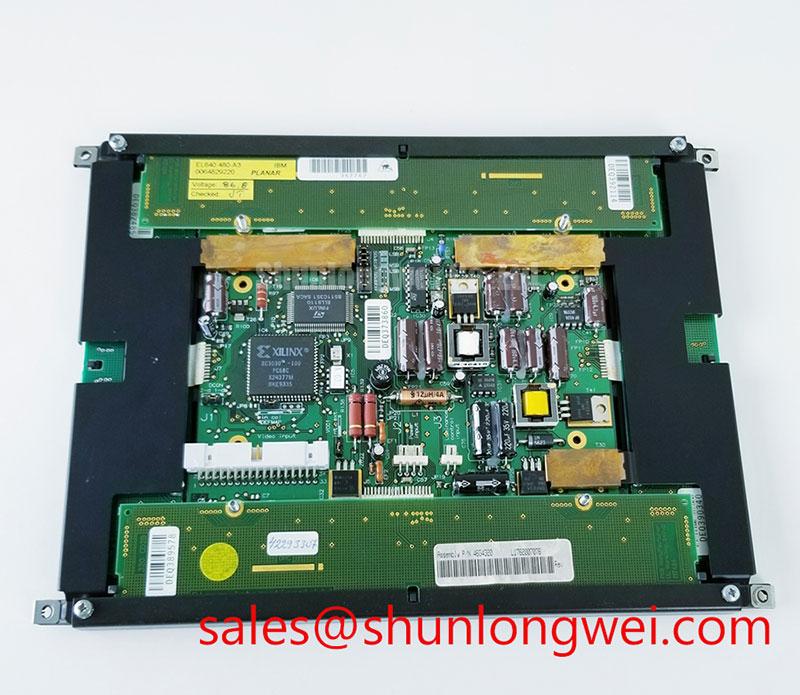
The Planar EL640.480-A3 is a Thin Film Electroluminescent (TFEL) display engineered for absolute reliability in applications where conventional displays fail. Its core value proposition is delivering unwavering visual performance and mechanical stability across extreme operational conditions. This solid-state panel provides crisp, high-contrast imaging that is immune to the visual artifacts and environmental limitations of liquid crystal-based technologies.
- Key Specifications: 640 x 480 VGA Resolution | -25°C to +65°C Operating Temperature | <1 ms Response Time
- Engineering Advantages: Exceptional durability against shock and vibration, consistent readability at any viewing angle.
Engineers often face challenges with LCDs in cold environments, where slow pixel response can render data unreadable. The EL640.480-A3 solves this with an instantaneous response time that remains constant, ensuring immediate clarity on startup, regardless of ambient temperature.
Download the Official EL640.480-A3 Datasheet (PDF)


Technical Analysis: Intrinsic Ruggedness and Thermal Stability
The EL640.480-A3’s resilience originates from its solid-state TFEL construction. Unlike TFT-LCDs, it contains no liquid crystals that are susceptible to freezing or boiling, nor a backlight assembly that can be a point of failure. This design allows it to withstand a documented 100 g shock (half-sine, 6 ms), making it suitable for high-vibration environments such as ground military vehicles or heavy industrial machinery. The engineering benefit is predictable, long-term performance where mechanical stress is a primary design constraint.
A critical differentiator is its performance over a wide temperature range of -25°C to +65°C. To understand its value, consider an analogy: the liquid crystal in a standard LCD can behave like cold oil in winter, becoming viscous and slowing down pixel updates. This results in severe motion blur or “ghosting.” The EL640.480-A3’s sub-millisecond response time is not temperature-dependent. This ensures that critical data is displayed instantly and clearly, whether the system is starting up in a freezing warehouse or operating in a hot, enclosed control cabinet.
Optimized Application Scenarios
The specific performance characteristics of the EL640.480-A3 make it a superior choice for a focused set of demanding applications:
- Medical and Analytical Instrumentation: The greater than 160° viewing angle and high 40:1 contrast ratio ensure that vital signs and diagnostic data are legible from any position around the equipment.
- Avionics and Defense Systems: Its documented resistance to extreme shock, vibration, and temperature is essential for reliability in cockpits, armored vehicles, and portable field equipment.
- Industrial Process Control: In environments like steel mills or outdoor control panels, the display’s broad operating temperature range and immunity to EMI ensure consistent operation.
- Legacy System Retrofits: As a long-established part, it serves as a reliable replacement for aging EL displays in critical systems, preserving operational continuity.
This display is the optimal choice for systems requiring absolute visual clarity and operational integrity across severe environmental conditions. For further reading on this topic, see our guide to engineering displays for extreme reliability.
Key Specifications of the EL640.480-A3
| Optical and Mechanical Characteristics | |
|---|---|
| Resolution | 640 x 480 (VGA) |
| Active Area | 206.4 mm x 154.8 mm |
| Typical Luminance | 41 cd/m² |
| Typical Contrast Ratio | 40:1 |
| Viewing Angle | >160° |
| Response Time | <1 ms |
| Environmental and Electrical Ratings | |
| Operating Temperature | -25°C to +65°C |
| Storage Temperature | -40°C to +85°C |
| Operational Shock Resistance | 100 g, 6 ms half-sine wave |
| Power Supply Voltage | +5 VDC (Logic), +22 VDC (Display) |
| Interface | 4-bit LCD Type Parallel Interface |
Engineer’s Frequently Asked Questions
- 1. What are the primary advantages of the EL640.480-A3’s TFEL technology over a TFT LCD for a rugged application?
- The EL640.480-A3 offers three distinct advantages based on its solid-state physics. First, its operational temperature range is far wider without performance degradation. Second, its response time is under 1 ms regardless of temperature, eliminating motion blur. Third, its inherent resistance to shock and vibration is significantly higher due to the absence of fragile layers like liquid crystal and backlights. Read more in our guide to shock resistance.
- 2. What are the power-on and interface considerations for this display?
- Integration requires two primary DC supply voltages: a +5V rail for logic and a +22V rail for the EL panel itself, as specified in the datasheet. The video interface is a 4-bit parallel data bus, commonly known as an “LCD-type” interface, which uses signals like Data, Clock, Line Pulse, and Frame Pulse for synchronization.
- 3. How should this display be mounted to ensure maximum reliability against vibration?
- The datasheet provides a mechanical drawing with specified mounting hole locations. For optimal performance, the display should be secured to a rigid chassis or bezel using all designated mounting points with appropriate fasteners and vibration-damping washers. Ensure the connecting cables have sufficient slack to avoid transmitting stress to the connectors.
- 4. Does the display’s brightness degrade over time?
- Like all emissive displays, the EL640.480-A3 will experience a gradual and predictable decrease in luminance over its operational life, typically measured in tens of thousands of hours. This contrasts with many older CCFL-backlit LCDs, which can experience sudden backlight failure. This predictable characteristic allows for scheduled maintenance in critical systems.
For engineering teams developing systems where display failure is not an option, the EL640.480-A3 provides a field-proven foundation of visual performance and environmental resilience. Its design principles prioritize data integrity and operational uptime above all else.