Fuji 2MBI300P-140: A Technical Analysis of a Robust 1400V/300A IGBT Module
## Fuji 2MBI300P-140 IGBT Module: 1400V 300A Performance
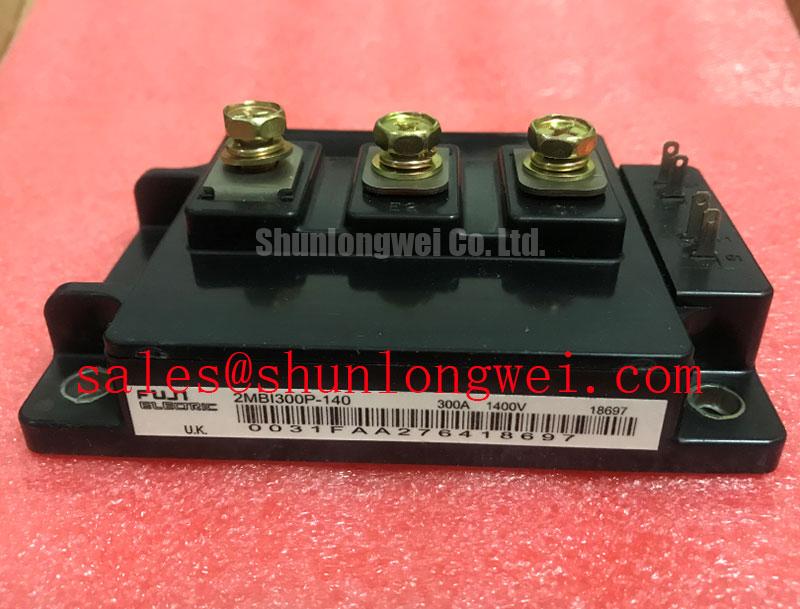
The Fuji Electric 2MBI300P-140 is a dual IGBT module engineered for high-power switching systems, delivering a robust combination of high voltage endurance and substantial current handling. This module integrates two IGBTs in a half-bridge configuration, providing a foundational component for demanding industrial inverters and motor control systems where operational reliability is paramount. Its design is centered on ensuring durability under fault conditions and maintaining stable thermal performance under heavy loads.
* **Core Specifications**: 1400V | 300A | VCE(sat) 3.0V (max)
* **Key Engineering Advantages**: High short-circuit withstand capability and excellent thermal transfer characteristics.
* **Primary Function**: Provides a ruggedized high-voltage switching solution for applications requiring precise and powerful current modulation.
Download Official Datasheet (PDF)
### Technical Analysis for System Reliability
A defining characteristic of the 2MBI300P-140 is its high short-circuit withstand capability. This feature is critical for system survivability in harsh industrial environments where faults like motor stalls or phase-to-phase shorts can occur. The module’s wide Reverse Bias Safe Operating Area (RBSOA) ensures it can safely turn off high currents without damage, giving protective circuits the necessary time to intervene. This level of resilience directly contributes to lower system downtime and enhanced equipment longevity.
Another key engineering attribute is the module’s efficient thermal management. The specified junction-to-case thermal resistance (Rth(j-c)) for the IGBT is a low 0.05°C/W. This parameter can be visualized like the width of a water pipe; a lower value signifies a wider pipe, allowing heat to flow away from the active silicon junction more easily. Efficient heat dissipation is crucial for maintaining stability and preventing thermal runaway, especially when operating at the high end of the module’s 300A current rating.
### Optimized Application Scenarios
The technical specifications of the 2MBI300P-140 make it a strong candidate for several demanding industrial power systems.
* **AC and DC Motor Drives**: The 300A continuous current rating and high RBSOA provide the power and ruggedness required to precisely control large industrial motors.
* **Uninterruptible Power Supplies (UPS)**: Its 1400V collector-emitter voltage offers a significant safety margin for high-voltage DC bus architectures, ensuring system reliability during power grid fluctuations.
* **General Purpose Inverters**: Efficient switching characteristics and simplified paralleling make it suitable for a range of DC-to-AC power conversion tasks, from renewable energy systems to industrial heating.
For high-voltage inverters operating on 690V AC lines, the module’s 1400V rating provides the necessary design margin for robust and reliable performance.
### Key Specifications of the 2MBI300P-140
| Parameter | Symbol | Value | Conditions |
|—|—|—|—|
| **Absolute Maximum Ratings** | | | (Tc=25°C) |
| Collector-Emitter Voltage | VCES | 1400 V | |
| Gate-Emitter Voltage | VGES | ±20 V | |
| Continuous Collector Current | IC | 300 A | Tc=80°C |
| Max Power Dissipation | PC | 2500 W | |
| Operating Temperature | Tj | +150 °C | |
| Isolation Voltage | Vis | 2500 V | AC, 1 minute |
| **Electrical Characteristics** | | | (Tj=25°C) |
| Collector-Emitter Saturation Voltage | VCE(sat) | 2.7V (typ), 3.0V (max) | VGE=15V, IC=300A |
| Gate-Emitter Threshold Voltage | VGE(th) | 6.0V (min), 9.0V (max) | VCE=20V, IC=300mA |
| Turn-on Time | ton | 1.20 µs (typ) | VCC=600V, IC=300A |
| Turn-off Time | toff | 1.00 µs (typ) | VGE=±15V, RG=2.7Ω |
| FWD Forward Voltage | VF | 2.4V (typ), 3.3V (max) | IF=300A, VGE=0V |
| **Thermal Characteristics** | | | |
| Thermal Resistance (Junction-to-Case) | Rth(j-c) | 0.05 °C/W (IGBT) | |
| Thermal Resistance (Junction-to-Case) | Rth(j-c) | 0.10 °C/W (Diode) | |
### Engineer’s FAQ
**1. What are the primary thermal design considerations for the 2MBI300P-140?**
The most critical factor is ensuring a low-resistance thermal path from the module’s baseplate to the ambient environment. Given the IGBT’s thermal resistance (Rth(j-c)) of 0.05°C/W, an appropriately sized heatsink with thermal compound is essential to keep the junction temperature below the 150°C maximum during operation. Careful calculation of total thermal resistance, including the heatsink, is required to prevent overheating.
**2. How does the VCE(sat) of this module impact system efficiency?**
The collector-emitter saturation voltage, VCE(sat), directly contributes to conduction losses (Power Loss = VCE(sat) x IC). With a typical VCE(sat) of 2.7V at 300A, designers can accurately calculate and manage thermal dissipation. While not the lowest in its class, this value represents a balance between conduction loss, switching performance, and short-circuit ruggedness. For a deeper analysis, explore strategies for the quest for lower IGBT VCE(sat).
**3. What makes this module easy to connect in parallel?**
The datasheet notes a narrow distribution of characteristics, particularly the gate-emitter threshold voltage (VGE(th)) and VCE(sat). This consistency between devices ensures better current sharing when modules are connected in parallel, preventing one module from taking a disproportionate amount of the load. This simplifies the design of higher-power systems.
**4. Can the 2MBI300P-140 be used in applications above 20kHz?**
While possible, it may not be optimal. The typical turn-on (1.20 µs) and turn-off (1.00 µs) times indicate that switching losses will increase significantly at higher frequencies. This module is best suited for applications where conduction losses are dominant and switching frequencies are moderate, typical of industrial motor drives and high-power UPS systems. Managing the impact of parasitic inductance is crucial at any frequency.
This IGBT module provides engineers with a high-voltage, high-current switching block that prioritizes durability. Its strong short-circuit withstand capability and efficient thermal design create a reliable foundation for building powerful and resilient power conversion systems.