Fuji 7MBR50NF060: A Technical Analysis of the 7-in-1 Integrated Power Module
## Fuji Electric 7MBR50NF060 600V 50A PIM IGBT Module
The Fuji Electric 7MBR50NF060 is a Power Integrated Module (PIM) that consolidates a complete three-phase power stage into a single component. This 7-in-1 module’s primary value is its high level of integration, which combines a three-phase diode bridge converter, a three-phase IGBT inverter, and an IGBT brake chopper. This architecture provides a streamlined solution for engineers developing compact and efficient motor control systems.
* **Core Specifications**: 600V | 50A | VCE(sat) 1.8V (Typ.)
* **Key Advantages**: Simplifies PCB layout and assembly, optimizes thermal management with a single heatsink interface.
* **Engineering Value**: By integrating multiple power stages, this module significantly reduces parasitic inductance compared to discrete solutions, mitigating voltage overshoot during switching.
Download Official Datasheet (PDF)
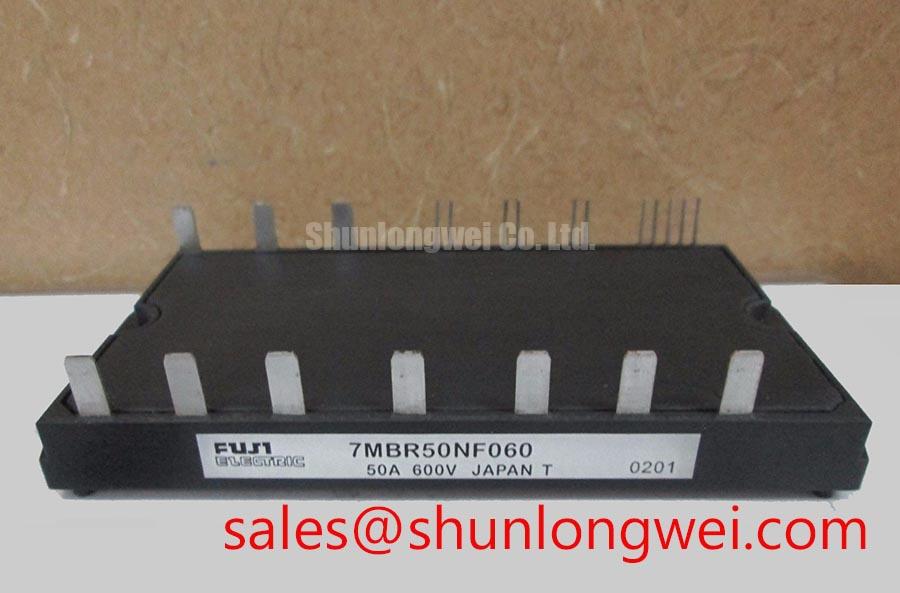
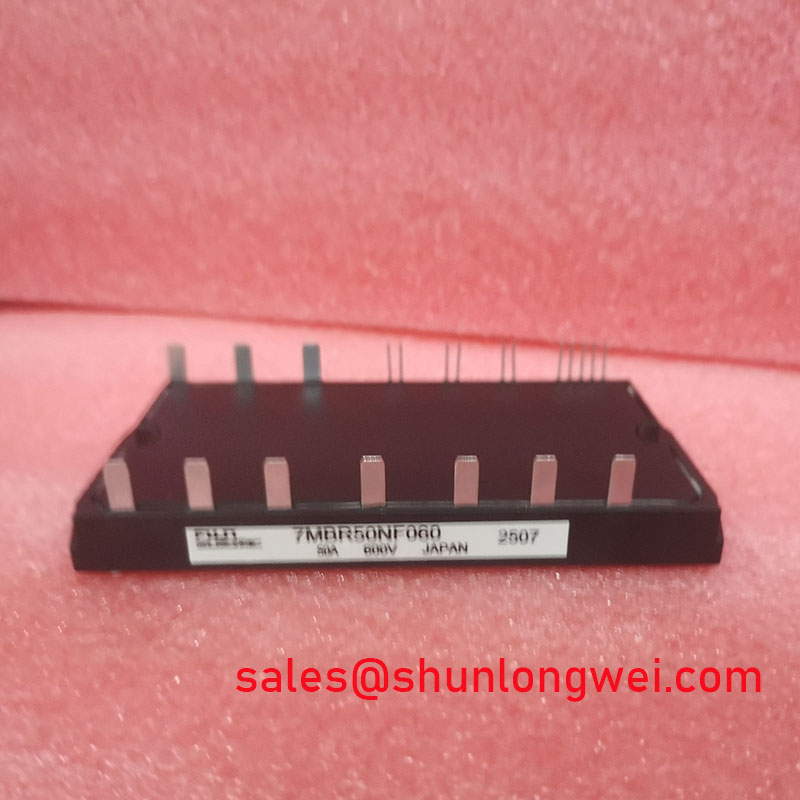
Technical Analysis of the 7-in-1 Integrated Design
The core benefit of the 7MBR50NF060 module is its functional density. Integrating the AC-DC converter, DC-AC inverter, and braking circuit into one package reduces both the physical footprint and the component count on the final bill of materials. This consolidation directly addresses space constraints common in modern industrial automation and robotics. Furthermore, the short internal connections inherent to the module design minimize stray inductance, a critical factor for improving electromagnetic compatibility (EMC) and reducing the need for extensive external snubber circuits.
A key parameter for evaluating efficiency is the collector-emitter saturation voltage, VCE(sat), which is specified as typically 1.8V for the inverter IGBTs at their nominal 50A rating. This low conduction loss directly translates to less heat generated during operation, easing thermal management requirements. The module’s thermal resistance, Rth(j-c), can be thought of as the width of a pipe for heat to escape; the low specified value of 0.63 °C/W for the inverter IGBT indicates an efficient thermal path from the semiconductor junction to the case, allowing for effective heat dissipation. This is crucial for maintaining system reliability under continuous load conditions. The module also includes an integrated NTC thermistor for real-time temperature monitoring, a vital component for implementing robust over-temperature protection.
Optimized Application Scenarios
The electrical and thermal characteristics of the 7MBR50NF060 are well-matched for specific industrial applications:
- Compact Variable Frequency Drives (VFDs): The module’s all-in-one topology is ideal for small machine tools, pumps, and conveyor systems where panel space is at a premium. The integrated brake chopper provides essential control for dynamic load deceleration.
- Servo Drives for Automation: In robotics and CNC machinery, precise motor control and high reliability are essential. The module’s low conduction losses and efficient thermal path support the demanding duty cycles found in these applications.
- General-Purpose Industrial Inverters: For systems like uninterruptible power supplies (UPS), the 7MBR50NF060 offers a proven power core that can help shorten the design cycle and accelerate time-to-market.
This module is best matched for low-to-mid-power motor drives requiring a compact, reliable, and thermally efficient power conversion stage.
Key Specifications of the 7MBR50NF060
| Parameter | Symbol | Value | Unit |
|---|---|---|---|
| Absolute Maximum Ratings (Tj=150°C) | |||
| Collector-Emitter Voltage | VCES | 600 | V |
| Continuous Collector Current (Tc=25°C) | IC | 50 | A |
| Total Power Dissipation (Tc=25°C) | PC | 195 | W |
| Electrical Characteristics – Inverter Part (Tj=25°C) | |||
| Collector-Emitter Saturation Voltage (IC=50A) | VCE(sat) | 1.8 (Typ.), 2.2 (Max.) | V |
| Gate-Emitter Threshold Voltage | VGE(th) | 5.5 (Typ.) | V |
| Thermal Characteristics | |||
| Thermal Resistance (Junction-to-Case, Inverter IGBT) | Rth(j-c) | 0.63 | °C/W |
Engineer’s FAQ
What is the main advantage of using the 7MBR50NF060 over discrete components?
The primary advantage is system simplification. This 7-in-1 PIM reduces component count, shrinks PCB size, and simplifies the assembly process. It also provides an optimized thermal interface and minimizes parasitic inductance, which enhances both reliability and electrical performance.
How does the integrated NTC thermistor improve system reliability?
The NTC thermistor provides a direct way to monitor the module’s internal temperature. A gate driver or system controller can use this data to trigger alarms, reduce power output (derating), or initiate a system shutdown if temperatures exceed safe limits, preventing catastrophic IGBT failures due to overheating.
What are the recommended mounting procedures for this module?
According to the datasheet, the module should be mounted to a heatsink with a recommended torque of 1.7 to 2.1 Nm for the M4 mounting screws. A thermal compound with a thermal conductivity of approximately 0.9 W/m·K should be applied evenly to the baseplate to ensure optimal thermal contact and performance.
Can this module be used in a high-frequency application?
The datasheet specifies switching characteristics with a 51-ohm gate resistor, showing a turn-on time (ton) of typically 1.2 µs and a turn-off time (toff) of 1.5 µs for the inverter section. While suitable for typical motor control frequencies (up to ~15-20 kHz), engineers should perform a thorough thermal analysis to calculate switching losses and ensure the junction temperature remains within the safe operating area for higher-frequency designs.
This integrated module enables engineers to develop compact, reliable, and thermally managed low-power motor control systems with a simplified design architecture. The consolidation of key power stages into a single component directly addresses the engineering demand for higher power density and reduced system complexity.