Fuji ETG81-050 Thyristor Module: Technical Review and Application Guide
Fuji ETG81-050 Thyristor Module: 500V 80A Power Control
Introduction and Core Product Specifications
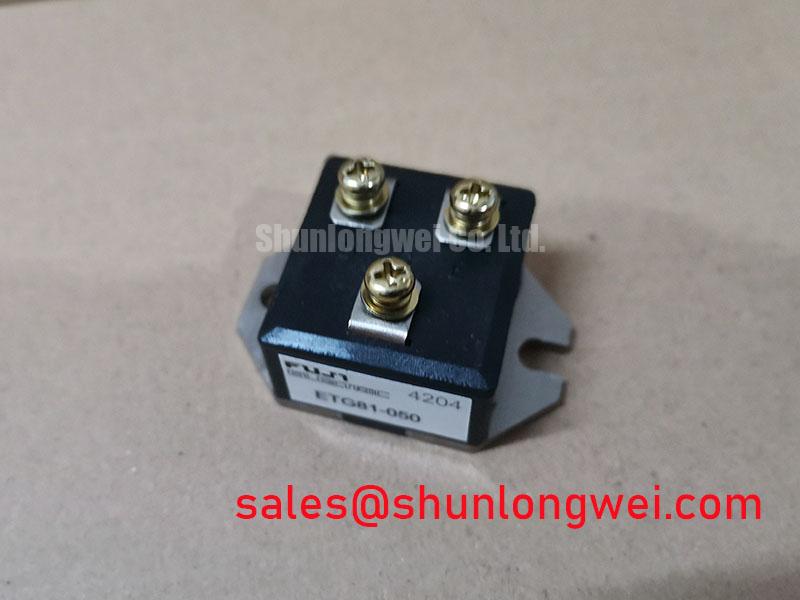
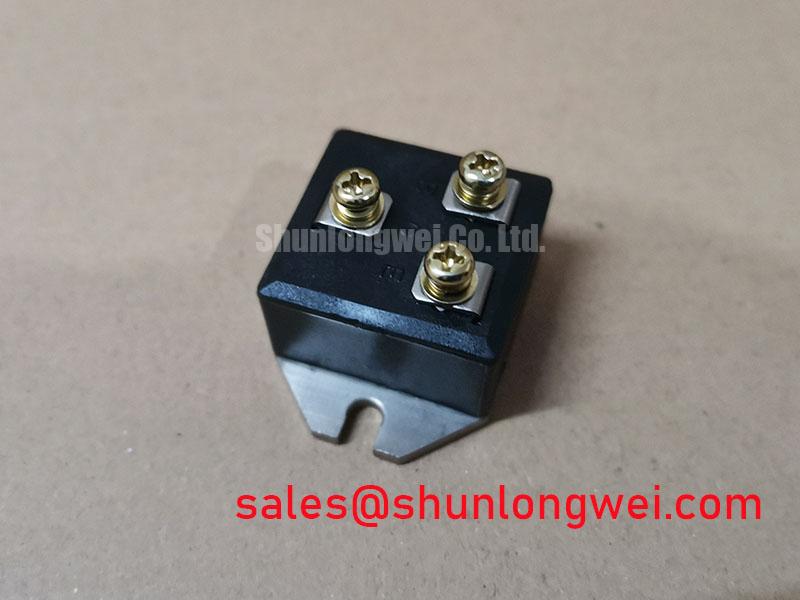
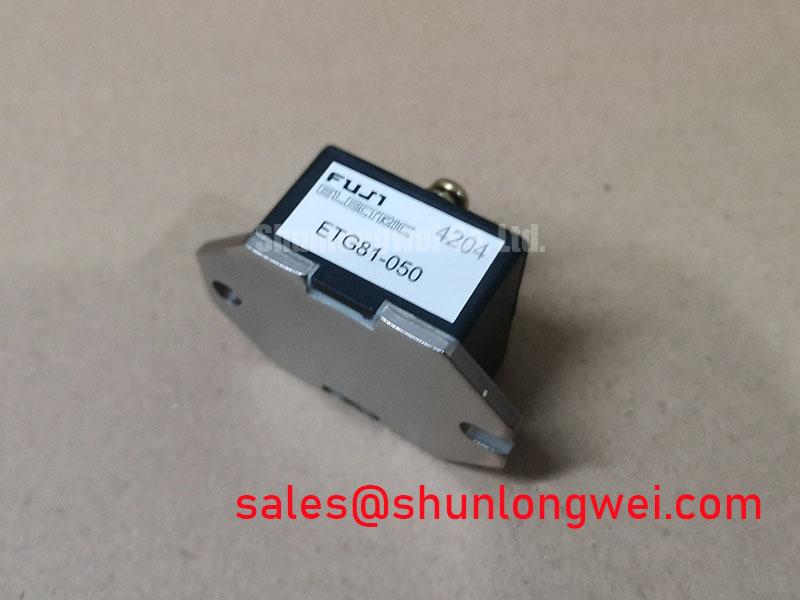
The ETG81-050 fuji is an industrial-grade, isolated dual-thyristor module engineered for robust AC power control and phase-angle switching. Representing Fuji Electric’s established power semiconductor technology, this module is rated for a repetitive peak off-state voltage of 500V and a nominal average on-state current of 80A. Its fully isolated copper baseplate simplifies thermal mounting, making it an excellent choice for legacy systems and rugged industrial assemblies. Designers can explore other modules in our power semiconductors portfolio for alternative voltage ratings.
Key Ratings: 500V Peak Off-State Voltage | 80A Average On-State Current | 2500V AC Isolation Voltage
- Enhanced Safety: The 2500V AC isolation barrier eliminates the need for external insulating sheets under the module.
- Minimized Conduction Losses: Highly optimized forward voltage drop ($V_{TM}$) helps reduce heat generation under continuous load conditions.
Technical details and physical parameters can be compared in the Fuji Electric official product series documentation.
In-Depth Technical Analysis and Thermal Engineering
The internal architecture of the ETG81-050 fuji consists of two series-connected thyristor branches, which enables flexible configuration as an AC switch or half-controlled bridge rectifier. Operating with a repetitive peak reverse voltage ($V_{RRM}$) of 500V, this module provides a reliable safety margin against line voltage fluctuations in nominal 220V AC and 240V AC industrial distribution systems.
Thermal management is a critical factor for ensuring long-term reliability. The junction-to-case thermal resistance ($R_{th(j-c)}$) of the module is minimized through direct bond copper (DBC) substrate packaging. To visualize this performance, think of thermal resistance as a highway lane. A lower resistance value acts like an extra lane, allowing heat to flow rapidly away from the silicon die. This prevents localized hotspots and ensures the junction temperature stays well below the $125^circtext{C}$ threshold during operation.
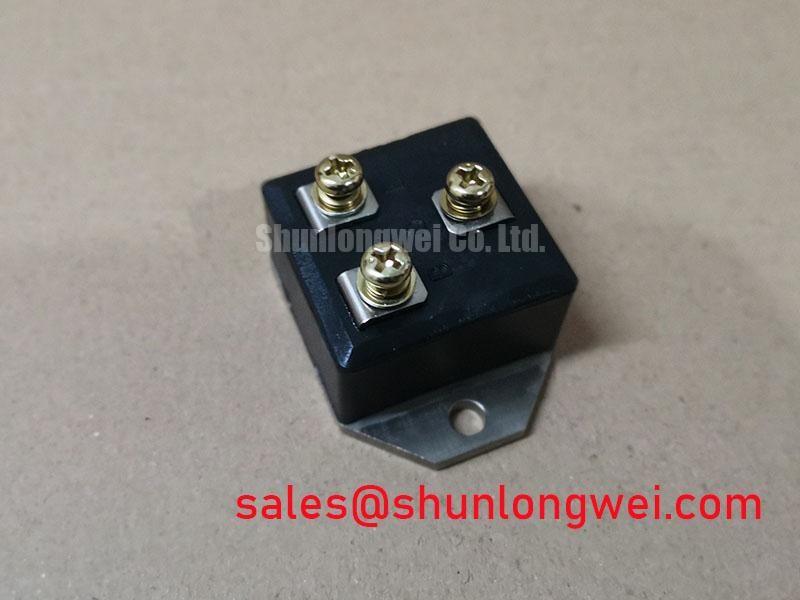
When implementing phase control, gate drive requirements must be met precisely. The gate trigger current ($I_{GT}$) is specified to ensure reliable latching across the entire temperature spectrum. If you are servicing or upgrading existing setups, you may also review the similar Fuji ETF81-050 or the higher voltage Fuji ETK81-060 modules to compare gate trigger characteristics and housing configurations.
Ideal Application Environments
- Industrial Heating Control: Smoothly regulates power in resistive heating elements and industrial furnaces.
- AC Motor Soft Starters: Limits inrush currents in line-frequency electric motors during initial startup phases.
- Uninterruptible Power Supplies (UPS): Acts as a reliable static bypass switch for automatic, high-speed power transfer.
- Solid-State Contactors: Offers bounce-free switching for inductive or resistive loads in high-vibration manufacturing zones.
Best Fit: An ideal option for legacy industrial AC power control circuits requiring a compact 500V/80A thyristor block with electrical isolation.
Technical Specifications Table
The parameters below are derived from official manufacturer database records for the ETG81-050 series:
| Parameter Category | Specific Parameter | Typical Value | Unit |
|---|---|---|---|
| Absolute Maximum Ratings | Repetitive Peak Reverse Voltage ($V_{RRM}$) | 500 | V |
| Average On-State Current ($I_{T(AV)}$) | 80 (at $T_c = 85^circtext{C}$) | A | |
| Surge On-State Current ($I_{TSM}$) | 1600 (at 60Hz, 1 cycle) | A | |
| Electrical Characteristics | Peak On-State Voltage ($V_{TM}$) | 1.4 (at $I_{TM} = 240text{A}$) | V |
| Gate Trigger Current ($I_{GT}$) | 100 (Max) | mA | |
| Gate Trigger Voltage ($V_{GT}$) | 3.0 (Max) | V | |
| Thermal and Isolation | Junction Operating Temperature ($T_j$) | -40 to +125 | °C |
| Isolation Voltage ($V_{isol}$) | 2500 (AC, 1 minute) | V |
For further guidelines on thermal design calculations, please refer to the standard resources on thermal resistance modeling.
Engineer’s Frequently Asked Questions
Q1: How do you protect the ETG81-050 fuji from fast voltage transients ($dv/dt$)?
A1: An RC snubber circuit connected in parallel with the thyristor terminals is recommended to limit the rate of off-state voltage rise ($dv/dt$). To understand passive protection circuit design in detail, check out our guide on mastering thyristor protection and suppression.
Q2: Can this module be operated within a standard safe operating area (SOA) without gate current degradation over time?
A2: Yes, provided the gate drive circuit supplies a trigger pulse that is within the limits defined by the manufacturer’s data sheet. Exceeding peak gate power limits ($P_{GM}$) must be avoided. Standard practices for staying within the Safe Operating Area should always be followed.
Q3: Is the baseplate electrically isolated from the thyristor terminals?
A3: Yes. The baseplate is internally isolated with a rated insulation limit of 2500V AC for one minute. This allows multiple modules to be bolted onto a single heatsink without causing internal electrical short circuits.
Designing with Factual Specifications
The ETG81-050 fuji remains a trusted choice for maintenance, system replication, and line-frequency AC power designs. By leveraging its low forward voltage drop and 2500V electrical isolation, power system developers can implement compact and efficient thermal assemblies. To ensure accurate design margins, engineering teams must base all calculations on the factual ratings presented in the verified manufacturer specifications.