FZ800R12KL4C: A Technical Analysis of a High-Power 1200V 800A IGBT Module
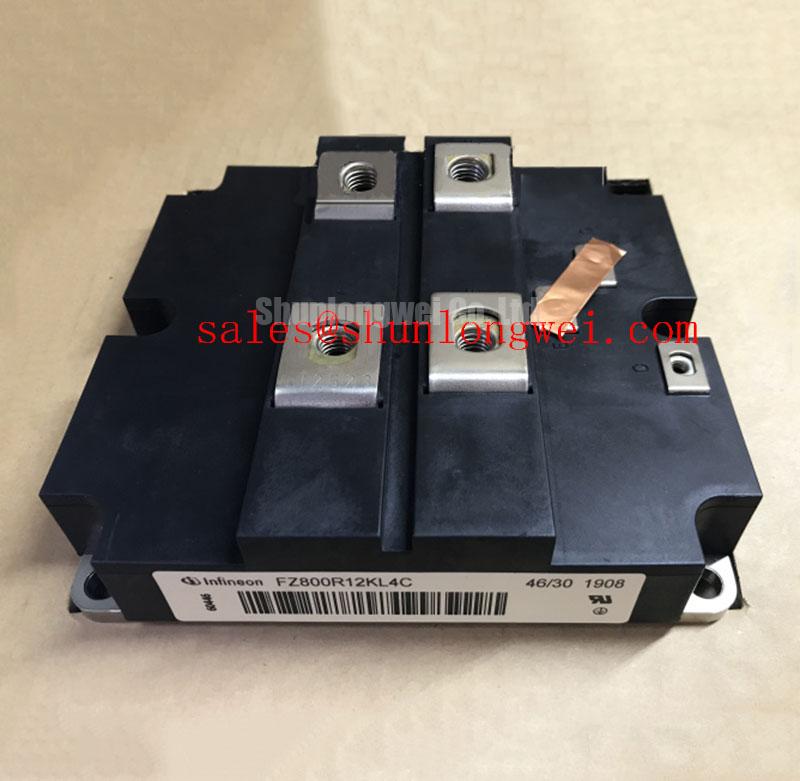
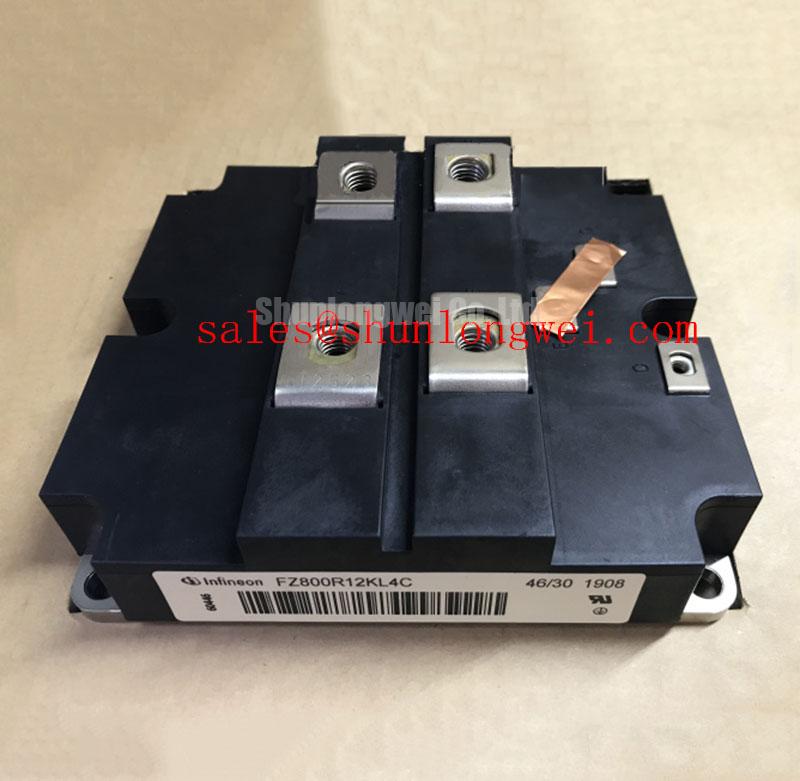
FZ800R12KL4C: Infineon 1200V 800A IGBT Module
High-Current Performance with Optimized Thermal Management
The Infineon FZ800R12KL4C is a high-power IGBT module engineered for robust performance in demanding power conversion systems. It delivers a nominal current of 800A at a blocking voltage of 1200V, featuring Trench/Fieldstop IGBT3 technology for a balanced profile of conduction and switching efficiency. Its low junction-to-case thermal resistance is a key design feature, simplifying heatsink selection and enabling more compact, power-dense designs. This module is built for reliability in high-stress industrial environments.
- Core Specifications: 1200V | 800A | VCE(sat) (typ.) 2.05V @ 125°C
- Key Advantages: Facilitates efficient thermal management, enables high power density designs.
Download Official Datasheet (PDF)
Technical Analysis for System Integration
The engineering value of the FZ800R12KL4C is rooted in its core semiconductor technology. The Trench/Fieldstop IGBT3 design provides a low collector-emitter saturation voltage (VCE(sat)), specified as 1.70V (typical) at 25°C and 2.05V (typical) at its operating junction temperature of 125°C. This low on-state voltage directly minimizes conduction losses, which are a major source of heat in high-current applications. For designers, this translates into higher system efficiency and reduced demand on the cooling system, a crucial aspect further explored in resources covering IGBT thermal design.
Effective heat dissipation is fundamental to reliability. The module’s thermal resistance from junction to case (RthJC) for the IGBT is specified at a low 0.055 K/W. This parameter can be visualized as the width of a pipe for heat to escape the semiconductor die. The FZ800R12KL4C’s low value signifies a very wide pipe, enabling rapid and effective heat transfer to the heatsink. This superior thermal performance is critical for keeping the junction temperature within its safe operating area, ensuring dependable performance under sustained heavy loads. The integrated Emitter Controlled 3 diode complements the IGBT with soft recovery characteristics, which helps to reduce turn-on losses and electromagnetic interference (EMI).
Optimized Application Scenarios
The FZ800R12KL4C is specified for high-power industrial systems where current handling and thermal stability are critical. Its characteristics make it a strong fit for several applications:
- Industrial Motor Drives: The 800A nominal and 1600A repetitive peak current ratings are well-suited for controlling large, high-torque AC motors in applications like conveyors, pumps, and fans.
- Renewable Energy Inverters: In large-scale solar or wind power systems, its 1200V blocking voltage and low conduction losses contribute to higher energy conversion efficiency.
- Uninterruptible Power Supplies (UPS): The module’s ability to handle high peak currents ensures system stability during load transients and fault conditions.
- Welding Power Supplies: The robust thermal design and high current capability provide the durability required for the demanding cycles of industrial welding equipment.
This module is an optimal match for high-power applications where efficient thermal management and reliable current handling are paramount design requirements.
Key Specifications of the FZ800R12KL4C
| Absolute Maximum Ratings (Tvj = 25°C unless otherwise specified) | |
|---|---|
| Collector-Emitter Voltage (VCES) | 1200V |
| Continuous Collector Current (IC nom) | 800A |
| Repetitive Peak Collector Current (ICRM), tp=1ms | 1600A |
| Gate-Emitter Voltage (VGES) | ±20V |
| Short Circuit Withstand Time (tSC), VCC=800V, VGE ≤ 15V, Tvj ≤ 125°C | 10 µs |
| Electrical & Thermal Characteristics | |
| Collector-Emitter Saturation Voltage (VCEsat) @ IC=800A, Tvj=125°C | 2.05V (typ.) |
| Thermal Resistance, Junction-to-Case (RthJC), IGBT | 0.055 K/W |
| Thermal Resistance, Junction-to-Case (RthJC), Diode | 0.080 K/W |
| Operating Junction Temperature (Tvj op) | -40 to +150°C |
Engineer’s FAQ
How does the low RthJC of the FZ800R12KL4C impact heatsink selection?
A lower RthJC (0.055 K/W for the IGBT) indicates more efficient heat transfer from the silicon to the module’s baseplate. This means for a given power loss, the junction temperature will be lower. It allows engineers to either use a smaller, more cost-effective heatsink to achieve the target operating temperature or to push more power through the module with a larger heatsink, thereby increasing the system’s power density.
What are the recommended mounting torque specifications for this module?
According to the datasheet, the recommended mounting torque for the M6 mounting screws is 3 – 6 Nm. For the main terminals (M8), the recommended torque is 7 – 14 Nm. Adhering to these values is critical for ensuring a low-resistance thermal and electrical connection without causing mechanical stress to the module. For further reading, see this article on the critical role of IGBT terminal torque.
What is the primary benefit of the Trench/Fieldstop IGBT3 technology?
This technology offers an optimized trade-off between conduction losses (VCE(sat)) and switching losses. It achieves a low on-state voltage drop, reducing heat generation during conduction, while the field-stop layer allows for faster, more controlled turn-off with a minimal “tail” current. This balance makes it highly effective in applications like motor drives and solar inverters.
Can this module be paralleled to achieve higher current output?
Yes, modules like the FZ800R12KL4C can be paralleled. The positive temperature coefficient of its VCE(sat) helps with thermal balancing between parallel devices. As a device heats up, its on-state voltage increases slightly, naturally directing current to cooler, parallel modules. However, successful paralleling requires careful attention to symmetrical busbar layout to minimize stray inductance and ensure even current distribution, a topic detailed in resources on mastering IGBT paralleling.
Design Enablement
The FZ800R12KL4C provides system designers with a high-current switching component where thermal performance and electrical efficiency are co-optimized. Its robust specifications and industry-standard packaging enable the development of compact and reliable high-power conversion systems for demanding industrial and renewable energy markets.