Innolux G070Y3-T01: A Robust Display for Extreme Industrial Environments
## Innolux G070Y3-T01 7.0″ WVGA Industrial TFT-LCD Module
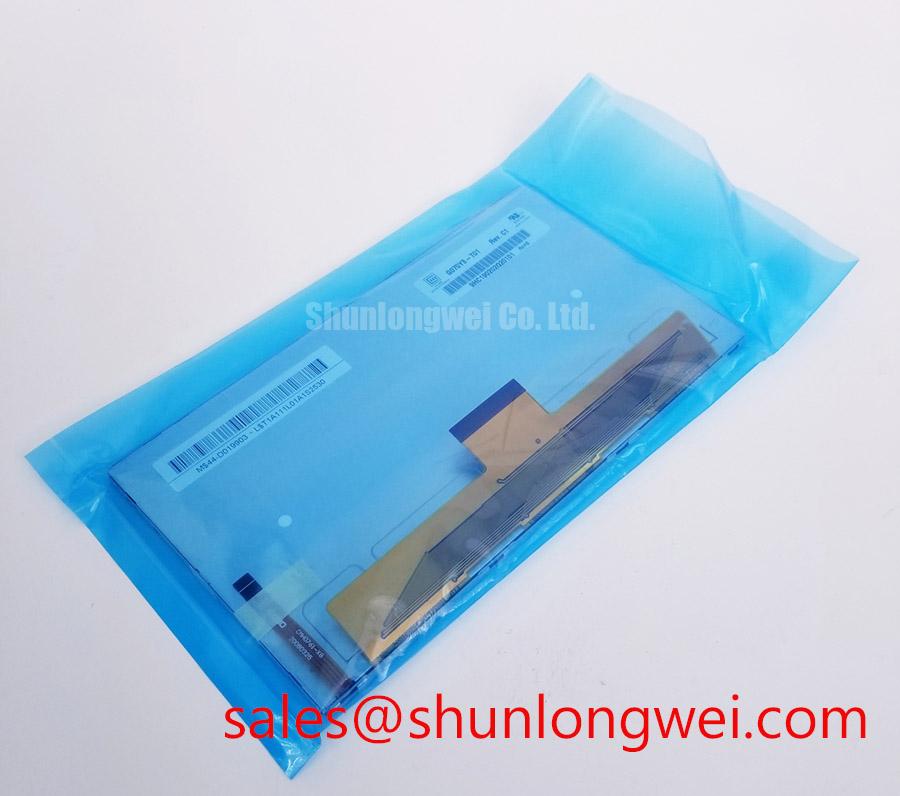
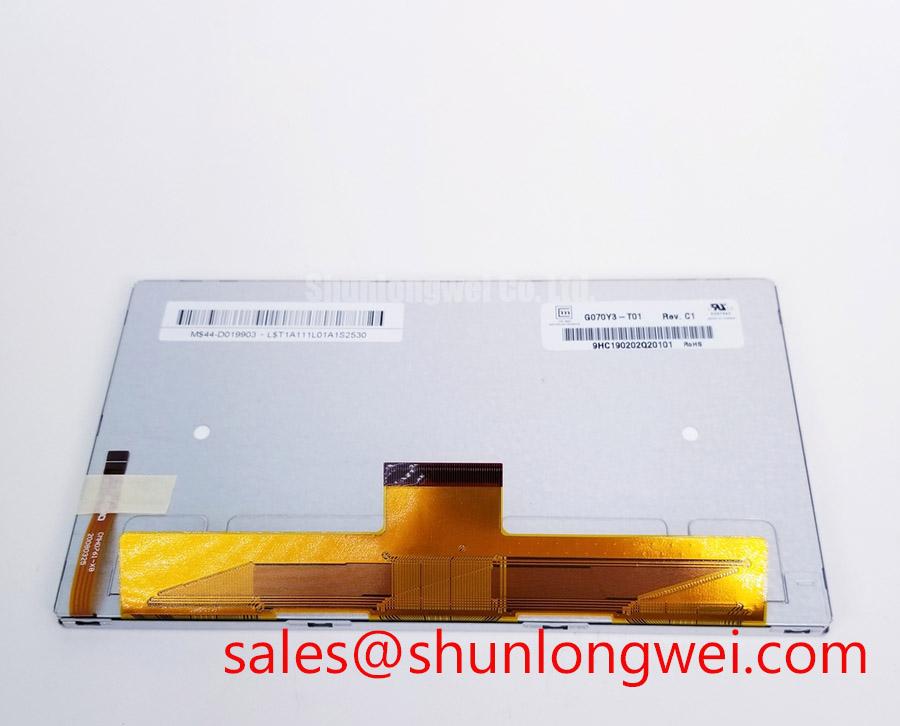
The Innolux G070Y3-T01 is a 7.0-inch a-Si TFT-LCD module engineered for operational resilience and clarity in demanding industrial and automotive applications. Its core value proposition is the delivery of consistent visual performance across an exceptionally wide operating temperature range, combined with high brightness for readability in challenging light conditions.
* **Core Specifications**: 800×480 WVGA | 600 cd/m² Brightness | -30 to 85°C Operating Temp.
* **Key Advantages**: Ensures reliable operation in extreme cold and heat, reducing the need for auxiliary thermal management. The anti-glare surface enhances readability under intense ambient lighting.
* **Application Focus**: The module’s robust environmental specifications address the primary challenge of maintaining display uptime and clarity in non-climate-controlled settings, such as factory floors or outdoor terminals.
Download Official Datasheet (PDF)

### Technical Analysis for System Integration
The G070Y3-T01 is specified to solve concrete engineering problems beyond simple image display. Its design focuses on environmental robustness and optical performance, critical factors for long-term reliability in industrial equipment.
A key differentiator is the module’s extensive operating temperature range of -30°C to 85°C. This is achieved by using specialized liquid crystal material and durable components that resist the physical degradation and performance lag common in standard displays at temperature extremes. This specification can directly reduce system complexity and bill-of-materials (BOM) cost by potentially eliminating the need for dedicated heaters or cooling fans within an enclosure. The storage temperature range is even wider, from -40°C to 90°C, ensuring module integrity during transport and warehousing.
The module’s optical stack is also tuned for industrial settings. A typical brightness of 600 cd/m² ensures the screen remains legible under bright overhead factory lighting. This is complemented by an anti-glare surface treatment with a 25% haze value, which diffuses external light sources rather than reflecting them. Think of this anti-glare surface like frosted glass; it scatters incoming light, reducing mirror-like reflections that could obscure critical data for an HMI operator, thus improving accuracy and reducing eye strain.

### Optimized Application Scenarios
The specific parameter set of the G070Y3-T01 makes it a strong candidate for applications where reliability is non-negotiable.
* **Industrial HMI Panels:** The wide temperature range and vibration resistance (3.0G) ensure continuous operation on factory floors with fluctuating environmental conditions.
* **Outdoor Kiosks & Terminals:** High brightness and the anti-glare surface provide the necessary readability for use in environments with high ambient or indirect sunlight.
* **Agricultural & Construction Vehicles:** The module’s ability to function reliably from a cold start at -30°C is critical for equipment operated outdoors in various climates.
* **Marine Navigation Displays:** The specified durability and clear visuals are well-suited for bridge control systems and instrumentation.
* **Medical Diagnostic Equipment:** Stable, clear imaging and a long-life WLED backlight (30k hours minimum) support the need for reliable, long-term performance.
This display is an optimal match for systems requiring proven environmental resilience and consistent visual clarity without advanced interface protocols.
### Key Specifications of the G070Y3-T01
| Display Characteristics | |
|---|---|
| Panel Type | a-Si TFT-LCD, TN, Normally White |
| Resolution | 800(RGB) × 480 (WVGA) |
| Brightness | 600 cd/m² (Typ.) |
| Contrast Ratio | 650:1 (Typ.) |
| Viewing Angle (L/R/U/D) | 70/70/60/60 (Typ.) (CR≥10) |
| Display Colors | 262K (6-bit) |
| Interface & Electrical | |
| Signal Interface | TTL (1 ch, 6-bit), 50 pins FPC |
| Supply Voltages (VCC/AVDD/VGH/VGL) | 3.3 / 10.5 / 18 / -7 V (Typ.) |
| Backlight System | WLED, 30,000 hours (Min.) life |
| Mechanical & Environmental | |
| Outline Dimensions (W×H×D) | 168 × 94 × 6.65 mm (Max.) |
| Weight | 180g (Typ.) |
| Operating Temperature | -30°C to 85°C |
| Storage Temperature | -40°C to 90°C |

### Engineer’s FAQ
**1. How does the wide operating temperature affect the thermal design of our enclosure?**
The -30°C to 85°C operating range significantly simplifies thermal design. For many applications within this spectrum, it may remove the requirement for external heating elements in cold environments or active cooling systems like fans in warmer settings. This reduces power consumption, system complexity, and potential points of failure. Engineers should still ensure the enclosure design allows for adequate passive heat dissipation to prevent the module’s surface from exceeding the 85°C maximum.
**2. What are the key layout considerations for the 50-pin TTL interface?**
The G070Y3-T01 utilizes a parallel TTL interface. To ensure signal integrity, keep the FPC or connecting cable length as short as possible. Route the parallel data lines together with corresponding ground traces to minimize crosstalk and EMI. The power supply lines (VCC, AVDD, VGH, VGL) should be decoupled with capacitors placed close to the connector on the driver board.
**3. Is the WLED backlight user-replaceable?**
The datasheet specifies the WLED backlight has a minimum lifetime of 30,000 hours to half-brightness. While the datasheet notes the backlight is technically replaceable, it is an edge-light system integrated into the module. Replacement is a complex process not typically intended for field service and should be planned for at the depot level if necessary. The design focus is on a long service life that matches the operational lifetime of the host equipment.
The G070Y3-T01 delivers a focused feature set for engineers building systems that must perform reliably in thermally and optically challenging environments. It provides a durable foundation for clear and dependable user interfaces, enabling the development of robust industrial-grade equipment.