IXYS DSEI2X61-04C: The Advantage of Soft Recovery for High-Frequency, Low-EMI Design
IXYS DSEI2X61-04C Fast Recovery Epitaxial Diode Analysis
High-Frequency Switching with Low EMI Signature
The IXYS DSEI2X61-04C is a dual Fast Recovery Epitaxial Diode (FRED) module engineered for high-frequency power conversion systems. Its core value proposition lies in the combination of a very short reverse recovery time and soft recovery characteristics, which enables designers to increase switching frequencies while minimizing electromagnetic interference (EMI).
- Core Specifications: 400V | 60A (per diode) | t_rr 35ns (typ.)
- Key Advantages: Reduces power dissipation in the diode and turn-on losses in the commutating switch. The soft recovery behavior minimizes voltage overshoots.
- Design Consideration: This device’s low reverse recovery charge (Q_r) is a critical parameter for improving the efficiency of switch-mode power supplies (SMPS).
Download the Official DSEI2X61-04C Datasheet (PDF)
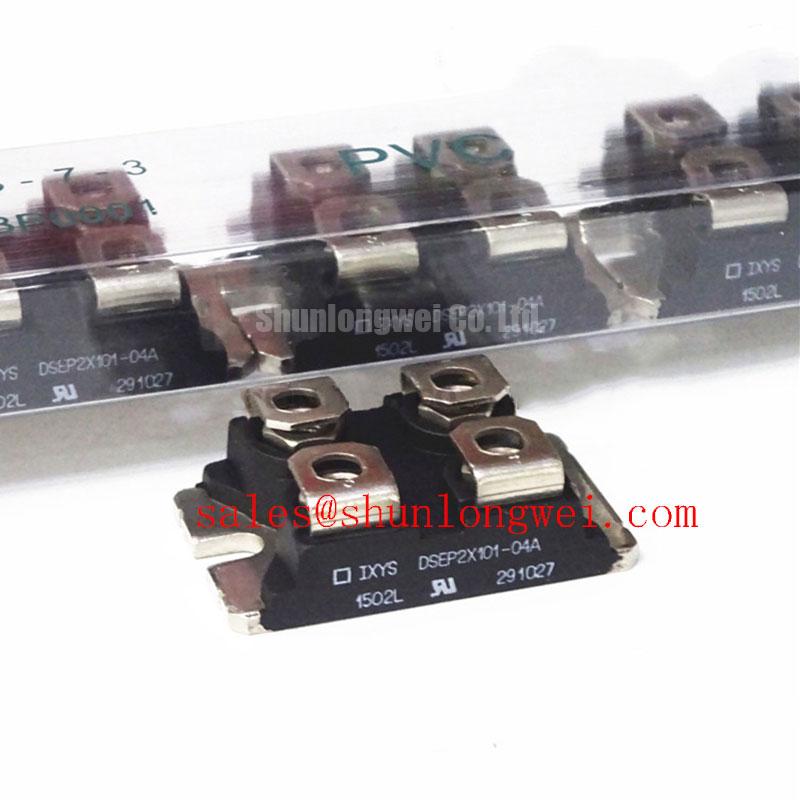

Technical Analysis: The Engineering Value of Soft Recovery
A key parameter documented in the datasheet is the typical reverse recovery time (t_rr) of just 35 nanoseconds. This rapid switching capability directly enables operation at higher frequencies, which allows for the use of smaller magnetic components and capacitors, thus increasing power density. However, fast switching can often introduce high-frequency noise and voltage stress. The DSEI2X61-04C mitigates this through its “soft recovery” behavior.
Think of the reverse recovery current like stopping a fast-moving vehicle. A standard fast diode might “slam on the brakes,” causing a sudden current drop that creates a high voltage spike (dv/dt) and significant EMI—much like the jolt and screeching tires in a hard stop. The DSEI2X61-04C, with its soft recovery, is like a vehicle with an advanced braking system that stops just as quickly but with a controlled, smooth deceleration. This gentler current transition avoids the electrical “jolt,” resulting in lower EMI and reduced stress on associated components like freewheeling IGBTs. This characteristic simplifies system design by potentially reducing the need for extensive snubber circuits.
Optimized Application Scenarios
The specific electrical characteristics of this FRED module make it a strong candidate for several demanding applications:
- Switch Mode Power Supplies (SMPS): The combination of fast and soft recovery is ideal for output rectification, where it minimizes switching losses and EMI, leading to higher efficiency and simpler filtering.
- Motor Control Circuits: Used as a freewheeling diode, it protects the switching element (e.g., an IGBT) by providing a path for inductive current, while its low reverse recovery charge reduces turn-on losses in the transistor.
- Uninterruptible Power Supplies (UPS): High efficiency and reliability are critical. This diode’s low power dissipation and robust planar passivated chip design contribute to system longevity.
- Welding Power Supplies: The device’s ability to handle high peak currents (I_FRM = 800A) and its fast recovery are essential for the high-frequency inverter stages found in modern welding equipment.
This module is an optimal match for designs requiring efficient, high-frequency operation above 50 kHz with stringent EMI performance requirements.
Key Specifications of the DSEI2X61-04C
| Parameter | Symbol | Value | Conditions |
|---|---|---|---|
| Repetitive Peak Reverse Voltage | V_RRM | 400 V | T_VJ = 25°C to 150°C |
| Average Forward Current (per diode) | I_FAV | 60 A | T_C = 70°C, rectangular, d=0.5 |
| Peak Forward Voltage | V_F | 1.72 V (max) | I_F = 60 A, T_VJ = 100°C |
| Reverse Recovery Time | t_rr | 35 ns (typ) | I_F = 60A, -di/dt = 400 A/µs, V_R = 350V |
| Thermal Resistance, Junction to Case | R_thJC | 0.7 K/W (max) | Per diode |
| Operating Junction Temperature | T_VJ | -40°C to +150°C |
Engineer’s FAQ
What is the primary benefit of the ‘soft recovery’ feature?
The soft recovery characteristic ensures a smooth decrease of the reverse recovery current. This behavior reduces voltage overshoots and oscillations (ringing), which are primary sources of EMI. It enables cleaner system operation with potentially smaller and less complex snubber circuits.
How do I ensure proper thermal management for this module?
The SOT-227B package features an isolated copper baseplate for efficient heat transfer. To achieve the specified thermal resistance of 0.7 K/W, the module must be mounted on a flat, clean heatsink surface with an appropriate thermal grease. The datasheet recommends a mounting torque of 1.5 – 2.5 Nm for the M4 mounting screws.
Are the two diodes in the module independent?
Yes, the DSEI2X61-04C contains two independent diodes within the SOT-227B package. This configuration provides flexibility for use in various circuit topologies, such as a dual anti-parallel diode setup or as two separate freewheeling diodes.
What does the planar passivated chip technology offer?
This technology results in very low leakage current and high reliability. The planar process creates a robust junction termination that maintains stable blocking voltage capability across the entire operating temperature range, enhancing the device’s long-term stability.
Enabling Higher Power Density
The DSEI2X61-04C empowers engineers to push the boundaries of power converter design. By integrating low switching losses with controlled, low-noise recovery characteristics, this dual FRED module provides a critical building block for developing more compact, efficient, and reliable power semiconductor systems.