K420A4001 Thyristor Module: A Technical Analysis for High-Reliability Power Control
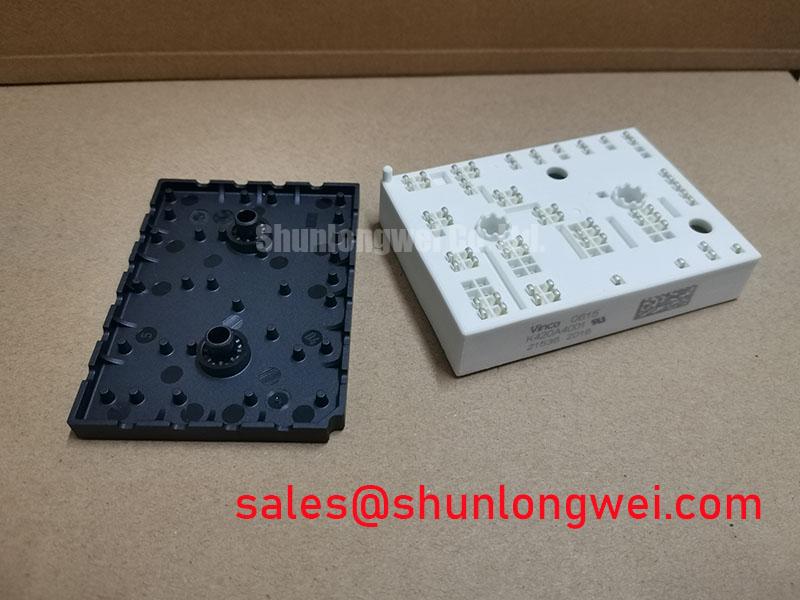
K420A4001 4000V/420A High-Reliability Thyristor Module
Introduction and Core Highlights
The SEMIKRON K420A4001 is a high-power Thyristor/Diode Module engineered for robust performance in demanding high-voltage power control systems. It provides exceptional reliability through its use of pressure contact technology and glass passivated thyristors, ensuring stable operation under severe electrical and thermal loads. Its superior thermal design, characterized by a very low junction-to-case thermal resistance, simplifies heatsink selection for power cycling applications and allows for more compact system designs. This module is a foundational component for building dependable and efficient high-power converters and controllers.
- Core Specifications: 4000V | 420A | Rth(j-c) of 0.045 K/W
- Key Advantages: High-voltage blocking capability, excellent thermal power cycling endurance.
Download Official Datasheet (PDF)

Technical Analysis for System Design
The K420A4001 module’s ability to block up to 4000V (VDRM/VRRM) makes it suitable for direct use in high-voltage industrial mains. This capability is supported by glass passivated thyristor chips, which provide a stable junction that is less susceptible to voltage transients and ensures low leakage currents over a long operational life. For engineers, this translates to a higher margin of safety and reduced need for complex overvoltage protection circuits in applications such as medium-voltage soft starters or industrial power supplies.
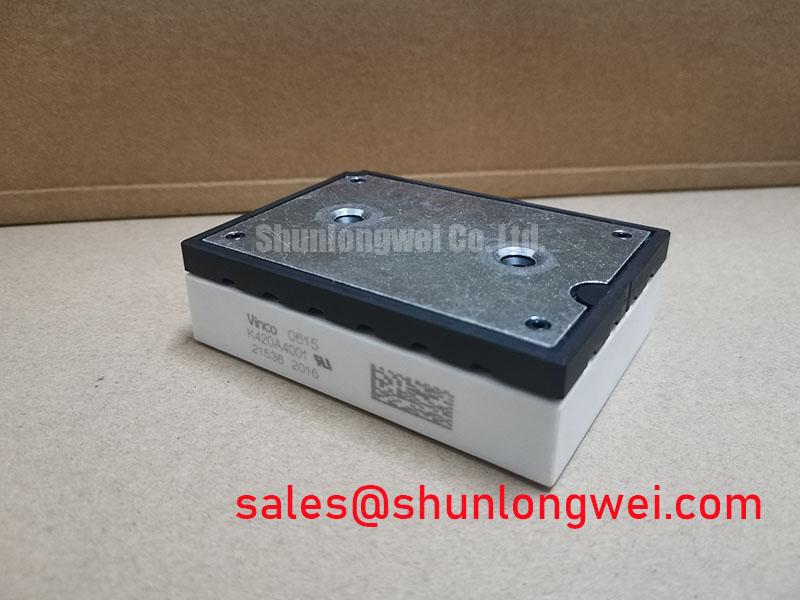
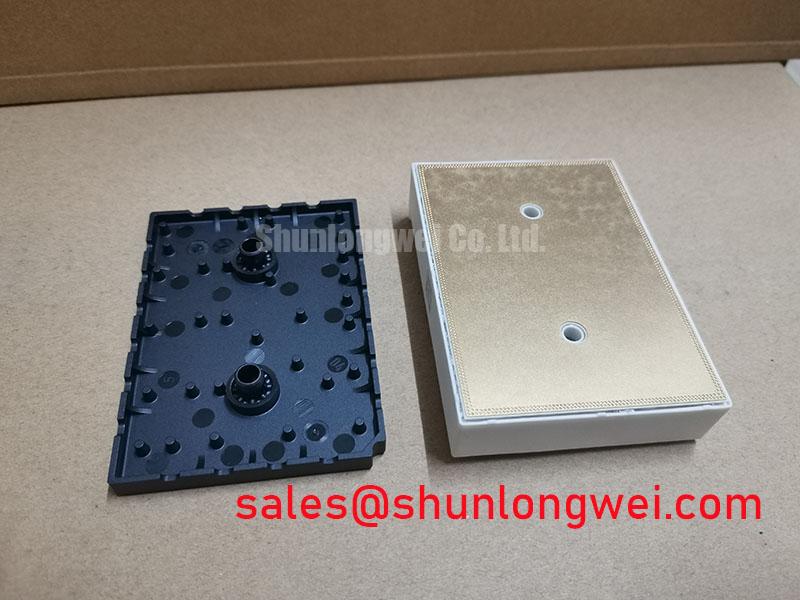
A central feature of the K420A4001 is its implementation of pressure contact technology. This design eliminates the use of solder layers for the silicon die connection, a common point of failure in power modules subjected to frequent temperature changes. Imagine pressure contact technology as a high-quality bolted connection versus a soldered one in a high-vibration environment. It prevents thermal fatigue, ensuring a consistently low-resistance electrical and thermal path. This significantly enhances the module’s power cycling capability and overall system longevity.
Optimized Application Scenarios
The specific characteristics of the K420A4001 lend themselves to several high-power applications:
- AC Motor Soft Starters: The module’s high current (420A average) and voltage ratings are ideal for managing the large inrush currents of industrial motors, providing a smooth and controlled start-up.
- High-Power Controlled Rectifiers: Its dual thyristor configuration in a single package simplifies the construction of controlled bridge rectifiers for industrial DC power supplies and battery chargers.
- Industrial Heating and Welding: The precise phase-angle control offered by the thyristors allows for accurate power regulation in large-scale resistance heating and welding power sources.
- DC Motor Drives: Suitable for the AC-DC conversion and control stages in DC motor speed controllers, where its robust thermal performance ensures reliability.
This module is an optimal match for industrial systems requiring robust, high-voltage AC control with superior thermal stability.
Key Specification Parameters
| Key Electrical and Thermal Specifications | |
|---|---|
| Repetitive Peak Off-State & Reverse Voltage (VDRM, VRRM) | 4000 V |
| Average On-State Current (ITAV @ Tc=85°C) | 420 A |
| RMS On-State Current (ITRMS) | 920 A |
| Surge Non-Repetitive On-State Current (ITSM, 10ms) | 8500 A |
| I²t value (10ms) | 361250 A²s |
| Thermal Resistance, Junction to Case (Rth(j-c), per thyristor) | 0.045 K/W |
| Isolation Test Voltage (Visol, 50 Hz, 1 min) | 10200 V |
| Operating Junction Temperature (Tvj op) | -40 to +125 °C |
Engineer’s FAQ
- What is the critical thermal resistance data for the K420A4001 and how does it affect heatsink selection?
- The datasheet specifies a very low thermal resistance from junction to case (Rth(j-c)) of 0.045 K/W per thyristor. This value indicates highly efficient heat transfer from the silicon chip to the module’s baseplate. For engineers, this means that for a given power dissipation, the junction temperature will rise less, allowing for the use of a smaller, more cost-effective heatsink or enabling higher power output with a given cooling solution. Effective thermal management is crucial for reliability.
- What are the recommended mounting procedures for the K420A4001?
- To ensure proper thermal contact and mechanical stability, it is critical to follow the torque specifications in the datasheet. The mounting torque for the heatsink (M8) is specified as 10 Nm ± 15%, and for the electrical terminals (M8) it is also 10 Nm ± 15%. A thin, uniform layer of thermal grease should be applied to the clean, flat baseplate before mounting to the heatsink to minimize thermal resistance.
- What is the primary benefit of the pressure contact technology used in this module?
- The main benefit is enhanced reliability, especially in applications with frequent temperature changes (power cycling). By eliminating solder joints, which can crack and degrade over time, pressure contact technology provides a durable and stable connection that withstands thermomechanical stress, leading to a longer operational lifetime.
- Is the K420A4001 suitable for line-commutated converter applications?
- Yes, its high voltage and current ratings, combined with the robust nature of thyristors, make it an excellent component for line-commutated converters, such as those used in industrial power semiconductors applications like high-power rectifiers and AC voltage controllers.
Enabling Robust High-Voltage Designs
Engineers can leverage the K420A4001’s high-voltage capability and robust internal construction to develop reliable and efficient power control systems. The module’s design, which prioritizes thermal efficiency and mechanical stability through pressure contact technology, provides a solid foundation for systems where long-term operational integrity is a primary design criterion.