MCC312-16io1: A Technical Review of a 1600V High-Reliability Thyristor Module
## MCC312-16io1 Thyristor Module: 1600V High-Isolation Control
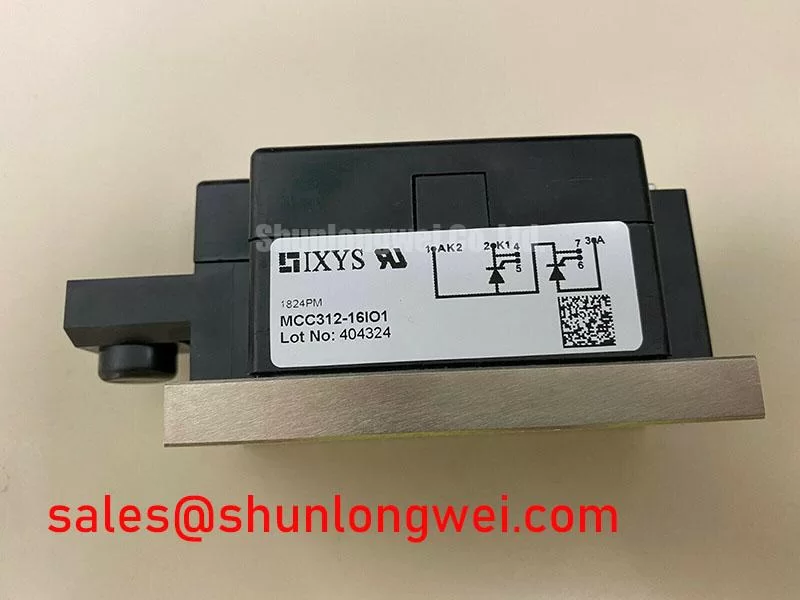
The MCC312-16io1 is a thyristor/diode module engineered for high-reliability power control applications, delivering robust performance through its high electrical isolation and excellent thermal management characteristics. This module integrates two thyristors in a series connection (common cathode), enabling efficient control of AC and DC loads in demanding industrial environments. Its design focuses on operational longevity and stability under significant electrical and thermal stress.
* **Core Specifications**: 1600V VDRM/VRRM | 320A ITAVM | 3000V~ Isolation Voltage
* **Key Advantages**: Simplifies thermal design with a direct copper bonded baseplate and ensures high reliability via planar passivated chips.
* **Engineered For**: AC motor controllers and regulated industrial power supplies requiring dependable phase control and rectification.
Download Official Datasheet (PDF)
### Technical Analysis for System Integration
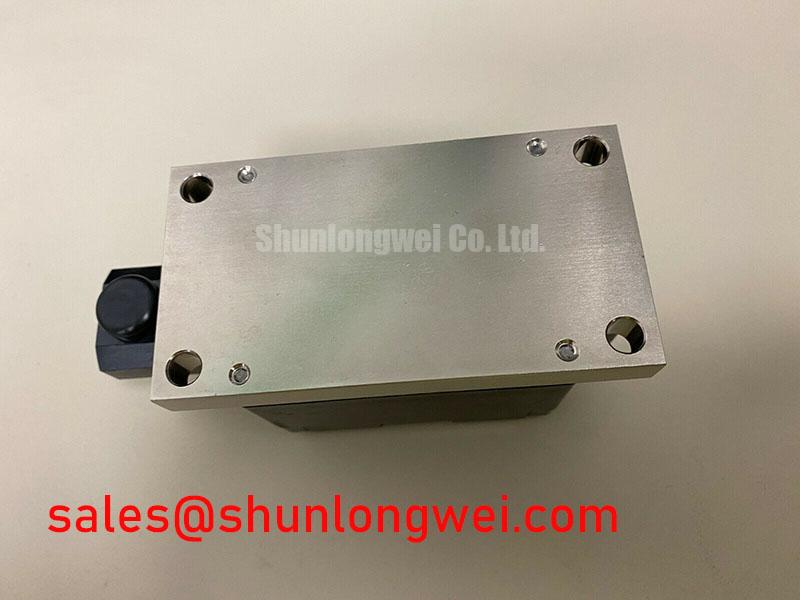
The MCC312-16io1 module’s architecture is centered on reliability and thermal efficiency. Its 3000V~ RMS isolation voltage (VISOL) for one minute provides a substantial safety margin, protecting control circuits and ensuring system integrity in high-potential environments. This isolation is achieved through a Direct Copper Bonded (DCB) aluminum oxide ceramic substrate, which not only insulates but also promotes efficient heat transfer from the silicon chips to the heatsink. The use of planar passivated chips enhances blocking stability and reliability over the component’s lifetime.
Effective thermal management is critical for high-current applications. The module specifies a thermal resistance from junction to case (RthJC) of 0.08 K/W per thyristor. Think of thermal resistance as the width of a pipe for heat; a lower value indicates a wider pipe, allowing heat to flow away from the active silicon more easily. This low thermal impedance simplifies the selection of a heatsink and helps maintain the junction temperature within its maximum limit of 140°C, ensuring stable operation even under sustained high-current loads.
### Optimized Application Scenarios
This module is well-suited for a range of high-power control systems where robust performance and electrical isolation are paramount.
* **AC Motor Soft Starters**: The dual-thyristor configuration is ideal for building phase-angle control circuits that gradually apply voltage to motors, reducing mechanical stress and inrush currents. The 320A average current rating supports medium to large motor applications.
* **Controlled Rectifiers**: In applications like DC power supplies or DC motor drives, the module can be used to create controlled single-phase or three-phase bridge rectifiers, providing a regulated DC output from an AC source.
* **Industrial Heating and Lighting Control**: For large-scale heating elements or lighting systems, the MCC312-16io1 allows for precise power regulation, optimizing energy consumption and process control. The module’s high surge current capability (ITSM up to 7800A) handles potential fault conditions.
* **Solid-State Switches**: The module can function as a high-power static switch for AC circuits, offering a reliable alternative to mechanical contactors with no moving parts to wear out.
This module is the optimal choice for industrial power systems requiring high-current AC phase control or rectification with dependable electrical isolation.
### Key Specifications of the MCC312-16io1
| Absolute Maximum Ratings (TVJ = 25°C unless otherwise specified) | ||
|---|---|---|
| Parameter | Symbol | Value |
| Repetitive Peak Off-State/Reverse Voltage | VDRM, VRRM | 1600 V |
| Average On-State Current (TC=85°C, 180° sine) | ITAVM | 320 A |
| RMS On-State Current | ITRMS | 520 A |
| Surge non-repetitive On-State Current (t=10ms, 50Hz) | ITSM | 7800 A |
| Critical Rate of Rise of On-State Current | (di/dt)cr | 200 A/µs |
| Operating Junction Temperature Range | TVJ | -40 to +140 °C |
| Isolation Voltage (50/60 Hz, RMS, t=1min) | VISOL | 3000 V~ |
| Thermal and Mechanical Characteristics | ||
| Thermal Resistance, Junction to Case (per Thyristor) | RthJC | 0.08 K/W |
| Mounting Torque (M6 screws) | Md | 4.5 – 7 Nm |
| Weight | 210 g (Typical) | |
*Data is sourced from the official IXYS datasheet and is subject to change. Refer to the document for comprehensive figures and operating curves.*


### Engineer’s FAQ
**What is the internal circuit configuration of the MCC312-16io1?**
The module contains two thyristors connected in series with a common cathode terminal. This “phase leg” or “half-bridge” configuration is versatile for controlling AC loads or for use as one leg in a controlled bridge rectifier circuit.
**What are the best practices for mounting this module to a heatsink?**
For optimal thermal transfer, ensure the heatsink surface is flat and clean. Apply a thin, uniform layer of thermal compound. The module should be secured using M6 screws with a mounting torque between 4.5 and 7 Nm, as specified in the datasheet, to ensure proper pressure without causing mechanical stress to the ceramic substrate.
**How does the DCB substrate benefit the design?**
The Direct Copper Bonded (DCB) substrate provides excellent electrical isolation while maintaining low thermal resistance. This integrated solution simplifies design by eliminating the need for external, often less efficient, isolation pads and improves the overall thermal performance and reliability of the power system.
**Can this module be used in parallel to increase current capacity?**
While paralleling thyristor modules is possible, it requires careful design to ensure current sharing. This includes matching gate trigger characteristics and ensuring symmetrical busbar layouts to balance stray inductances. For detailed guidance, it is advisable to consult application notes on power module paralleling.
### Enabling Robust Power Control
The MCC312-16io1 provides engineers with a high-current, high-voltage control element designed for long-term industrial service. Its combination of a rugged, isolated package and efficient thermal characteristics allows for the development of compact and reliable power conversion and control systems, directly addressing the need for both performance and operational safety.