Mitsubishi CM100RL-24NF: Technical Analysis for High-Efficiency Power Design
Mitsubishi CM100RL-24NF IGBT Module: Technical Analysis
Efficient Power Control with an Integrated 7-in-1 Chopper Module
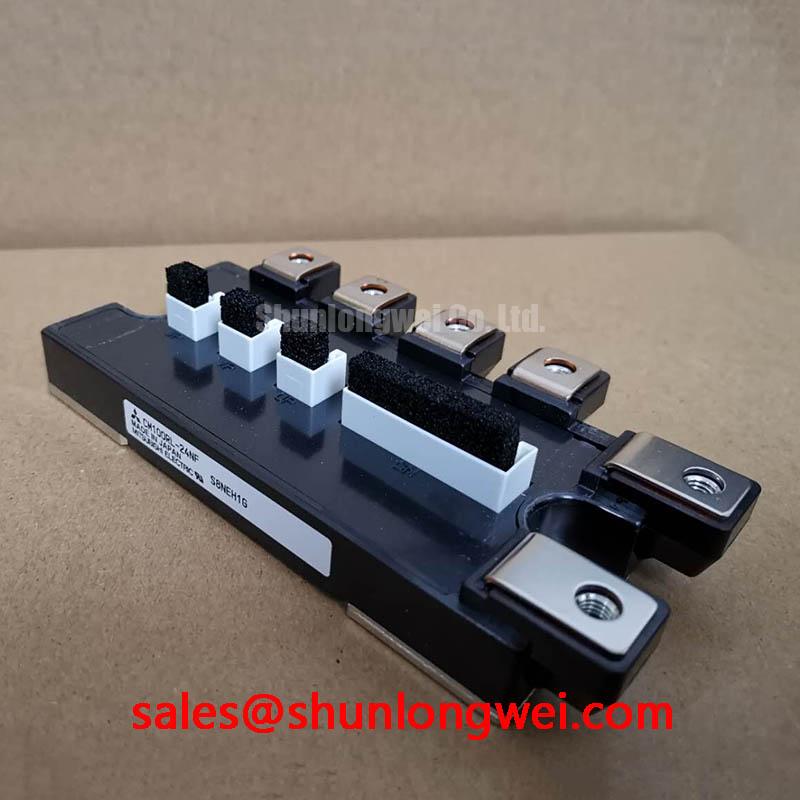
The Mitsubishi CM100RL-24NF is a 1200V, 100A IGBT module that integrates seven elements into a single package, including a dedicated chopper circuit. This module is engineered for low-loss operation, providing a robust solution for power conversion systems. Its architecture is focused on delivering a balance of performance and thermal efficiency, making it suitable for demanding industrial applications. The integration simplifies system design and assembly while maintaining high reliability.
- Core Specifications: 1200V | 100A | 620W Power Dissipation
- Key Features: Low VCE(sat) of 2.2V (typ) | Integrated Freewheeling Diode (FWDi)
- Engineering Value: Reduces conduction losses, enabling smaller heatsinks or higher power density.
For systems requiring efficient DC-DC conversion or braking, the module’s low collector-emitter saturation voltage is a critical parameter. It directly translates to lower power dissipation during operation, which simplifies the thermal design of the end application.
Download Official Datasheet (PDF)

Technical Analysis for System Integration
A key advantage of the CM100RL-24NF is its balance between conduction and switching losses, which is critical for overall system efficiency. The typical collector-emitter saturation voltage (VCE(sat)) is specified at 2.2V at the nominal 100A collector current. This low on-state voltage directly minimizes power dissipated as heat during the conduction phase of a switching cycle. This enables engineers to manage thermal loads more effectively, potentially reducing the size and cost of the required cooling system.
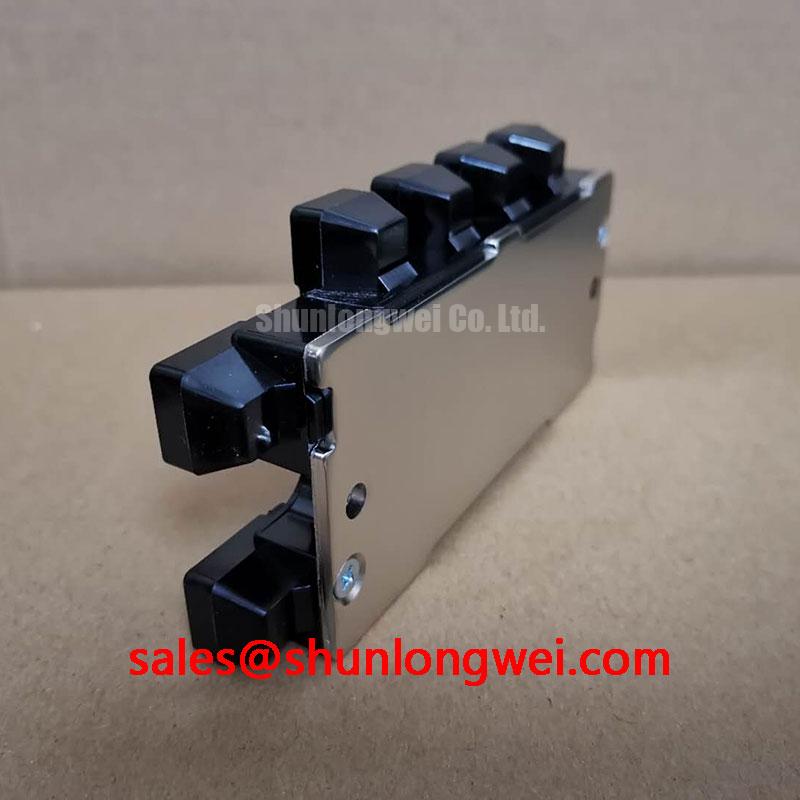
The module’s thermal resistance from junction to case (Rth(j-c)) is a crucial parameter for reliable thermal management. For the IGBT portion, this is rated at a maximum of 0.20 °C/W. This value can be thought of as the difficulty heat encounters when traveling from the active silicon chip to the module’s baseplate. A lower thermal resistance is like a wider pipe for heat; it allows for more efficient heat extraction, keeping the junction temperature lower and extending the operational life of the component. Proper management of this thermal path is essential for long-term reliability.

Optimized Application Scenarios
The architecture of the CM100RL-24NF makes it a strong candidate for several specific industrial power applications:
- AC Drive Inverters & Servo Controls: The module’s integrated brake chopper simplifies the design of regenerative braking circuits, efficiently managing energy returned from the motor.
- Uninterruptible Power Supplies (UPS): Its 1200V rating provides sufficient voltage headroom for use in DC-DC boost converter stages, and its efficiency helps minimize battery drain.
- Switch Mode Power Supplies (SMPS): In high-power SMPS designs, the low switching and conduction losses contribute to higher overall system efficiency and power density.
- Solar Inverters: The robust voltage and current ratings are suitable for the DC-DC converter and DC-AC inverter stages within a solar power system. For more on this, see our guide on maximizing solar yield.
With its integrated chopper configuration and low-loss characteristics, this module is an excellent match for applications requiring efficient high-voltage DC switching.
Key Specifications of the CM100RL-24NF
| Absolute Maximum Ratings (Tj=25°C unless otherwise noted) | ||
|---|---|---|
| Parameter | Symbol | Rating |
| Collector-Emitter Voltage | VCES | 1200V |
| Gate-Emitter Voltage | VGES | ±20V |
| Collector Current (DC, TC=94°C) | IC | 100A |
| Collector Current (Pulse) | ICM | 200A |
| Maximum Power Dissipation (TC=25°C) | PC | 620W |
| Operating Junction Temperature | Tj | -40 to +150°C |
| Electrical Characteristics (Tj=25°C) | ||
| Collector-Emitter Saturation Voltage (IC=100A, VGE=15V) | VCE(sat) | 2.2V (typ.), 2.7V (max) |
| Gate-Emitter Threshold Voltage (IC=10mA, VCE=10V) | VGE(th) | 5.0V to 7.0V |
| FWDi Forward Voltage (IE=100A) | VEC | 2.2V (typ.), 2.8V (max) |
| Thermal Characteristics | ||
| Thermal Resistance, Junction to Case (IGBT) | Rth(j-c)Q | 0.20°C/W (max) |
| Thermal Resistance, Junction to Case (FWDi) | Rth(j-c)R | 0.35°C/W (max) |
Engineer FAQ
- How do I calculate the power loss for the CM100RL-24NF in a chopper application?
- Total power loss is the sum of conduction and switching losses. Conduction loss is approximately VCE(sat) multiplied by the collector current and the duty cycle. Switching losses (Eon and Eoff), found in the datasheet performance curves, are multiplied by the switching frequency. Summing these provides the total thermal load for your heatsink calculation.
- What is the primary benefit of the integrated chopper configuration?
- The integrated single-switch chopper with its own freewheeling diode (FWDi) simplifies the bill of materials and PCB layout for applications like DC motor braking or boost/buck converters. It eliminates the need for an external diode and optimizes the layout to reduce parasitic inductance between the switch and diode.
- What are the mounting torque specifications for this module?
- The datasheet specifies a mounting torque for the M5 main terminal screws between 2.5 and 3.5 N·m and for the M5 mounting screws between 2.5 and 3.5 N·m. Adhering to these values is critical for ensuring good thermal contact and mechanical stability without causing stress to the module.
- Is this module suitable for parallel operation?
- While the datasheet does not explicitly detail procedures for paralleling, IGBTs can be paralleled with careful consideration of VCE(sat) and VGE(th) matching, as well as symmetrical PCB layout to ensure balanced current sharing. For further reading, consult resources on IGBT paralleling techniques.
Enabling Efficient and Compact Power Designs
The Mitsubishi CM100RL-24NF provides a verified, datasheet-driven solution for industrial power systems. Its integrated nature and focus on low conduction losses allow engineers to develop more compact and thermally efficient designs for motor drives, UPS systems, and other high-power switching applications. The module’s robust electrical and thermal characteristics support the development of reliable, long-service-life power conversion stages.