Mitsubishi CM300DU-24H IGBT Module: A Technical Review
Mitsubishi CM300DU-24H Dual IGBT Module | 1200V 300A
Robust Power Switching for High-Reliability Inverters
The Mitsubishi CM300DU-24H is a dual IGBT module engineered for high-power switching applications, delivering a robust balance of conduction and switching performance. It integrates two IGBTs in a half-bridge configuration, each paired with a super-fast recovery free-wheel diode, providing a foundation for efficient and reliable power system design. This module’s construction focuses on minimizing conduction losses while ensuring effective thermal management for demanding industrial workloads.
- Core Specifications: 1200V | 300A | VCE(sat) (typ) 2.2V
- Key Advantages: Low collector-emitter saturation voltage reduces overall power loss. The isolated baseplate simplifies thermal design and assembly.
- Design Focus: Optimized for systems where managing thermal performance is as critical as electrical efficiency, such as in variable frequency drives.
Download the Official CM300DU-24H Datasheet (PDF)
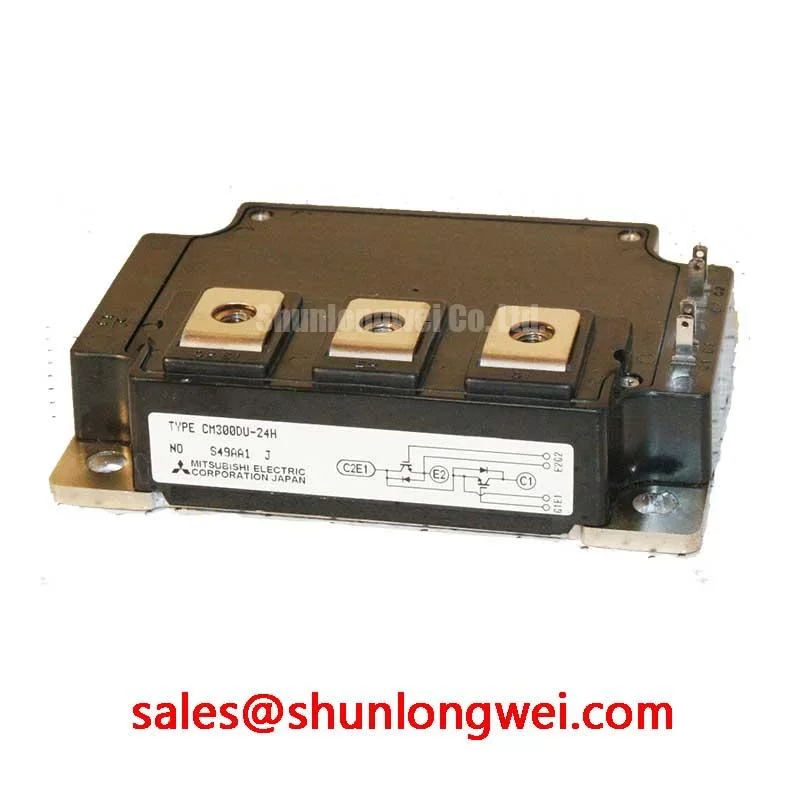
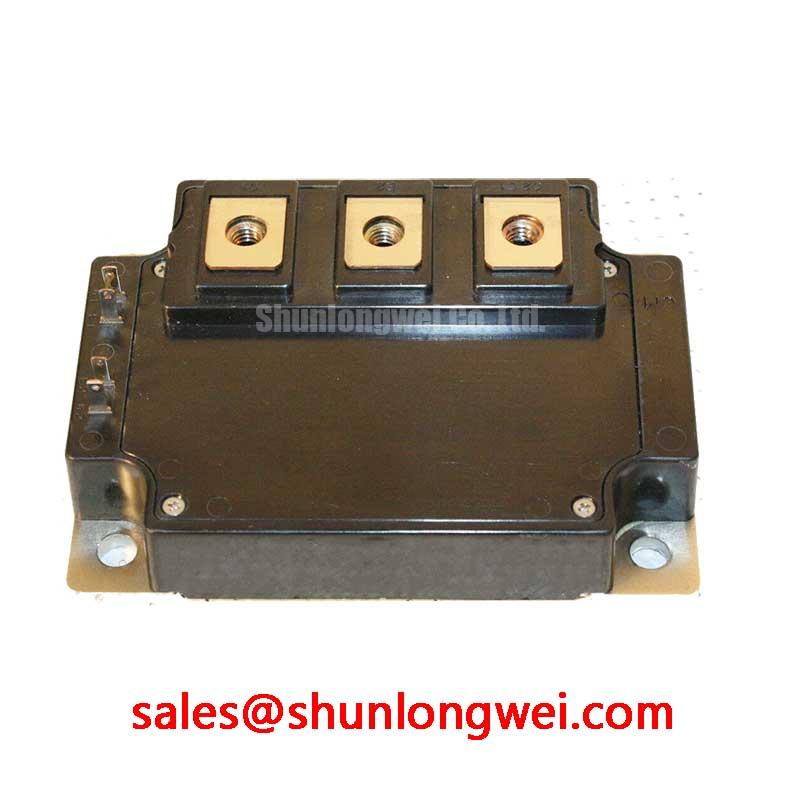
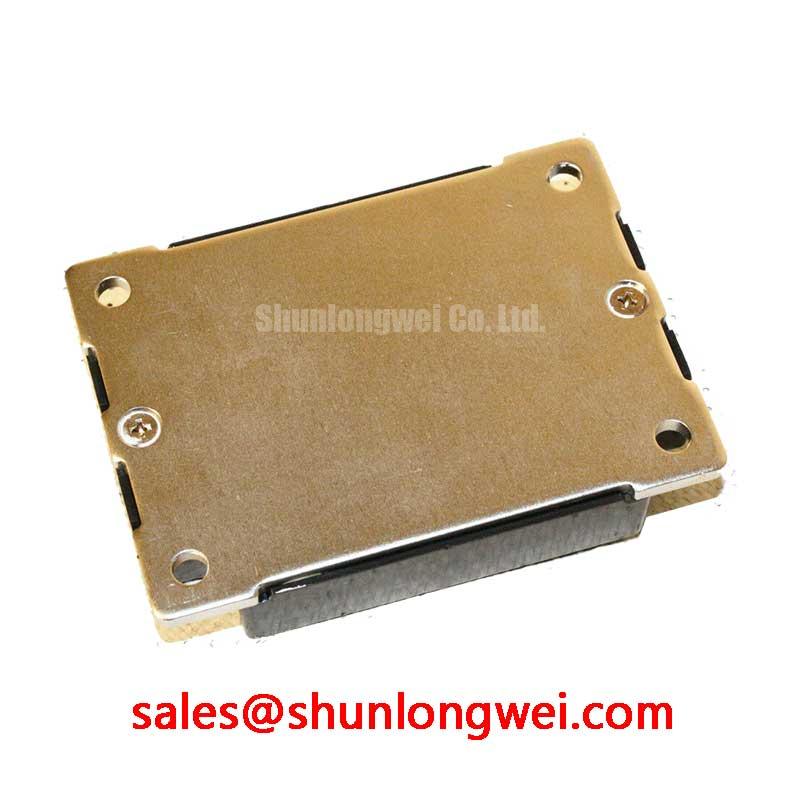
Technical Analysis for System Integration
The engineering value of the CM300DU-24H is centered on its electrical and thermal efficiency. The collector-emitter saturation voltage, VCE(sat), is a critical parameter, specified with a typical value of 2.2V at its nominal current (IC = 300A). This directly impacts conduction losses, which are a major source of heat generation in high-current applications. A lower VCE(sat) means less power is dissipated as heat when the IGBT is active, leading to higher overall system efficiency and reduced demand on the cooling system. Proper thermal management is essential for reliability.
Complementing its electrical characteristics is the module’s thermal resistance from junction to case (Rth(j-c)), specified at 0.11 °C/W for the IGBT part. This value can be thought of as the narrowness of a pipe; a lower thermal resistance is like a wider pipe, allowing heat to flow more easily from the active semiconductor junction to the heatsink. This efficient heat transfer is crucial for maintaining the junction temperature below its 150°C maximum rating, ensuring stable operation and extending the module’s operational lifespan, a key factor in preventing IGBT failures.
Optimized Application Scenarios
The specifications of the CM300DU-24H make it well-suited for several high-power industrial applications:
- AC Motor / Servo Drives: The module’s 300A current rating and low VCE(sat) are ideal for efficiently driving large induction motors, where minimizing heat is critical for reliability in enclosed cabinets.
- Uninterruptible Power Supplies (UPS): Its robust half-bridge configuration and high voltage rating (1200V) provide the necessary performance for the inverter stage of a high-capacity UPS.
- Welding Power Supplies: The device’s ability to handle high peak currents (ICM = 600A) makes it a durable choice for the demanding, pulsed-load conditions found in modern welding equipment.
- High-Frequency Power Conversion: With fast-switching characteristics, this module supports systems that require higher operating frequencies to reduce the size of magnetic components.
This module is an optimal match for industrial systems requiring a durable 1200V/300A half-bridge with balanced efficiency and proven thermal performance.
Key Specifications of the CM300DU-24H
| Absolute Maximum Ratings (Tj = 25°C) | |||
|---|---|---|---|
| Parameter | Symbol | Rating | Unit |
| Collector-Emitter Voltage | VCES | 1200 | V |
| Gate-Emitter Voltage | VGES | ±20 | V |
| Collector Current (DC, Tc = 25°C) | IC | 300 | A |
| Peak Collector Current | ICM | 600 | A |
| Maximum Collector Dissipation (Tc = 25°C) | Pc | 1130 | W |
| Operating Junction Temperature | Tj | -40 to 150 | °C |
| Electrical & Thermal Characteristics (Tj = 25°C) | |||
| Collector-Emitter Saturation Voltage (IC=300A, VGE=15V) | VCE(sat) | 2.2 (Typ), 2.7 (Max) | V |
| Thermal Resistance (Junction to Case, IGBT) | Rth(j-c) | 0.11 (Max) | °C/W |
| Thermal Resistance (Junction to Case, Diode) | Rth(j-c) | 0.21 (Max) | °C/W |
| Isolation Voltage (AC, 1 min.) | Viso | 2500 | Vrms |
Engineer’s FAQ
How does the VCE(sat) of the CM300DU-24H influence thermal management design?
The VCE(sat) value is used to calculate conduction losses (Pcond = VCE(sat) x IC x Duty Cycle). A lower VCE(sat), like the 2.2V typical value for this module, directly reduces the heat generated. This allows for the selection of a smaller, more cost-effective heatsink or provides greater thermal margin in high-ambient-temperature environments.
What are the mounting torque requirements for this module?
According to the datasheet, the recommended mounting torque for both the M6 main terminals and the M6 mounting holes is 3.5 to 4.5 N·m. Applying the correct torque is critical to ensure low thermal contact resistance and prevent mechanical stress on the module.
Does the integrated diode affect switching performance?
Yes, the module contains a discrete super-fast recovery free-wheel diode. Its characteristics, such as reverse recovery time (trr) and forward voltage drop, are optimized to work with the IGBT, minimizing switching losses and protecting the transistor during inductive load switching events. Understanding the behavior of this free-wheeling diode is essential for high-frequency designs.
Is this module suitable for paralleling to achieve higher current?
While the datasheet does not explicitly detail paralleling procedures, it is a common practice in power semiconductor applications. Successful paralleling requires careful attention to symmetrical PCB layout to equalize current sharing, as well as gate drive circuit design to ensure matched switching times. Mismatches can lead to thermal imbalances and reduced system reliability.
The CM300DU-24H provides a solid foundation for industrial power converters by offering a well-documented set of electrical and thermal characteristics. Its construction enables designers to build efficient, high-current switching systems with straightforward thermal management, contributing to long-term operational reliability.