Mitsubishi J2-Q16A-C: High-Gain 600V 15A Darlington Transistor Module for MR-J2 Servo Systems
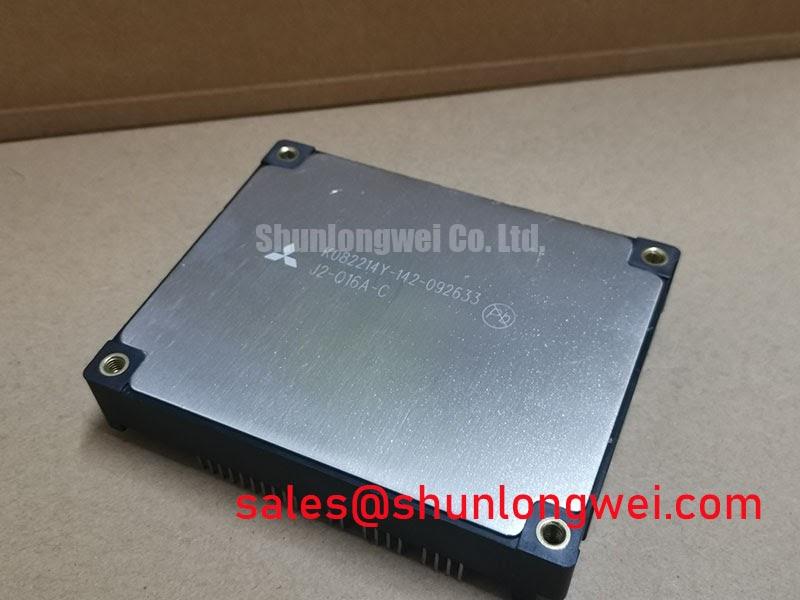
J2-Q16A-C Mitsubishi Darlington Transistor Power Module
Mitsubishi J2-Q16A-C: High-Gain Current Amplification for Precision Servo Switching
The J2-Q16A-C is a specialized NPN Darlington Transistor Power Module engineered by Mitsubishi Electric specifically for high-performance motion control systems. Characterized by its high current gain and robust switching logic, this module serves as the primary power stage in legacy Mitsubishi MR-J2 series servo amplifiers. It integrates multiple Darlington pairs into a single, thermally efficient package to streamline power delivery to brushless DC and synchronous AC motors.
- Core Specifications: 600V Blocking Voltage | 15A Continuous Collector Current | High Current Gain ($h_{FE}$)
- Key Engineering Value: Simplifies driver stage design and provides low-saturation voltage for reduced power dissipation.
One common question engineers encounter when integrating this module into older systems is: “How does the J2-Q16A-C handle the high-frequency PWM switching typical of modern servo controls?” The module is specified with a fast-recovery antiparallel diode and optimized switching times to minimize switching losses at frequencies up to several kilohertz.
Download Official J2-Q16A-C Technical Summary (PDF)
Technical Analysis: Integrated Power Multiplication and Thermal Stability
The Unique Value Proposition (UVP) of the J2-Q16A-C lies in its integrated “Force Multiplication” architecture. Unlike discrete transistors, the Darlington configuration inside the J2-Q16A-C combines two bipolar transistors so that the current amplified by the first is further amplified by the second. This results in an exceptionally high current gain ($h_{FE}$), allowing a very low-power control signal from a microcontroller to switch heavy motor currents with minimal effort.
You can visualize the high current gain of the J2-Q16A-C like a hydraulic power steering system: just as a light touch on the steering wheel can move a multi-ton vehicle using hydraulic assistance, the small base current entering this module triggers a massive flow of electricity through the collector-emitter path. This integration reduces the component count on the PCB and minimizes the risk of parasitic oscillations between the driver and the power stage.
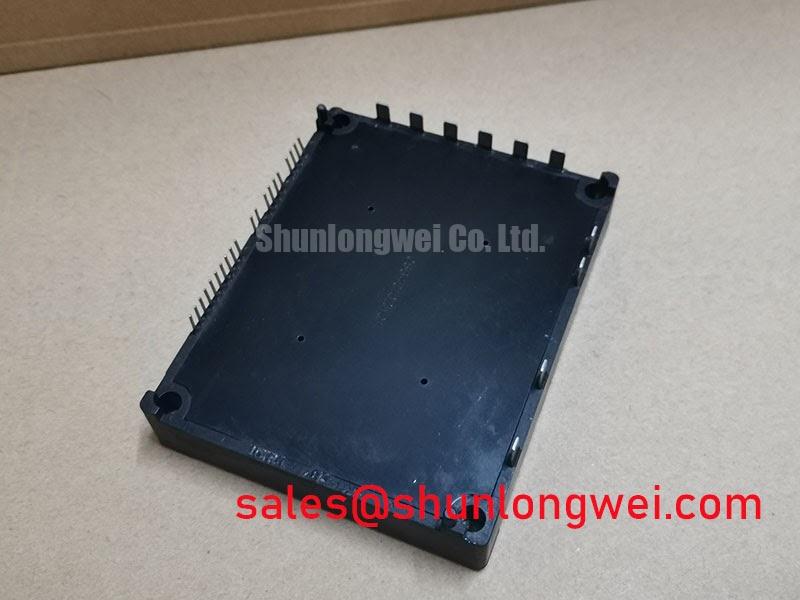
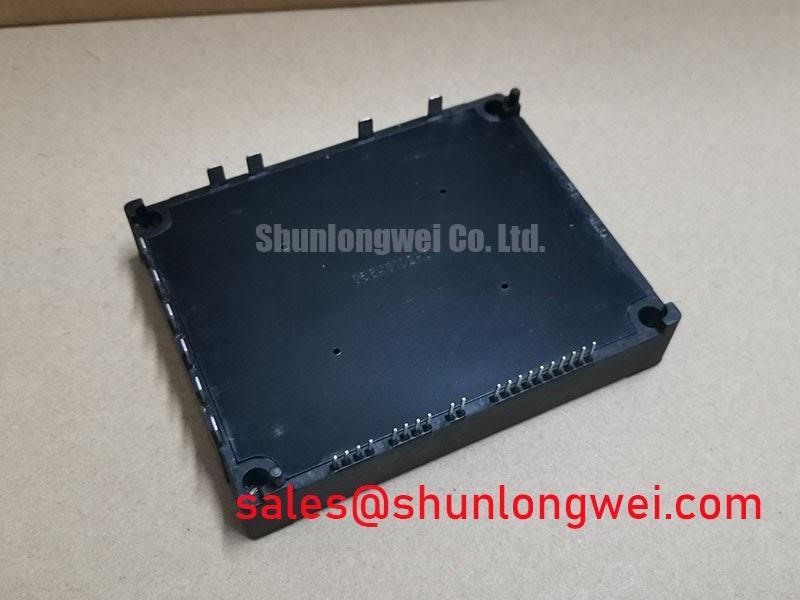
Furthermore, the J2-Q16A-C utilizes an isolated baseplate technology. This ensures that the electrical switching elements are thermally coupled but electrically isolated from the heat sink. This construction is vital for maintaining low junction temperatures during continuous 15A operation, as it facilitates a direct thermal path away from the silicon, protecting the internal Darlington pairs from thermal runaway.
Optimized Industrial Application Scenarios
- Mitsubishi MR-J2 Servo Repair: This is the exact replacement module for MR-J2-10A and 20A amplifiers, maintaining original OEM specifications for timing and current response.
- Small Motor Inverters: Used in general-purpose AC inverters where 600V isolation and medium-current switching are required for compact machinery.
- Industrial Robotics: Ideal for the secondary axes of robotic arms where high-gain switching simplifies the gate drive circuitry and space is at a premium.
- Uninterruptible Power Supplies (UPS): Suitable for low-power inverter stages that require robust transient handling and simple logic interfaces.
Best Match: The J2-Q16A-C is the definitive choice for legacy servo system maintenance where exact electrical matching is required to prevent control loop instability.
J2-Q16A-C Key Specifications
| Parameter Category | Description | Value |
|---|---|---|
| Maximum Ratings | Collector-Emitter Voltage ($V_{CES}$) | 600V |
| Current Ratings | Continuous Collector Current ($I_C$) | 15A (at $T_c=25^circ C$) |
| Electrical Characteristics | Collector-Emitter Saturation Voltage | 2.0V (Typical) |
| Switching Speed | Turn-off Time ($t_{off}$) | 3.0 $mu s$ (Typical) |
| Thermal Management | Baseplate Insulation Voltage | 2500V AC (1 min) |
Engineer’s FAQ for the J2-Q16A-C
Q1: What are the thermal derating requirements for the J2-Q16A-C in high-ambient environments?
A: As ambient temperature rises above $25^circ C$, the collector current must be derated according to the thermal resistance curve. Using high-quality thermal interface material (TIM) is essential to prevent junction failures. For more on this, refer to our guide on thermal design and Zth curves.
Q2: Can the J2-Q16A-C be replaced with a modern IGBT module?
A: While IGBTs offer similar power ratings, the J2-Q16A-C is a Darlington transistor module. The gate drive requirements for an IGBT are voltage-driven, whereas the Darlington requires a current-driven base signal. A direct swap without modifying the control circuitry is not recommended.
Q3: What is the significance of the “C” suffix in the model number?
A: In Mitsubishi’s nomenclature for this series, the suffix usually denotes specific terminal configurations or minor revisions in the internal protection logic tailored for particular servo amplifier batches.
Q4: How should terminal torque be handled during installation?
A: Excessive torque can crack the internal ceramic substrate, while insufficient torque leads to high contact resistance and overheating. Always follow the manufacturer’s torque specifications (typically 1.5 to 2.0 N·m for M4 terminals). You can learn more about terminal torque risks here.
Professional Assessment
The J2-Q16A-C remains a cornerstone component for the maintenance and longevity of legacy Mitsubishi motion control infrastructure. By providing a high-gain, integrated power switching solution with 600V isolation, it allows engineers to sustain high-uptime environments without the need for total system overhauls. Its proven Darlington architecture continues to offer a reliable balance of simple control interfaces and robust thermal performance.