Mitsubishi TM150SA-6 Thyristor Module: A Technical Review
Mitsubishi TM150SA-6 Thyristor Module | 600V 150A
Introduction and Core Highlights
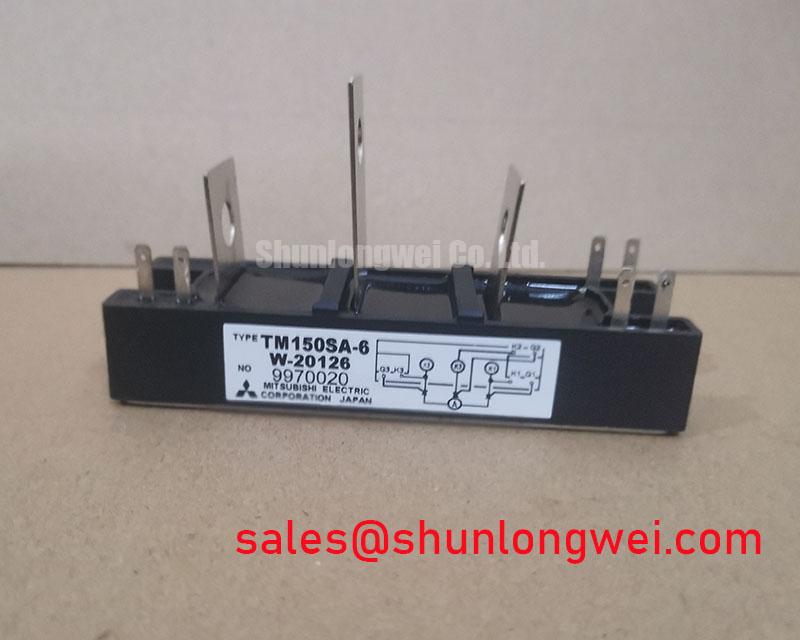
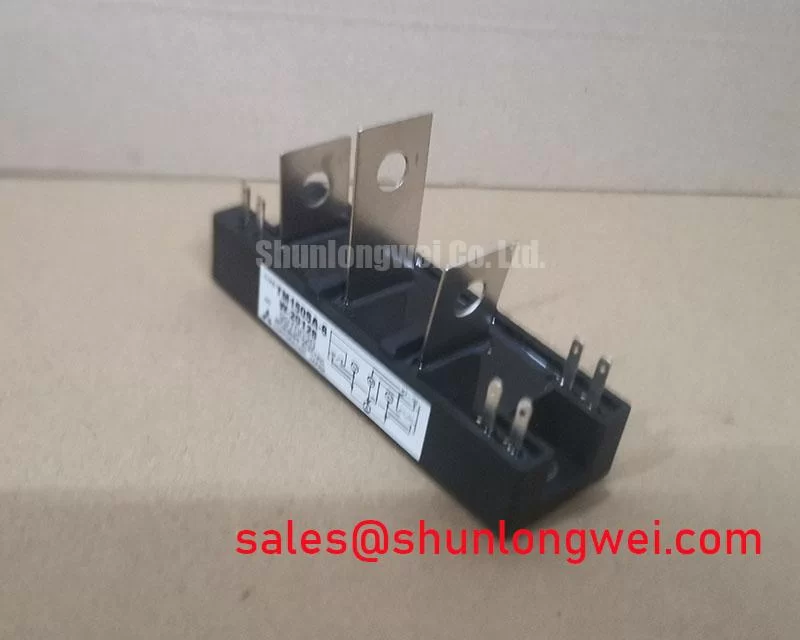
The Mitsubishi TM150SA-6 is a G-Series three-phase bridge thyristor module that integrates six thyristors into a single, electrically isolated package. This component offers a robust and streamlined solution for AC power control, featuring a high isolation voltage that enhances system safety and reliability. By consolidating the rectification stage, it simplifies the design and assembly of medium-power industrial converters. This module is particularly effective for systems where controlled AC-to-DC conversion is a primary requirement.
- Core Specifications: 600V VDRM | 150A IT(AV) | 2500V Viso
- Key Advantages: Simplifies thermal management with an isolated baseplate, reduces component count and assembly complexity.
- Primary Function: Provides reliable, phase-controlled rectification for three-phase AC power sources.
Download the Official TM150SA-6 Datasheet (PDF)
Technical Analysis of Core Features
The engineering value of the TM150SA-6 module is centered on its integration and robust isolation. The single-module approach for a three-phase bridge significantly reduces the complexity of system assembly compared to using six discrete thyristors. This configuration minimizes the number of electrical connections and mounting points, which in turn reduces potential points of failure and simplifies the busbar or PCB layout. The result is a more compact and mechanically stable power stage, a critical factor in systems subject to vibration.
A defining characteristic specified in the datasheet is the 2500V RMS isolation voltage (Viso) between the terminals and the copper baseplate. This high level of electrical isolation is fundamental to system safety and reliability. You can think of the module’s isolated baseplate as a durable electrical firewall; it ensures that the high potential of the main power circuit is safely contained and cannot conduct to the system’s grounded chassis or heatsink. This allows for the direct mounting of multiple modules onto a common heatsink without the need for additional, often fragile, insulating pads, thereby improving thermal transfer and simplifying mechanical design.
Optimized Application Scenarios
The characteristics of the TM150SA-6 make it a strong fit for several medium-power industrial applications requiring controlled rectification.
- AC Motor Starters and Drives: The module’s three-phase configuration is the standard topology for the front-end converter in variable frequency drives (VFDs) and soft starters. Its 150A current rating is suitable for controlling industrial motors in the 30-60 kW range, depending on voltage and load.
- Industrial Power Supplies: For high-current DC power systems, this module serves as a reliable AC-to-DC controlled rectifier, allowing for voltage regulation at the input stage.
- Industrial Heater and Lighting Control: The phase-angle control capability of thyristors allows for precise power regulation to resistive loads like industrial heating elements or high-intensity lighting systems.
- Battery Charging Systems: The TM150SA-6 can be used to build powerful and controllable chargers for large industrial battery banks, where managing the charge current is essential.
This module is best matched for industrial AC-DC converters that require a robust, isolated, and easy-to-integrate phase control solution for currents up to 150A.


Key Specifications of the TM150SA-6
| Absolute Maximum Ratings (Tc=25°C unless otherwise specified) | |
|---|---|
| Repetitive Peak Reverse Voltage (VRRM) | 600V |
| Repetitive Peak Off-State Voltage (VDRM) | 600V |
| Average On-State Current (IT(AV)) | 150A |
| Surge Non-Repetitive On-State Current (ITSM) | 2500A (50Hz), 2700A (60Hz) |
| I²t for Fusing | 31200 A²s |
| Isolation Voltage (Viso) | 2500V (AC, 1 minute) |
| Operating Junction Temperature (Tj) | -40 to +125°C |
| Electrical & Thermal Characteristics | |
| Peak On-State Voltage (VTM) | Max 1.6V (at 470A) |
| Gate Trigger Current (IGT) | Max 150mA |
| Thermal Resistance (Rth(j-c)) per arm | Max 0.22 °C/W |
| Mounting Torque (Main Terminals) | 2.5 ~ 3.5 N·m |
| Mounting Torque (Module Mounting) | 3.9 ~ 5.9 N·m (M6 Screws) |

Engineer’s FAQ for the TM150SA-6
1. What is the recommended mounting procedure to ensure proper thermal performance?
To achieve the specified thermal resistance, ensure the heatsink surface is flat and clean. Apply a thin, uniform layer of thermal compound. Secure the module using M6 screws, tightening them evenly to a final torque between 3.9 and 5.9 N·m as specified in the datasheet. This ensures optimal thermal contact without inducing mechanical stress on the module’s baseplate.
2. How is the thermal resistance value of Rth(j-c) = 0.22 °C/W used in thermal design?
The thermal resistance from junction to case, Rth(j-c), quantifies how effectively heat moves from the silicon thyristor die to the module’s baseplate. This value is a fundamental parameter for heatsink calculation. By determining the power dissipation of each thyristor, you can use this value along with the thermal resistance of the heatsink to calculate the expected junction temperature, ensuring it remains within the safe operating limit of 125°C. For more information on this topic, consider reading our guide on mastering thermal design.
3. Can this three-phase module be used for a single-phase AC application?
Yes, it is possible to use the TM150SA-6 in single-phase bridge or half-bridge configurations by utilizing only two or four of the six internal thyristors. While electrically functional, this approach may not be the most cost-effective or space-efficient solution compared to a dedicated single-phase module. The device is fully optimized for three-phase applications where all six devices are utilized.
4. What is the purpose of the isolated baseplate in power modules?
The isolated baseplate provides high dielectric strength between the electrically active semiconductor components and the metal mounting surface. This is a crucial safety feature in power semiconductors, allowing the module to be directly mounted onto a grounded heatsink. It simplifies the overall system design by eliminating the need for separate insulating layers, which can impede heat transfer and add complexity.
System Integration and Design Enablement
The Mitsubishi TM150SA-6 provides a durable and electrically isolated foundation for controlled three-phase power rectification. Its integrated design and standardized package empower engineers to develop reliable medium-power converters with simplified thermal management, reduced assembly time, and enhanced safety, streamlining the path from design to deployment in demanding industrial environments.