NEC NL8060BC26-30D: A Serviceable Industrial Display Engineered for Longevity
NEC NL8060BC2-30D a-Si TFT-LCD Module Technical Review
High-Reliability 10.4-inch SVGA Display with Serviceable Design
The NL8060BC26-30D is an amorphous silicon TFT-LCD module engineered for sustained performance in industrial applications. It delivers crisp, clear visuals through its 10.4-inch panel, combining a standard SVGA (800×600) resolution with features that prioritize simplified system integration and long-term serviceability. The module’s key engineering value is its focus on operational longevity, highlighted by its user-replaceable backlight system and an integrated LED driver. This approach significantly extends the usable life of the equipment it’s designed into.
* **Core Specifications**: 10.4″ Diagonal | 800×600 SVGA | 400 cd/m² Luminance
* **Key Advantages**: Integrated LED driver reduces external component count. User-replaceable backlight assembly minimizes downtime and total cost of ownership.
* **Integration Focus**: The LVDS interface and built-in driver answer the need for a straightforward, reliable display solution in long-lifecycle equipment.
Download Official Datasheet (PDF)
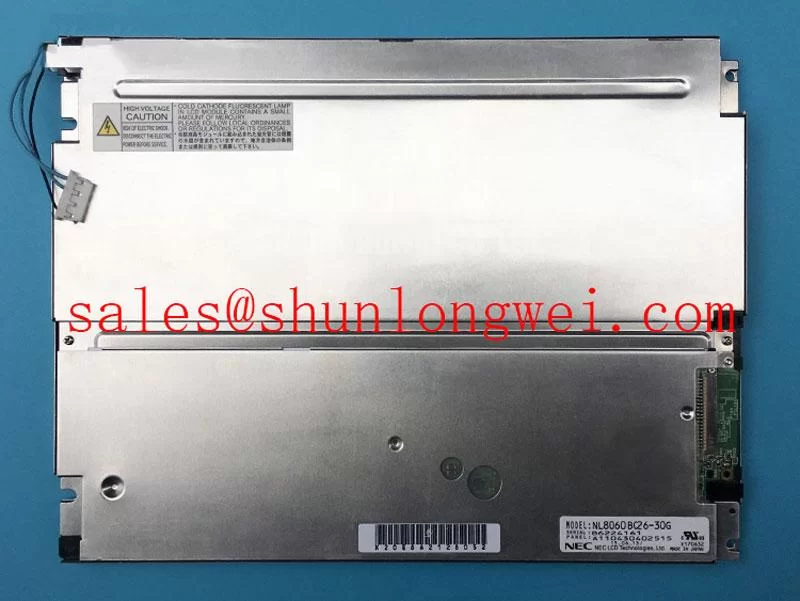
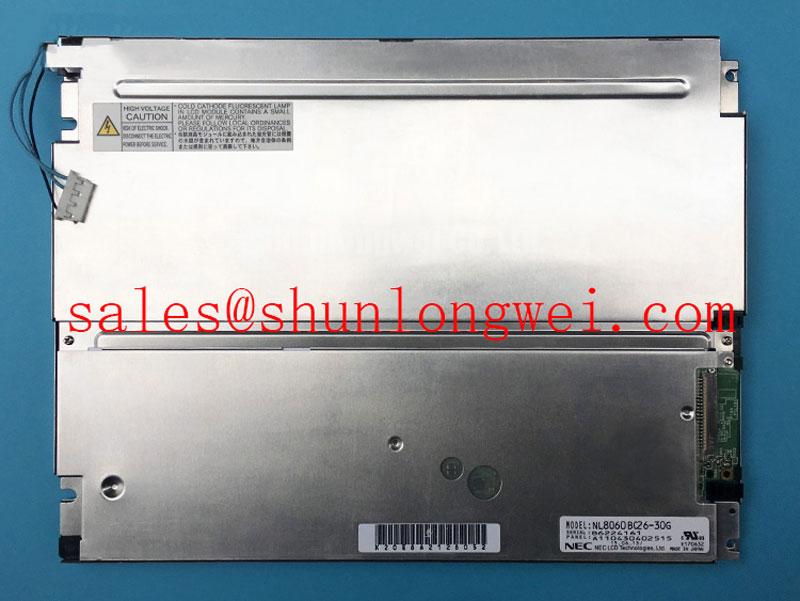
Engineered for Longevity and Simplified Design
A standout feature documented in the datasheet is the module’s serviceable backlight. Unlike many displays where a failing backlight necessitates a full panel replacement, this module allows for the lamp unit to be replaced independently. This dramatically reduces maintenance costs and extends the operational lifetime of the host system, a critical factor in industrial machinery and medical devices where recertification is costly and complex. The design directly addresses the long-term reliability concerns of system integrators.
Further streamlining the engineering process, the NL8060BC26-30D incorporates a built-in LED driver. Think of this integrated driver as a built-in power adapter for the backlight; it eliminates the need for an external control board, saving physical space within an enclosure and reducing the bill of materials. This not only simplifies the electrical interface design but also removes a potential external failure point, contributing to a more robust and compact final product. You can learn more about the importance of such components in our guide to LCD core technology.
Optimized Application Scenarios
The specific feature set of the NL8060BC26-30D makes it a strong candidate for several demanding applications:
- Industrial HMI Panels: The standard SVGA resolution and 10.4″ size are perfect for direct replacement or new designs in factory automation and process control, where the replaceable backlight ensures longevity.
- Medical Monitoring Systems: A typical luminance of 400 cd/m² and a 600:1 contrast ratio provide the necessary clarity for displaying vital patient data, while its serviceability is crucial for hospital equipment.
- Test & Measurement Equipment: Its reliable LVDS interface and integrated driver allow for easy integration into specialized instruments that require a stable, long-life display.
- Legacy System Upgrades: The module provides a modern, LED-backlit solution for older systems that used CCFL displays, offering better power efficiency and a longer lifespan.
This display’s focus on serviceability and integrated design makes it an optimal match for equipment where long-term operational availability is a primary design requirement.
Key Technical Specifications
| Parameter | Specification |
|---|---|
| Screen Size | 10.4 inches (26 cm) |
| Resolution | 800 (RGB) x 600 [SVGA] |
| Display Technology | Amorphous Silicon TFT-LCD, Normally White, Transmissive |
| Luminance | 400 cd/m² (Typical) |
| Contrast Ratio | 600:1 (Typical) |
| Viewing Angle | 80°/80°/80°/60° (L/R/U/D) (Typ., CR≥10) |
| Interface | LVDS (1 ch, 6-bit), 20-pin connector |
| Operating Temperature | -10°C to 70°C |
| Storage Temperature | -20°C to 80°C |
| Module Dimensions | 243.0(W) x 185.1(H) x 11.0(D) mm |
Engineer’s Frequently Asked Questions
1. What is the primary benefit of the replaceable backlight system on the NL8060BC26-30G?
The primary benefit is a significantly extended operational life for the entire system. Backlights have a finite lifespan; by making them replaceable, the display’s service life is not limited by the backlight’s longevity. This is critical for reducing the total cost of ownership in industrial and medical applications.
2. Does this module require an external LED driver?
No. The datasheet confirms that the NL8060BC26-30D includes an integrated LED driver circuit. This simplifies system design by reducing the need for external components, saving space and potential points of failure.
3. What are the key considerations for interfacing with the LVDS connector?
Engineers should ensure their controller board’s LVDS transmitter is compatible with a 1-channel, 6-bit configuration. Careful attention must be paid to the pin assignments specified in the datasheet to ensure correct power, ground, and data line connections. Signal integrity is also key; maintaining proper impedance and minimizing trace lengths is essential for reliable data transmission.
4. How does the anti-glare surface treatment impact usability?
The anti-glare surface treatment diffuses ambient light, reducing specular reflections. This improves readability in brightly lit environments, such as factory floors or control rooms, minimizing operator eye strain and ensuring critical information is clearly visible from various angles. Understanding these factors is part of designing for vibration and shock resistance for industrial displays.
Enabling Robust and Sustainable System Design
This TFT-LCD module provides a robust foundation for systems that require reliable visual output over many years of service. By combining a standard, proven interface and resolution with forward-thinking features like a replaceable backlight and an integrated driver, the NL8060BC26-30D empowers engineers to create displays that are not only easy to integrate but also economical to maintain throughout their entire lifecycle. It is a component choice that reflects a commitment to both performance and long-term operational sustainability.