PHT4008 Technical Review: A Robust Thyristor for High-Surge Applications
PHT4008 800V / 400A Thyristor Module for High Surge Apps
Introduction and Core Highlights
The PHT4008 from SanRex (formerly NIEC) is a thyristor module engineered for robust control in high-power AC line frequency applications. Its defining feature is an exceptional surge current capability, providing a high degree of survivability in systems with large inrush events. This module allows engineers to implement reliable and thermally efficient power control stages for the most demanding industrial loads.
- Core Specifications: 800V VDRM/VRRM | 400A IO(AV) | 7500A ITSM
- Key Engineering Advantages: Withstands massive inrush currents, reducing failure risk. The isolated baseplate simplifies mounting and improves thermal transfer.
This component is an excellent technical match for systems where uncontrolled surge currents, such as those from large motors or transformers, pose a significant design challenge.
Download the PHT4008 Official Datasheet (PDF)
Technical Analysis: Engineering for Robustness
A key performance metric of the PHT4008 is its non-repetitive surge on-state current (ITSM) rating of 7500A. This value represents the module’s ability to endure a massive, single-pulse current spike without degradation. This is critical for controlling inductive loads like large AC motors, which can draw immense current for brief periods during startup. The high ITSM rating provides a substantial safety margin, directly contributing to system longevity and field reliability.

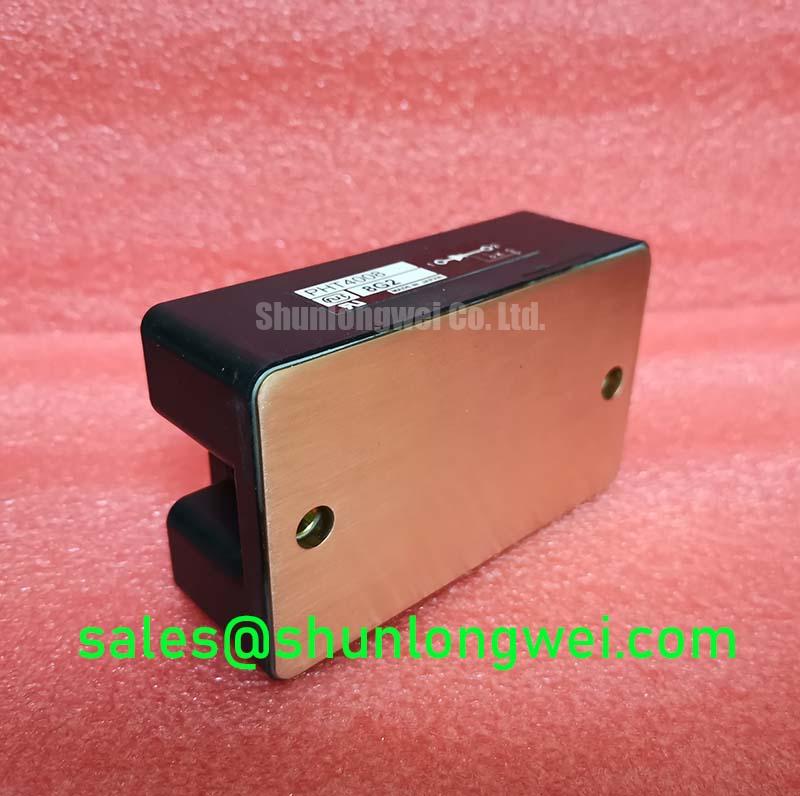
Effective thermal management is equally important for high-current devices. The module features a junction-to-case thermal resistance (Rth(j-c)) of just 0.12 °C/W. You can think of thermal resistance like the width of a pipe for heat; a lower value signifies a wider pipe, allowing heat to flow easily away from the active silicon junction to the module’s baseplate. This efficiency is enhanced by the module’s isolated base, which provides 2000V of isolation. This design eliminates the need for external insulating pads, which can add thermal resistance and complexity, ensuring a more direct and effective path to the heatsink.
Optimized Application Scenarios
The PHT4008’s specifications make it a strong candidate for several specific industrial applications:
- AC Motor Soft Starters: Its 7500A ITSM rating directly addresses the high inrush currents typical of large induction motors, preventing device failure during startup sequences.
- Industrial Heater & Furnace Control: The high average current rating of 400A enables precise phase-angle control for high-power resistive heating elements, ensuring stable temperature regulation.
- High-Power Controlled Rectifiers: Used as the core control element in front-end rectifiers for battery chargers and industrial power supplies where output voltage and current must be tightly regulated.
- Static VAR Compensators (SVC): In power quality systems, this thyristor can switch capacitor or reactor banks to stabilize the grid, relying on its high voltage and current ratings.
This module is best matched for AC line frequency systems where survivability against surge currents and long-term thermal stability are primary design requirements.
Key Specifications of the PHT4008
| Absolute Maximum Ratings (Tj = 25°C unless otherwise specified) | |
|---|---|
| Repetitive Peak Off-State/Reverse Voltage (VDRM/VRRM) | 800V |
| Average Rectified Output Current (IO(AV), Tc=63°C) | 400A |
| RMS On-State Current (IT(RMS)) | 630A |
| Surge On-State Current (ITSM, 50Hz Half Sine, 1 Pulse) | 7500A |
| I²t for fusing (2ms to 10ms) | 281000 A²s |
| Operating Junction Temperature (Tjw) | -40 to +125°C |
| Isolation Voltage (Viso, Baseplate to Terminals, AC 1 min) | 2000V |
| Thermal and Mechanical Characteristics | |
| Thermal Resistance, Junction-to-Case (Rth(j-c)) | 0.12 °C/W |
| Thermal Resistance, Case-to-Sink (Rth(c-f), with compound) | 0.05 °C/W (Typ.) |
| Mounting Torque, Case (M6 Screw) | 2.5 to 3.5 N·m |
| Mounting Torque, Terminals (M8 Screw) | 9.0 to 10.0 N·m |
Engineer’s FAQ
1. What is the correct mounting procedure for the PHT4008 to ensure proper thermal performance?
The datasheet specifies a mounting torque of 2.5 to 3.5 N·m for the M6 mounting screws. It is essential to apply a thin, uniform layer of thermal grease to the module’s baseplate before mounting to a flat, clean heatsink surface. This practice minimizes the case-to-sink thermal resistance, ensuring efficient heat dissipation.
2. How does the isolated base of the PHT4008 benefit my design?
The integrated 2000V isolated base simplifies mechanical assembly and improves thermal transfer. It eliminates the need for separate, fragile insulating pads (like mica or silicone) between the module and the heatsink. This reduces the bill of materials, lowers assembly complexity, and creates a more reliable and direct thermal path, which is a key factor in achieving long-term system reliability.
3. Can the PHT4008 be used for high-frequency switching applications like in a modern SMPS?
No, the PHT4008 is a phase-control thyristor (SCR). Its turn-off characteristics are not suitable for high-frequency switching. It is designed specifically for line frequency applications (50/60Hz), such as AC motor control and power rectification, where the line voltage reversal naturally turns the device off. For high-frequency designs, a different power semiconductor like an IGBT or MOSFET would be required.
Enabling Reliable Power Control
The PHT4008 thyristor module provides a direct path to building dependable and thermally stable power control systems. By integrating a high-current thyristor with an electrically isolated base and providing exceptional surge survivability, it empowers engineers to manage demanding industrial loads with confidence and a simplified mechanical design.