Pro-face GP470-EG11: A Technical Guide to Sustaining Legacy Industrial Systems
Pro-face GP470-EG11 HMI for Industrial System Longevity
Introduction & Core Highlights
The Pro-face GP470-EG11 is an operator interface engineered for sustained performance in established industrial automation systems. This Human-Machine Interface (HMI) centers on providing a clear, durable, and reliable control point for legacy equipment, thereby extending the operational life of valuable machinery. Its architecture is focused on delivering unambiguous operational data and dependable input, making it a strategic component for maintaining system continuity. This focus answers the critical engineering question of how to support vital, time-tested automation without expensive system-wide retrofits.
* **Core Specifications**: 8.9-inch Monochrome STN Display | Analog Resistive Touchscreen | 85-132 VAC Input
* **Key Advantages**: High-contrast readability in varied lighting, flawless operation with gloved hands.
* **Intended Function**: Serves as a direct-fit interface for older CNC machines, process control skids, and production lines.
Download the GP-470/570 Series User Manual (PDF)
Technical Analysis for Sustained Operations
The design of the GP470-EG11 is rooted in industrial pragmatism. A core element is its Super-Twisted Nematic (STN) monochrome LCD. This technology provides high-contrast visuals that remain clear across a wide spectrum of industrial lighting conditions, from dimly lit control rooms to areas with bright overhead lights. The efficiency of the monochrome display minimizes heat generation, an important factor for long-term stability inside sealed control panels and contributing to a longer component lifespan.

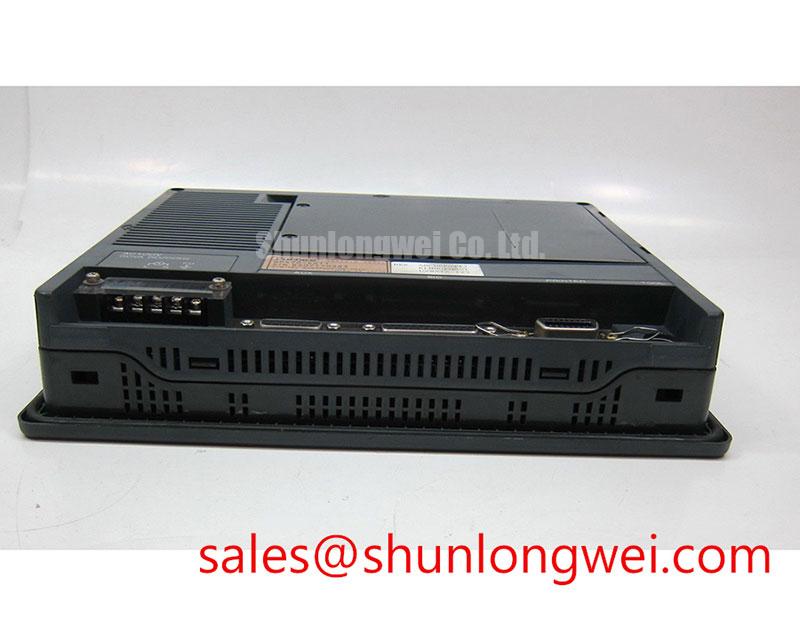
Interaction with the HMI is handled by an analog resistive touchscreen. This technology registers input based on pressure, allowing it to function correctly with gloved hands, a stylus, or other objects. The importance of this can be compared to using a mechanical button versus a smartphone’s touchscreen; the resistive panel acts like the reliable button, guaranteeing a registered press regardless of whether the operator is wearing thick safety gloves or if the screen has surface contaminants. This inherent resilience is critical in environments where personal protective equipment is mandatory or where dust and moisture are present.
Optimized Application Scenarios
The specific characteristics of the GP470-EG11 make it a valuable component for maintaining existing industrial infrastructure.
* **CNC Machine Controls**: For mechanically sound but electronically aging CNC mills and lathes, it can serve as a replacement for a failed operator panel, preserving the original control logic and avoiding extensive re-engineering.
* **Process Control Skids**: In self-contained systems like chemical dosing or water treatment units, this HMI provides a dependable, standalone control interface suited for deployment in varied field locations.
* **Packaging and Material Handling Lines**: It offers a straightforward interface for monitoring, recipe selection, and diagnostics on established packaging lines, where its durability withstands continuous vibration.
* **Legacy System Support**: Its primary value lies in asset management, allowing facilities to maintain proven automation systems without the disruption of a complete overhaul.
This HMI is best matched for applications where operational continuity and proven reliability take precedence over advanced graphical capabilities.
Key Specifications of the GP470-EG11
| Feature | Specification |
|---|---|
| Display Type | Monochrome STN LCD |
| Screen Size | 8.9 inches |
| Touch Panel | Analog Resistive Film |
| Input Voltage | 85 to 132 VAC, 50/60 Hz |
| Power Consumption | 50 VA maximum |
| Operating Temperature | 0 to 50°C (32 to 122°F) |
| Operating Humidity | 20% to 85% RH (non-condensing) |
| Dimensions (W x H x D) | 274 mm x 216 mm x 56.5 mm |
Engineer’s FAQ
**1. Can the GP470-EG11 be used as a direct replacement for other HMIs?**
The GP470-EG11 is often used to replace failed operator panels on older equipment. However, engineers must verify panel cutout dimensions, communication protocols, and power supply requirements. For example, migrating from this AC-powered unit to a newer DC-powered model like the GP4000 series would require electrical and mechanical modifications.
**2. What are the key mounting and installation considerations?**
This unit is designed for vertical mounting in a solid panel. It is crucial to ensure the installation gasket is in good condition to protect the internal electronics from industrial contaminants like oil and dust. Proper sealing is essential for maintaining reliability on the factory floor.
**3. Why use a monochrome display in a modern system?**
A monochrome STN display offers specific engineering advantages. Its high contrast provides excellent readability in diverse lighting, and its lower power consumption reduces thermal load within a control cabinet. For displaying critical process data, status indicators, and alarms, clarity and reliability often outweigh the need for full color. More information on modern industrial display technologies can be found in resources about LCD core technology.
**4. How does the resistive touchscreen benefit industrial use?**
The analog resistive touchscreen works by sensing pressure, which means it functions reliably with gloved hands or a stylus. Unlike capacitive screens that require direct skin contact, this technology is immune to interference from surface moisture or dust, ensuring consistent input registration in demanding industrial settings. This is a key topic in designing a smart factory HMI.
Enabling System Durability
The Pro-face GP470-EG11 provides a focused solution for maintaining the integrity of established automation systems. Its design prioritizes durability and functional clarity, delivering a reliable interface that supports long-term operational goals. This HMI allows engineers to preserve the value of proven machinery by providing a robust and practical control component.