Semikron SKKR400/0.2-BVR: High-Efficiency 400A 200V Rectifier Diode Module for Industrial Power Solutions
Semikron SKKR400/0.2-BVR Rectifier Diode Module | 400A 200V High-Power Solution
Industrial Rectification Redefined for Efficiency and Reliability
The SKKR400/0.2-BVR is a high-performance rectifier diode module engineered by Semikron for low-voltage, high-current applications. This robust module is characterized by its exceptional conduction efficiency and thermal stability, serving as a critical building block in power conversion systems. With a repetitive peak reverse voltage ($V_{RRM}$) of 200V and an average forward current ($I_{FAV}$) of 400A, it is specifically optimized for secondary side rectification where minimizing voltage drop is paramount for system performance.
- Core Specifications: 200V | 400A | Low $V_F$ (Forward Voltage)
- Key Advantages: Significantly reduced thermal overhead through optimized conduction losses and simplified mechanical integration via the BVR baseplate design.
- Engineering Intent: This module addresses the critical challenge of high-current thermal management, allowing designers to utilize smaller heatsinks while maintaining a high safety margin in continuous operation.
Download Official Datasheet (PDF)
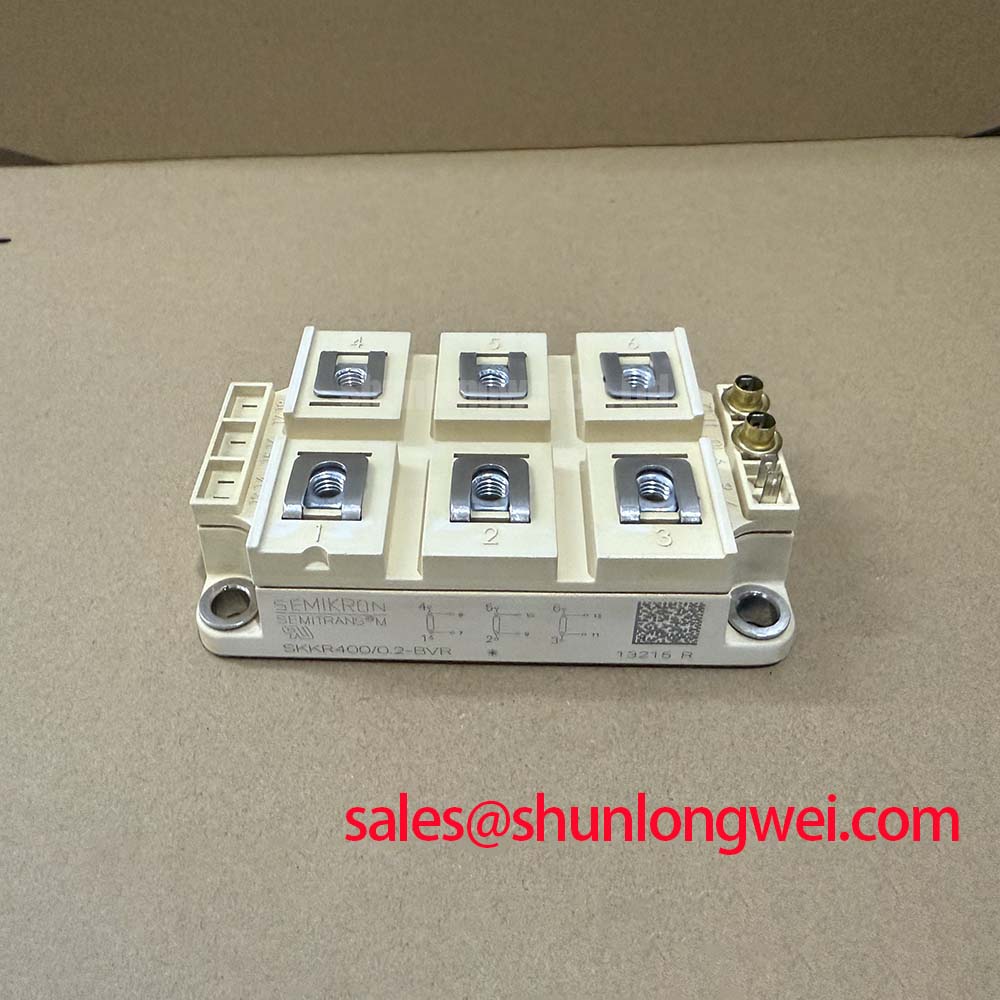
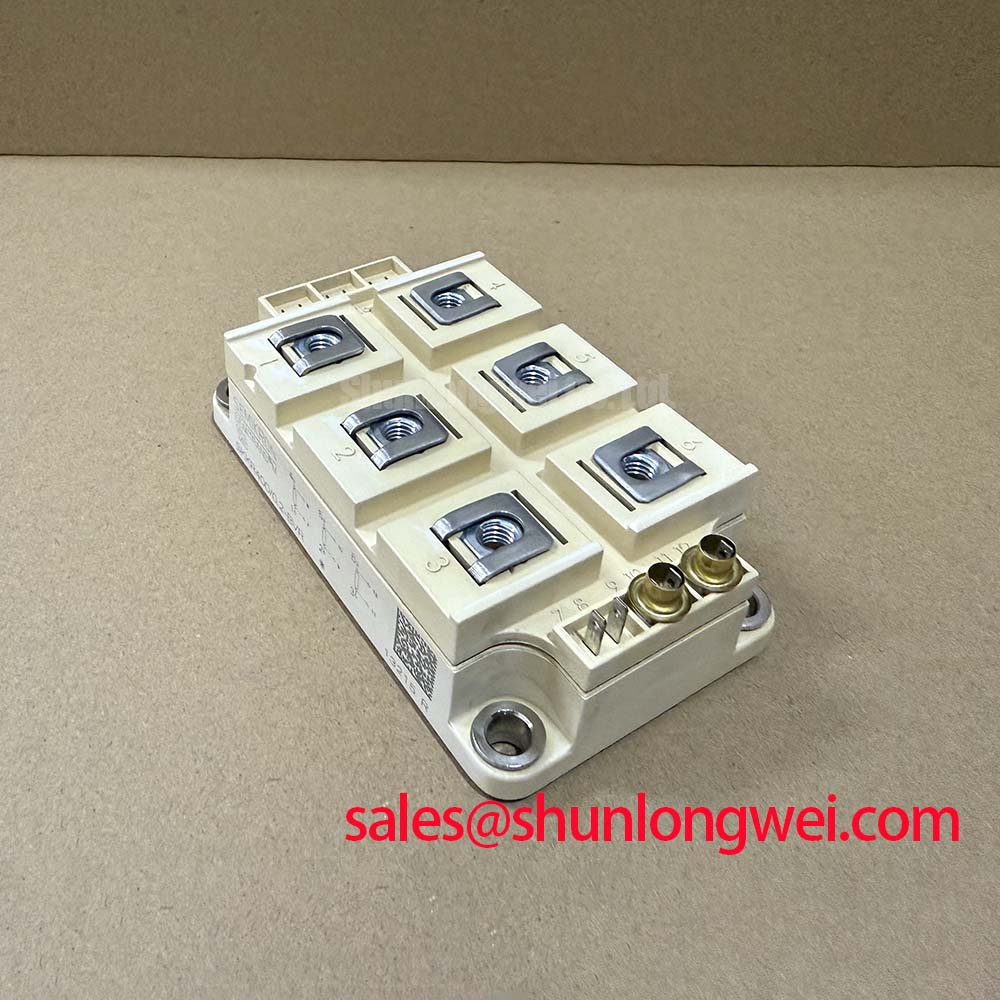
Technical Analysis of Conduction and Thermal Performance
The engineering value of the SKKR400/0.2-BVR lies in its mastery of the trade-off between current density and conduction losses. In high-power power semiconductors, the forward voltage drop ($V_F$) is the primary source of heat generation. By optimizing the silicon die for a 200V rating, Semikron has achieved a lower $V_F$ compared to standard 600V or 1200V diodes. This direct reduction in power dissipation ($P = I times V_F$) translates to a more efficient power supply and lower operating temperatures for surrounding components.
Thermal management is the second pillar of this module’s design. The thermal resistance junction-to-case ($R_{th(j-c)}$) is kept exceptionally low to ensure that heat generated at the silicon level is efficiently moved to the cooling surface. To visualize this, imagine thermal resistance as the diameter of a drainage pipe; a lower resistance value is like a wider pipe, allowing heat to “flow” away from the sensitive semiconductor junction much faster. This prevents localized hotspots that could lead to premature failure, a topic often explored in root cause analysis of power component failures.
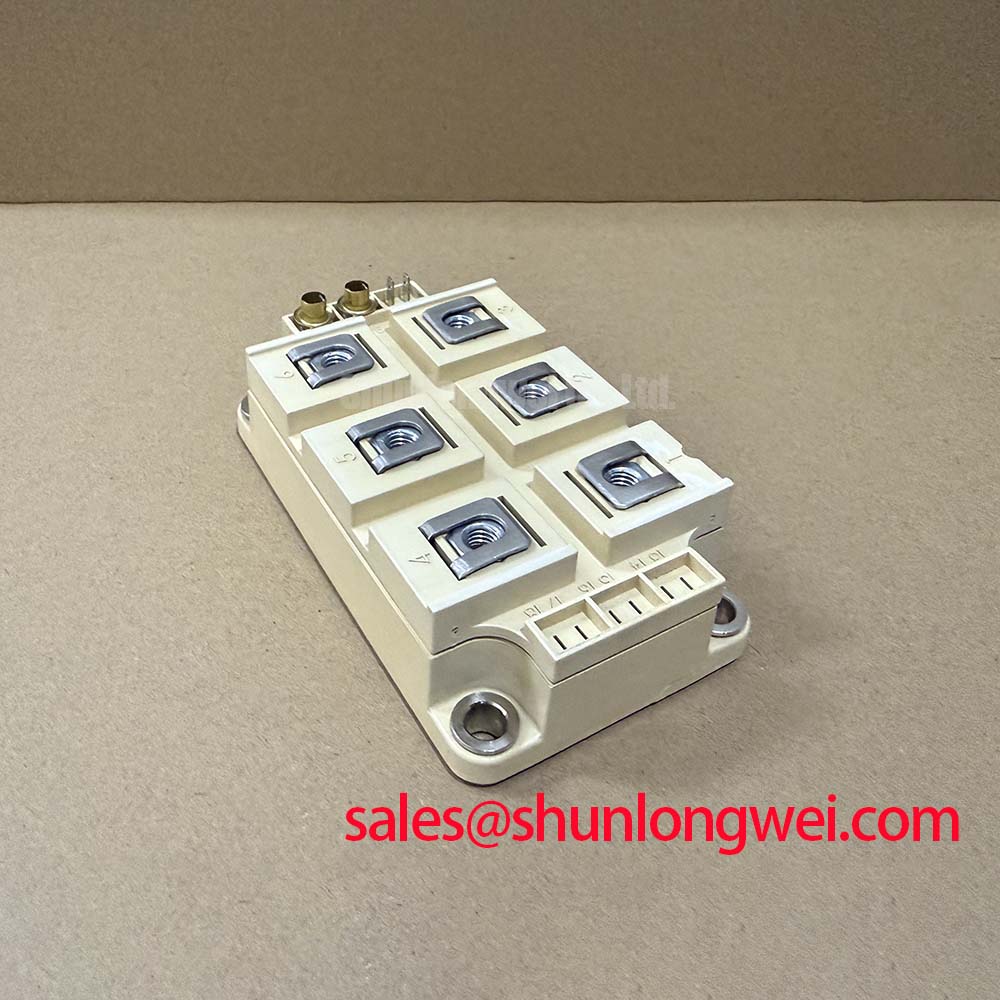
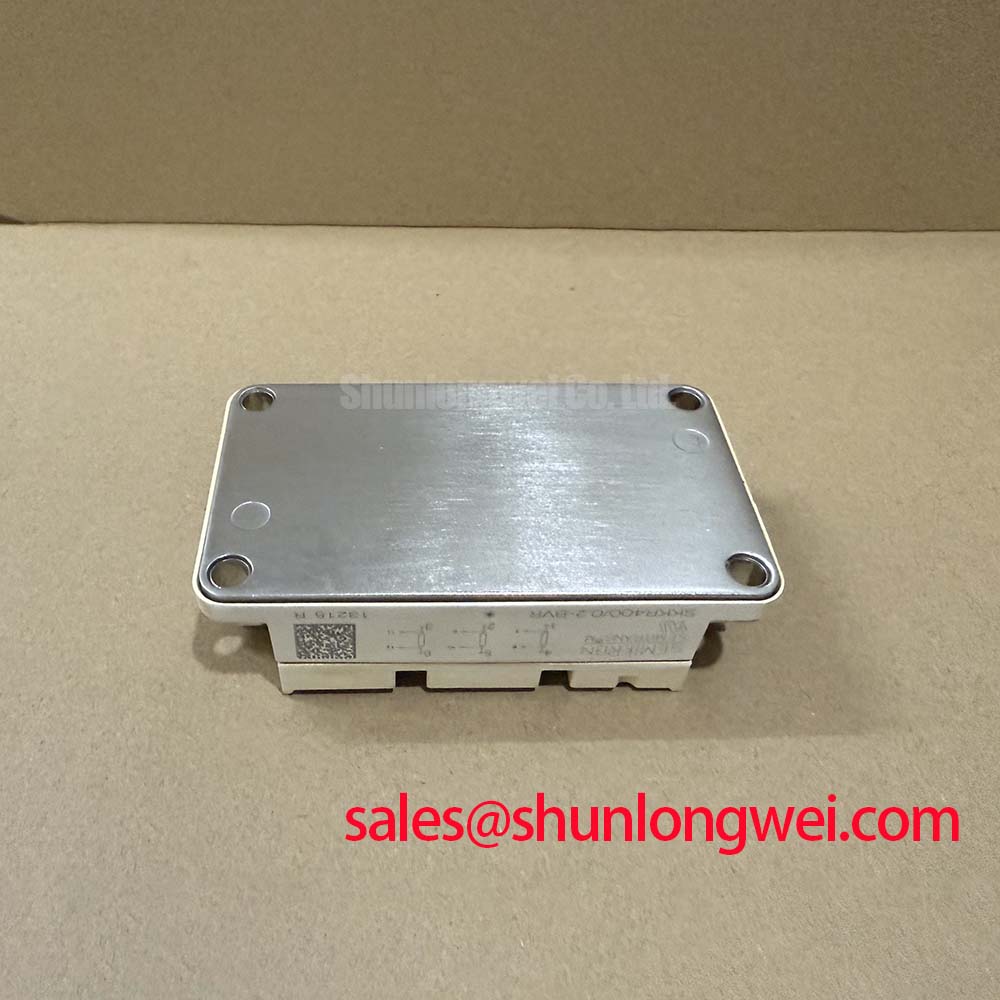
Optimized Application Scenarios
The SKKR400/0.2-BVR is best suited for environments requiring massive current throughput at relatively low voltages. Its design characteristics make it ideal for the following applications:
- Industrial Welding Power Supplies: High surge current capability ($I_{FSM}$) allows the module to withstand the erratic load profiles typical of arc welding equipment.
- Battery Charging Systems: For large-scale EV or industrial forklift chargers, the low conduction losses of the SKKR400/0.2-BVR improve overall energy conversion efficiency.
- Electroplating Rectifiers: Continuous 400A operation ensures reliable performance in high-duty cycle chemical deposition processes.
- High-Current Low-Voltage Power Supplies: Ideal for secondary rectification in switch-mode power supplies (SMPS) for heavy industrial machinery.
Best Match Conclusion: For systems requiring 400A rectification below 200V, the SKKR400/0.2-BVR offers the best balance of low conduction loss and thermal ruggedness.
Critical Technical Specifications
| Parameter Group | Symbol | Value | Unit |
|---|---|---|---|
| Absolute Maximum Ratings | $V_{RRM}$ (Repetitive Peak Reverse Voltage) | 200 | V |
| $I_{FAV}$ (Average Forward Current) @ $T_c=85^circ C$ | 400 | A | |
| $I_{FSM}$ (Surge Forward Current) @ 10ms | 8000 | A | |
| Electrical Characteristics | $V_F$ (Typical Forward Voltage) @ $I_F = 400A$ | 1.15 | V |
| $I_R$ (Peak Reverse Current) @ $V_{RRM}$ | < 50 | mA | |
| Thermal Properties | $R_{th(j-c)}$ (Junction to Case) | 0.12 | K/W |
| $T_j$ (Max Junction Temperature) | 150 | °C |
Engineer FAQ: SKKR400/0.2-BVR Integration
Q1: Why choose a 200V rated diode module like the SKKR400/0.2-BVR instead of a more common 600V version?
A: The 200V rating is a deliberate design choice to reduce conduction losses. Higher voltage diodes require thicker silicon layers, which increase internal resistance. For low-voltage applications (e.g., 24V-48V outputs), using a 200V diode significantly improves system efficiency and reduces heat generation.
Q2: What are the primary considerations for mounting the SKKR400/0.2-BVR to a heatsink?
A: Proper torque application and the use of high-quality thermal interface material (TIM) are critical. Given the 400A capacity, even a minor air gap between the module and heatsink can cause thermal runaway. Ensuring cleanliness and the right amount of silicone-based thermal compound is vital for long-term reliability.
Q3: How does the $I^2t$ rating impact the protection circuit design for this module?
A: The $I^2t$ value (found in the surge characteristics of the datasheet) defines the module’s energy limit before thermal damage occurs. It is essential for selecting the correct high-speed semiconductor fuse. Understanding the energy absorption limits ensures the fuse blows before the diode dies during a short-circuit event.
The Semikron SKKR400/0.2-BVR represents a precision-engineered solution for high-density power rectification. By providing high current capability alongside a specialized low-voltage die, it enables engineers to design more compact, efficient, and thermally stable power systems that meet the rigorous demands of modern industrial environments.