Sharp LM240103: A Technical Review of the Integrated STN Graphic Display
Sharp LM240103 240×64 STN Graphic LCD Module Analysis
High-Contrast STN Display with Integrated Controller for Compact HMI
The Sharp LM240103 is a monochrome STN (Super-twisted Nematic) graphic LCD module delivering clear, high-contrast visuals for space-constrained applications. This display integrates a 240×64 dot matrix and a dedicated controller IC, simplifying hardware design and software development. For engineers developing systems requiring crisp alphanumeric or graphic readouts, the built-in controller significantly offloads processing from the host microcontroller.
- Core Specifications: 240×64 Dot Resolution | STN Monochrome | Parallel Interface
- Key Advantages: Simplified system integration via onboard controller, excellent readability in various lighting conditions.
Download Sample Datasheet for a similar series (PDF)


Technical Analysis: Integrated Design and Visual Performance
The primary value of the LM240103 module lies in its integration. Many similar displays require the system’s main processor to constantly refresh the display content, consuming valuable processing cycles. This module, however, incorporates a graphics controller IC (similar to industry-standard controllers like the RA6963 or UC/NT series). This controller manages the pixel data and driving logic internally. An engineer sends high-level commands and data to the module’s memory, and the controller handles the rest. This architecture simplifies the interface design, reduces the I/O pin count on the host, and makes the software driver more straightforward to implement.
The display utilizes STN technology, a mature and reliable solution for monochrome industrial displays. Its specified 1/64 duty cycle is typical for this resolution and provides a good balance between contrast and power consumption. Think of the contrast ratio as the legibility of a printed page; a higher ratio means sharper, blacker text on a cleaner background. While specific contrast values depend on VEE adjustments, STN displays like the LM240103 are engineered for high readability, which is critical for reducing operator error in fast-paced or poorly lit industrial environments. The wide operating temperature range of -20°C to 70°C further ensures its reliability in demanding settings.
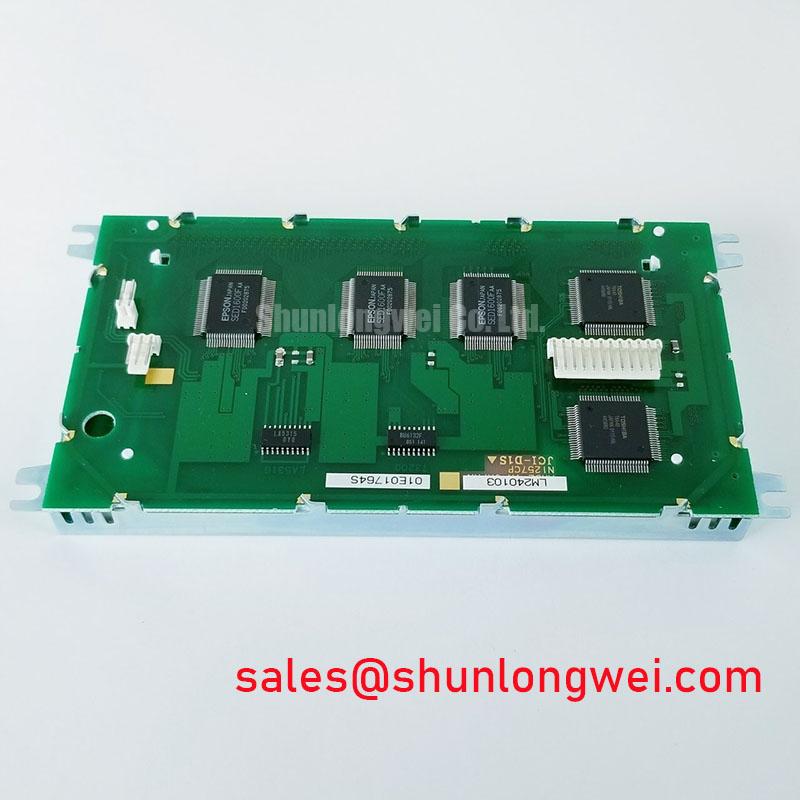

Optimized Application Scenarios
The specific feature set of the LM240103 makes it well-suited for several applications:
- Industrial Control Panels: The 240×64 resolution is ample for displaying status menus, alarm messages, and soft-key labels, while its robust construction is ideal for factory floors.
- Test and Measurement Equipment: Its ability to render both text and simple graphics makes it perfect for oscilloscopes, spectrum analyzers, and other benchtop instruments where clear data visualization is key.
- Medical Devices: The high-contrast, stable image is suitable for non-diagnostic readouts on equipment like infusion pumps or vital signs monitors, where accuracy is paramount.
- Point-of-Sale (POS) Systems: It can function as an operator display, providing clear prompts and transaction details without the complexity or cost of a full-color screen.
Its combination of a self-contained controller and a wide temperature range makes this module an excellent fit for reliable, text-and-graphic-heavy HMIs in compact enclosures.
Key Specifications of the LM240103
| Parameter | Specification |
|---|---|
| Display Technology | STN (Super-twisted Nematic) Monochrome LCD |
| Resolution | 240 x 64 Dots |
| Controller IC | Integrated Graphics Controller |
| Interface | Parallel Interface |
| Logic Supply Voltage (VDD) | 5.0V (Typical) |
| Driving Method | 1/64 Duty, 1/9 Bias |
| Operating Temperature | -20°C to +70°C |
| Storage Temperature | -30°C to +80°C |
Engineer’s FAQ
- How does the integrated controller on the LM240103 simplify system design?
- The onboard controller acts as an intermediary, managing the display’s RAM and timing signals. This allows the host processor to simply send commands and pixel data over a parallel bus, rather than handling the low-level pixel clocking and refresh cycles required by a raw LCD panel. This simplifies both the hardware connection and the software drivers.
- What is the purpose of the VEE pin and how is contrast adjusted?
- VEE is the negative voltage supply for the LCD driver. The contrast of an STN display is directly dependent on this voltage. Typically, this voltage is generated by a built-in negative voltage circuit or requires an external supply. It is often adjusted via a potentiometer or a digital-to-analog converter (DAC) to achieve optimal contrast across different viewing angles and temperatures.
- What are the mounting considerations for this module?
- The LM240103 is a Chip-on-Board (COB) module, meaning the controller IC is mounted directly on the PCB behind the glass. The module typically has a metal bezel with mounting holes. When designing an enclosure, it’s critical to ensure that the chassis does not put stress or pressure on the LCD glass itself. Use of appropriate standoffs and fasteners in the designated mounting holes is essential for mechanical stability and long-term reliability, as explored in guides to vibration and shock resistance for industrial displays.
- Is this display visible without a backlight?
- This depends on the specific variant (transmissive, reflective, or transflective). A transmissive model requires a backlight to be seen. A transflective model can be read in bright ambient light without a backlight and also uses a backlight in dim conditions, offering the most versatility. Always verify the display mode in the official datasheet for the specific part number.
The Sharp LM240103 provides a robust and efficient display solution for a wide range of industrial and technical equipment. Its design, which combines a clear STN panel with an integrated graphics controller, empowers engineers to create reliable, user-friendly interfaces with reduced development overhead and simplified system architecture. For more insights on display technologies, consider exploring resources on LCD core technology.