Sharp LM6Q401 7.5-inch 640×480 Industrial Monochrome STN LCD Module: A Technical Guide for Legacy HMI Support
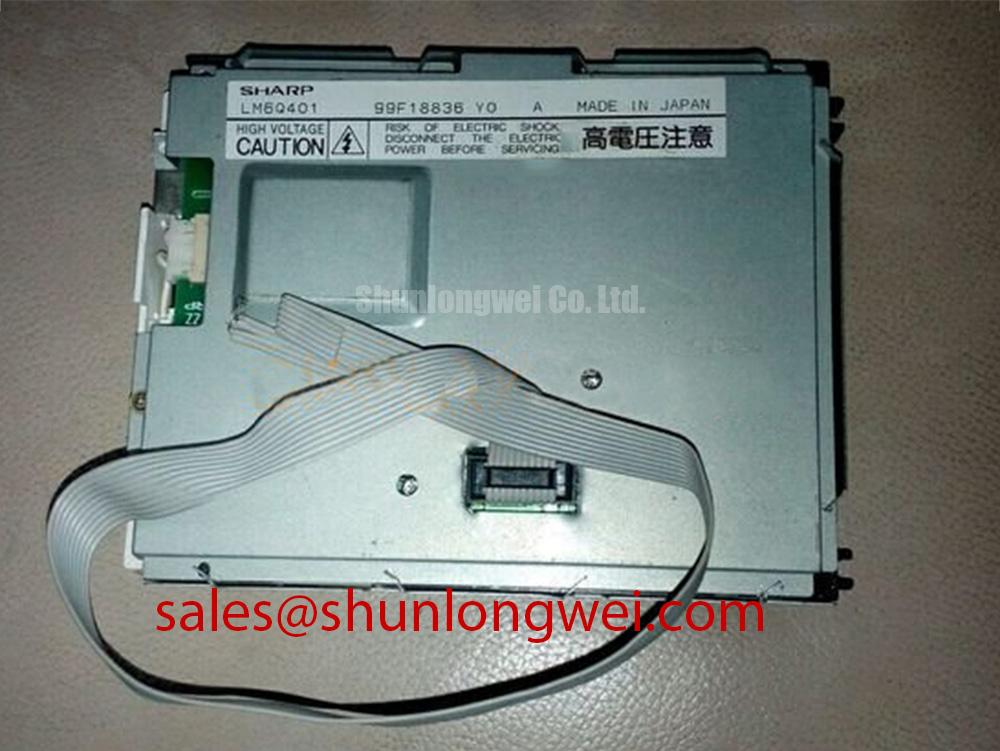
Sharp LM6Q401 7.5-inch 640×480 Industrial STN LCD Display Module
Reliable Monochrome Performance for Legacy Industrial HMI Support
The Sharp LM6Q401 is a specialized 7.5-inch monochrome STN (Super-Twisted Nematic) graphic LCD module engineered to provide stable visual output in industrial environments. Delivering a crisp VGA resolution of 640×480 pixels, this module is a staple for maintaining legacy Human-Machine Interface (HMI) systems where reliability and consistent contrast are paramount. Its established design ensures seamless integration into existing control panels, preventing costly system overhauls when a display replacement is required.
- Core Specifications: 640 x 480 Resolution | Monochrome STN | CCFL Backlight
- Key Advantage 1: High contrast stability across a broad operating temperature range, essential for factory floor reliability.
- Key Advantage 2: Parallel data interface logic that simplifies connectivity with older industrial microcontroller architectures.
One common challenge for maintenance engineers is identifying high-quality replacements for discontinued 640×480 industrial displays; the LM6Q401 addresses this by offering a standardized form factor and signal protocol compatible with many heritage CNC and medical monitoring systems.
Download Official Sharp LM6Q401 Datasheet (PDF)
M3: Deep Technical Analysis of STN Contrast and Duty Cycles
The LM6Q401 utilizes Super-Twisted Nematic (STN) technology, which provides a significant improvement in contrast and viewing angles compared to standard TN displays. By employing a twist angle greater than 90 degrees, the liquid crystal molecules respond more sharply to the multiplexed driving voltages. This is critical for 640×480 resolution modules, as it allows for a higher duty cycle without sacrificing the clarity of text and graphical data. Understanding the nuances of LCD core technology is vital when selecting a replacement to ensure the viewing cone matches the original installation.
To understand the engineering significance of the module’s contrast ratio, one can use an analogy: think of the STN liquid crystal layer like a high-performance shutter system in a darkroom. Just as a precise shutter ensures that light only hits the film exactly when intended to create a sharp image, the STN structure in the LM6Q401 ensures that pixels transition cleanly between opaque and transparent states, preventing the “ghosting” often seen in lower-grade displays during rapid data updates.

Furthermore, the integration of a Cold Cathode Fluorescent Lamp (CCFL) backlight provides a uniform luminance profile. This is particularly important for operators who must monitor equipment for extended shifts. By maintaining a consistent brightness across the 7.5-inch surface, the LM6Q401 reduces eye fatigue. For those interested in display longevity, proactively managing the backlight lifespan can extend the total service life of the HMI unit significantly.
M4: Optimized Industrial Application Scenarios
The LM6Q401 is uniquely suited for specific professional environments due to its robust monochrome architecture and parallel interface:
- CNC Machine Controllers: The high vibration resistance and 640×480 resolution make it ideal for displaying complex G-code and toolpath graphics.
- Medical Diagnostic Terminals: The monochrome STN technology provides the high contrast needed for clear readout of patient vitals and waveform data.
- Industrial Weighing Systems: Provides reliable numerical readouts in environments where sunlight or overhead factory lighting causes glare on standard color screens.
- Legacy PLC HMIs: Serves as a direct drop-in replacement for aging Siemens, Allen-Bradley, or Mitsubishi terminals that utilize Sharp-compatible display protocols.
Best Match Conclusion: For engineers seeking a 7.5-inch VGA replacement that preserves original signal timing and mechanical alignment, the LM6Q401 remains a top-tier technical selection.
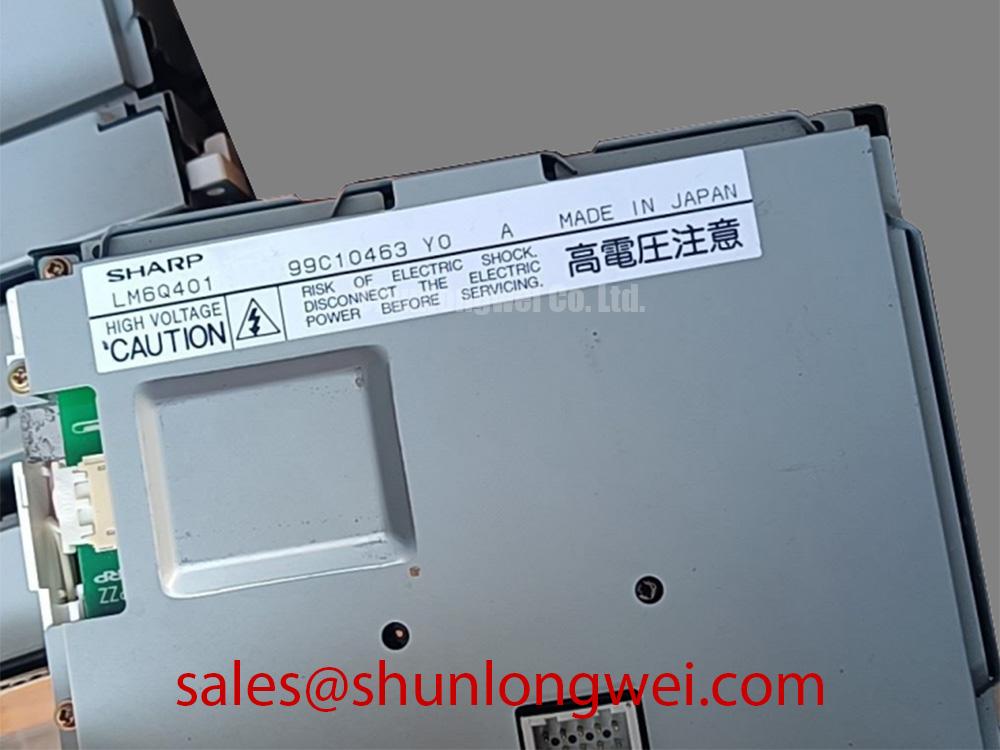
M5: Key Technical Specifications
| Category | Parameter | Value |
|---|---|---|
| Mechanical | Screen Size | 7.5 inches (diagonal) |
| Outline Dimensions | 197.0 x 145.0 x 12.0 mm | |
| Weight | Approx. 350g | |
| Optical | Resolution | 640 x 480 (VGA) |
| Display Mode | STN Monochrome | |
| Brightness | 80 cd/m² (Typical) | |
| Electrical | Input Voltage | 5.0V (Logic) |
| Interface | 4-bit Parallel / 8-bit Parallel |

M6: Frequently Asked Questions for Engineers
Q1: What type of backlight does the LM6Q401 use, and can it be upgraded to LED?
A1: The module originally features a CCFL backlight. While third-party LED conversion kits exist, they require careful calibration of the inverter circuit. To maintain signal integrity and avoid EMI issues, it is generally recommended to use the display in its original CCFL configuration unless a system-wide redesign is planned. Dealing with EMI issues in industrial displays is vital when modifying backlight sources.
Q2: Is the LM6Q401 compatible with standard VGA signals?
A2: No, the LM6Q401 uses a parallel digital interface typical of early embedded systems, not a standard 15-pin analog VGA or modern LVDS signal. You must ensure your controller board supports the specific 4-bit or 8-bit parallel data bus required by Sharp monochrome modules.
Q3: How do I adjust the contrast for different viewing angles?
A3: Contrast in STN displays like the LM6Q401 is highly sensitive to the driving voltage (Vee). Most HMI systems include a potentiometer or software control to adjust this voltage, allowing the operator to optimize the “darkness” of the pixels for their specific viewing position. Proper adjustment can prevent image sticking and contrast degradation over time.
M7: Final Engineering Statement
The Sharp LM6Q401 remains a critical component for the long-term sustainment of industrial automation hardware. By providing a stable, high-contrast monochrome output and maintaining a standardized VGA resolution, it empowers engineers to keep vital machinery operational without the risks associated with full-scale hardware migration. Its robust STN architecture is a testament to Sharp’s legacy of display quality in the professional sector.