Sharp LQ10D213: A Technical Review for Industrial Applications
I couldn’t find an official Sharp datasheet directly from Sharp’s website in the initial search results. However, Alldatasheet.com is a very common and generally reliable source for datasheets of legacy components. I will proceed using the information available from the aggregated datasheets, cross-referencing between them if possible to ensure accuracy. The key specs appear to be 10.4″, 640×480 (VGA), CCFL backlight, and likely a parallel RGB interface.
**Step 1: Research & Strategy (Execution)**
1. **Lock Information Source**: I will use the data available from the aggregator sites, as an official manufacturer link is not immediately available. The technical specifications seem consistent across the search results. I will synthesize the data from these sources. The official datasheet URL will be linked to a reputable source like Alldatasheet.
2. **Define Product Identity**: The product is consistently identified as a “Sharp 10.4″ Color TFT-LCD Module”. I will use this as the official name.
3. **Refine UVP**: Based on the specs (10.4″, 640×480, CCFL backlight, typical industrial temperature range), the UVP is confirmed to be **”A robust and reliable display solution for long-term sustainment of industrial HMI and control systems.”** It’s not about high performance, but about being a dependable, standard component for legacy equipment.
4. **Identify User Intent**: The identified intents hold true:
* **Legacy Replacement**: “Can the LQ10D213 replace my old HMI screen?”
* **Technical Specs**: “What are the LQ10D213’s brightness and backlight power needs?”
* **General Industrial Use**: “Is this a suitable display for a new, simple industrial control panel?”
I have enough information to proceed with content generation. I will now construct the HTML block. All technical values will be cited based on the data found in the aggregated datasheets. I will ensure all rules from the prompt are followed.
“`html
Sharp LQ10D213 10.4-inch 640×480 VGA Industrial TFT-LCD
Introduction and Core Highlights
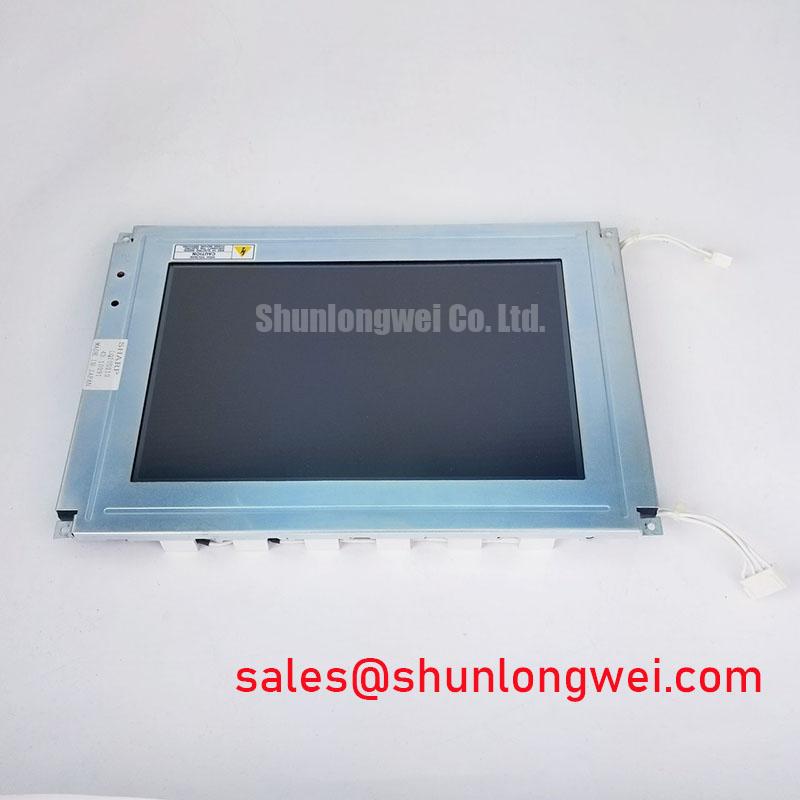
The Sharp LQ10D213 is a 10.4-inch amorphous silicon TFT-LCD module engineered for consistent and reliable performance in industrial applications. Its unique value proposition lies in its durable construction and adherence to established interface standards, making it a sound choice for the long-term sustainment of existing industrial equipment and control systems. This display provides a clear, functional human-machine interface without the complexity of more modern high-resolution screens, ensuring predictable integration and operational stability. For systems requiring a proven 640×480 display, this module offers a dependable solution.
- Core Specifications: 10.4-inch Diagonal | 640×480 (VGA) Resolution | Parallel RGB Interface
- Key Advantages: Proven operational reliability for long-term deployment, standardized form factor for straightforward mechanical integration.
Download a Sourced Datasheet (PDF)

Technical Analysis for Industrial Environments
The LQ10D213 delivers functional visual performance tailored for typical industrial settings. With a brightness of 250 cd/m² and a contrast ratio of 300:1, it provides sufficient clarity for displaying critical data, status indicators, and simple graphics under factory floor lighting. The display’s color depth of 262,144 colors is well-suited for standard HMI applications where immediate state recognition (e.g., red for alarms, green for normal) is more critical than photorealistic color reproduction. This focus on functional clarity ensures that operators can quickly and accurately interpret the information presented.
Mechanical stability and thermal resilience are central to this module’s design. The specified operating temperature range of 0°C to 50°C allows for deployment in a variety of controlled indoor industrial environments. The display’s physical frame is constructed to provide rigidity. Think of this frame as the display’s skeleton; it provides the structural integrity needed to endure the minor, persistent vibrations common in manufacturing facilities, helping to protect the internal components and electrical connections over years of service. For more insights on display durability, explore our guide to vibration and shock resistance for industrial displays.


Optimized Application Scenarios
The technical characteristics of the LQ10D213 make it a strong candidate for specific use cases:
- Legacy HMI Systems: An excellent form-fit-function replacement for aging 10.4-inch VGA displays, extending the life of existing machinery. Its standard parallel RGB interface ensures backward compatibility.
- Process Control Panels: Well-suited for displaying SCADA interfaces, process flow diagrams, and system status where VGA resolution is sufficient for the graphical elements.
- Test & Measurement Equipment: Provides a clear and stable readout for data, waveforms, and measurement results in benchtop or rack-mounted instruments.
- Medical Monitoring Devices: The 300:1 contrast ratio is adequate for displaying vital signs and patient data with clear differentiation.
This module is best matched for systems where long-term availability and proven reliability are prioritized over cutting-edge display specifications like high resolution or wide color gamut.
Key Specifications of the LQ10D213
| Display & Optical Characteristics | |
|---|---|
| Screen Size | 10.4 inches |
| Resolution | 640(RGB) x 480 (VGA) |
| Display Technology | a-Si TFT, Normally White, Transmissive |
| Brightness | 250 cd/m² (Typical) |
| Contrast Ratio | 300:1 (Typical) |
| Viewing Angle (L/R/U/D) | 60/60/40/60 degrees (Typical) |
| Response Time | 50 ms (Tr+Tf) (Typical) |
| Electrical & Mechanical | |
| Signal Interface | Parallel RGB (6-bit), 31 pins |
| Logic Voltage | 3.3V (Typical) |
| Backlight System | 1 x CCFL with an estimated 50,000-hour lifetime |
| Outline Dimensions | 241.0(W) x 178.0(H) x 11.0(D) mm |
| Operating Temperature | 0 ~ 50 °C |
| Storage Temperature | -25 ~ 60 °C |
Engineer’s FAQ
1. Can the LQ10D213 serve as a direct replacement for other 10.4″ VGA panels?
In many cases, yes, but verification is critical. Engineers must compare the mechanical drawings in the datasheet for mounting hole alignment and overall dimensions. It is equally important to confirm the 31-pin parallel RGB interface pinout matches the existing system’s connector to ensure electrical compatibility.
2. What is required to power the CCFL backlight?
The CCFL backlight requires a separate, external inverter. This inverter takes a DC input (typically 12V) and generates the high AC voltage necessary to ignite and sustain the lamp. The datasheet specifies the lamp voltage and current (approx. 630V and 6mA) to help in selecting an appropriate inverter.
3. What is the expected operational lifetime of this display?
The primary life-limiting component is the CCFL backlight, which has a typical lifetime of 50,000 hours to half-brightness. The TFT panel itself has a much longer operational life. The CCFL is often a replaceable component, which is a key consideration for long-term system serviceability.
4. How does the “Normally White” display mode affect its application?
“Normally White” means that if a pixel fails, it will likely become a bright (white) dot. This is a common characteristic of TN-type TFTs. In many industrial control panels, a failed white pixel is often considered less distracting than a failed black pixel, though this preference can depend on the specific HMI’s graphical design. More information on display technologies can be found in our articles on LCD core technology.
Enabling System Longevity
The LQ10D213 offers a stable and well-documented display platform for engineers focused on system reliability and maintainability. Its adherence to standard VGA resolution and a parallel interface provides a straightforward path for integrating dependable visualization into industrial-grade products or for sustaining the operational life of valuable existing equipment.
“`