Sharp LQ156M1LG21: A Technical Review of the High-Brightness FHD Display
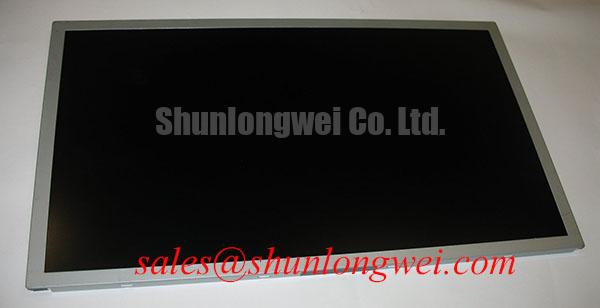
Sharp LQ156M1LG21 15.6″ FHD High-Brightness TFT-LCD Module
Introduction and Core Highlights
The Sharp LQ156M1LG21 is a 15.6-inch a-Si TFT-LCD module that delivers exceptional image clarity through its Full HD resolution and a very high typical brightness of 600 nits. This combination makes it a strong candidate for systems operating in variable lighting conditions. It uses a standard LVDS interface for straightforward system integration.
- Core Specifications: 1920×1080 FHD | 600 cd/m² | LVDS (2 ch, 8-bit) Interface
- Key Advantages: High brightness for improved readability, industry-standard 15.6″ size for versatile integration.
- This panel’s performance is well-documented, providing the necessary data for thermal and power budget calculations in portable or enclosed systems.
Download the Official LQ156M1LG21 Datasheet (PDF)
Technical Analysis for System Integration
The defining feature of the LQ156M1LG21 is its high luminance of 600 cd/m². This level of brightness is critical for devices intended for use outdoors or in brightly lit indoor environments, ensuring the screen remains legible. The panel provides this brightness while maintaining a Full HD (1920×1080) resolution, which translates to a pixel density of approximately 141 PPI. This density is sufficient for rendering fine text and detailed graphics without noticeable pixelation in typical viewing distances for laptops or medical devices.
The display specifies a contrast ratio of 800:1. This specification can be thought of as the panel’s ability to display deep blacks and bright whites simultaneously. A higher ratio results in a more vibrant and visually distinct image, which is vital for applications where visual accuracy is paramount. The use of a 2-channel, 8-bit LVDS interface is a practical choice, offering a widely supported and robust connection method capable of handling the data rate required for a 60Hz FHD signal. For more on display technologies, see our guide on LCD Core Technology.
Optimized Application Scenarios
- Portable Medical Diagnostic Equipment: The high brightness and FHD resolution are well-suited for displaying detailed medical imagery with clarity in various clinical settings.
- Outdoor Kiosks and Digital Signage: With 600 nits of brightness, the screen content remains visible even under significant ambient light, a key requirement for public-facing displays.
- Rugged Industrial Laptops: The standard form factor and robust interface make it a suitable component for mobile computing platforms used in field service or manufacturing floors where high ambient light is common.
- Marine and Avionic Displays: In cockpits and on ship bridges, high brightness is essential to overcome direct sunlight and ensure critical data is always readable. For more details on this topic, explore our article on engineering marine displays.
This module’s specifications are an excellent fit for systems that require high visual clarity and brightness in a standard, easy-to-integrate 15.6-inch package.
Key Specifications of the LQ156M1LG21
| Sharp LQ156M1LG21 Specifications | |
|---|---|
| Parameter | Value |
| Screen Size | 15.6 inch |
| Resolution | 1920(RGB)×1080, FHD |
| Panel Technology | a-Si TFT-LCD, TN, Normally White, Transmissive |
| Brightness | 600 cd/m² (Typ.) |
| Contrast Ratio | 800:1 (Typ.) |
| Viewing Angle | 80/80/80/65 (Typ.)(CR≥10) (L/R/U/D) |
| Response Time | 30 (Typ.)(Tr+Td) ms |
| Signal Interface | LVDS (2 ch, 8-bit), 30 pins Connector |
| Supply Voltage | 3.3V (Typ.) |
| Surface Treatment | Antiglare, Hard coating (3H) |
| Outline Dimensions | 370(W) × 217(H) × 9.8(D) mm |
| Operating Temperature | 0 ~ 70 °C |
| Storage Temperature | -30 ~ 70 °C |
Engineer’s FAQ
- What are the backlight characteristics of the LQ156M1LG21?
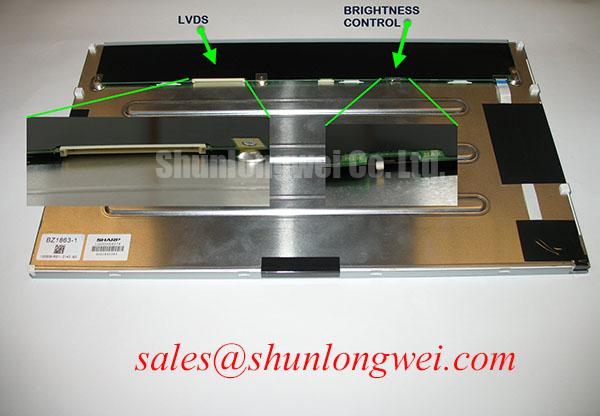
- The module uses a WLED backlight system. The datasheet indicates that the driver board includes functionality to adjust the backlight illumination to four distinct levels: 300, 350, 400, and 600 nits, with the 600 nits figure being the factory default setting.
- Are there specific layout considerations for the LVDS interface?
- Yes, for any LVDS interface, it is crucial to maintain controlled impedance (typically 100 ohms) for the differential pairs. The trace lengths for each pair should be matched closely to prevent data skew. Keep the traces as short as possible and avoid routing them near noisy components to ensure good signal integrity.
- Is this panel suitable for systems with a long operational life requirement?
- The operating temperature range is specified from 0 to 70°C. While this is suitable for many commercial and industrial indoor applications, systems intended for more extreme environments would require a display with a wider temperature range. Always perform thorough thermal analysis to ensure the panel operates within its specified limits. For more information on reliability, refer to our guide on accelerated aging tests.
Enabling High-Clarity Visual Systems
The LQ156M1LG21 provides a robust, high-performance display solution for engineers. Its combination of Full HD resolution, high brightness, and a standard LVDS interface delivers the clarity required for data-intensive applications. This allows for the design of effective HMIs that remain readable even in challenging lighting conditions.