Sharp LQ9D011K: A Technical Review for Legacy System Reliability
“`html
Sharp LQ9D011K 8.4″ VGA LCD for Legacy System Reliability
Introduction and Core Highlights
The Sharp LQ9D011K is an 8.4-inch color a-Si TFT-LCD module engineered for sustained performance in industrial control and HMI applications. Its design prioritizes long-term serviceability and drop-in compatibility with legacy systems, featuring a standard VGA resolution and a field-replaceable backlight system. This focus on maintainability ensures that equipment life can be extended without costly redesigns.
- Core Specifications: 8.4″ Diagonal | 640×480 VGA Resolution | Parallel RGB (3-bit) Interface
- Key Engineering Advantages: Simplifies MRO (Maintenance, Repair, Overhaul) with a replaceable CCFL backlight. Ensures electrical compatibility with legacy controllers.
- Answers Core Question: For systems requiring a display with a predictable maintenance path, the LQ9D011K’s separable backlight inverter and lamps provide a distinct advantage over fully integrated modern displays.
Download Official Datasheet (PDF)
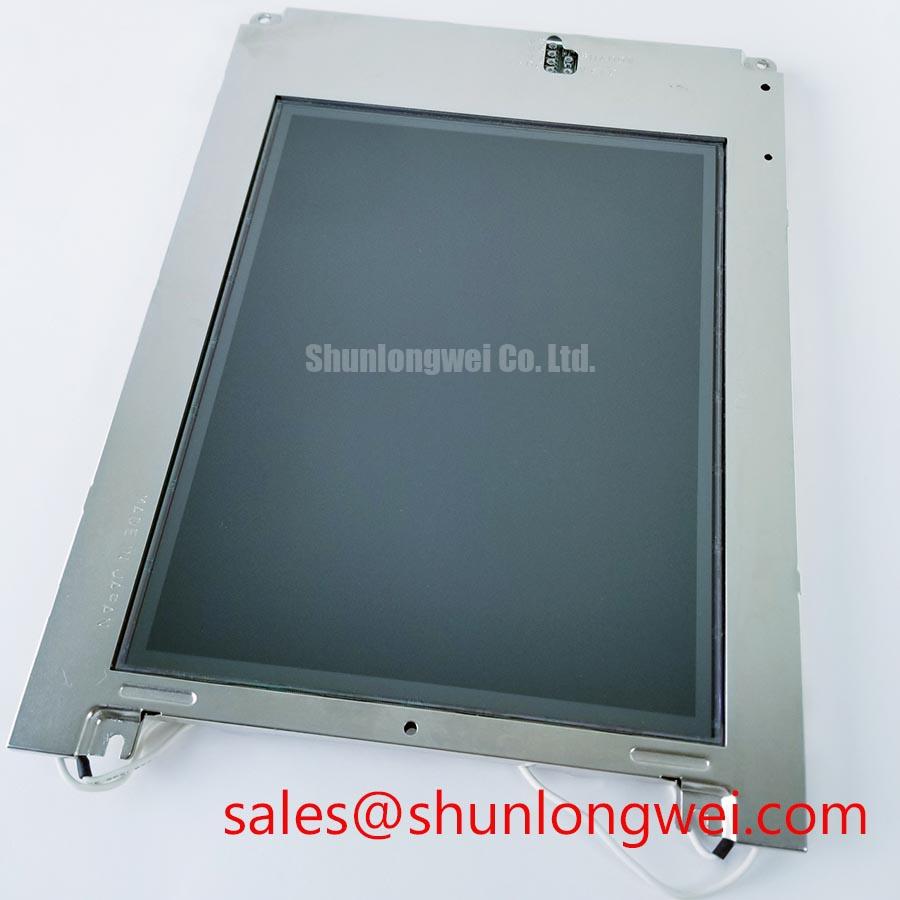

Technical Analysis for System Longevity
The LQ9D011K’s specification is deliberately focused on seamless integration into established systems. Its native 640 x 480 (VGA) resolution and parallel RGB digital interface are fundamental to its value. This combination allows it to connect directly to a generation of industrial controllers and embedded PCs without the need for signal conversion hardware or driver redevelopment. For an engineer tasked with repairing an existing HMI, this eliminates significant software and firmware validation overhead, accelerating the repair process and reducing total cost of ownership. More details on managing component lifecycle can be found in our guide to navigating LCD and driver IC end-of-life.


The module’s use of a CCFL (Cold Cathode Fluorescent Lamp) backlight is a critical feature for long-term serviceability. The backlight assembly, with a minimum specified life of 10,000 hours, is a separate component from the TFT panel itself and requires an external inverter. You can think of the CCFL backlight like the tires on a car—a wear item designed for periodic replacement. This contrasts with modern LED-backlit displays where the light source is permanently integrated. When the backlight of an LQ9D011K fails, a technician can replace just the lamp or inverter, rather than the entire display module, drastically reducing maintenance costs and equipment downtime. This philosophy is explored further in our article on the proactive management of industrial LCD backlight lifespan.
Optimized Application Scenarios
The LQ9D011K is specified for applications where reliability and backward compatibility are the primary design drivers. Its feature set makes it a strong candidate for:
- Legacy CNC Machine HMIs: The 640×480 resolution and standard +5V power input match the architecture of many machine tool controllers, enabling direct replacement.
- Industrial Process Control Panels: Where validated systems cannot be easily upgraded, the LQ9D011K serves as a form-fit-function replacement to extend the life of the asset.
- Test and Measurement Equipment: The parallel RGB interface provides a direct link to the FPGAs and custom controllers often found in older test instruments.
- Medical System Sustainment: For non-diagnostic displays in older medical devices, using a compatible panel avoids costly re-certification of the entire system.
This module is best matched for extending the operational life of capital equipment that was originally designed with a VGA-resolution interface.
Key Specifications of the LQ9D011K
| General & Optical Characteristics (Ta = 25°C) | |
|---|---|
| Manufacturer | Sharp |
| Part Number | LQ9D011K |
| Display Technology | a-Si TFT-LCD, TN, Normally White |
| Screen Size | 8.4 inches (21 cm) |
| Resolution | 640(RGB) × 480 [VGA] |
| Active Area | 170.88(W) × 129.6(H) mm |
| Brightness | 70 cd/m² (typ.) |
| Contrast Ratio | 60:1 (typ.) |
| Viewing Angle (CR≥5) | Horizontal: ±45°, Vertical: +30°/-10° (6 o’clock) |
| Backlight System | 2 pcs CCFL, inverter not included |
| Electrical & Interface Characteristics | |
| Signal Interface | Parallel RGB (1 ch, 3-bit), 15-pin connector |
| Logic Supply Voltage (VCC) | 5.0V (typ.) |
| Logic Power Consumption | 2.0W (typ.) |
| Operating Temperature | 0°C to +50°C |
| Storage Temperature | -25°C to +60°C |
Engineer’s FAQ
- Is the backlight on the LQ9D011K replaceable?
- Yes. The datasheet confirms the use of a CCFL lighting system that is separate from the LCD panel and requires an external inverter. This construction allows for the backlight lamps to be replaced, which is a significant factor for long-term maintenance of the host equipment.
- What are the power supply requirements for this module?
- The module requires a single +5.0V DC supply for its logic and control circuits, with a typical current draw of 400mA. An external DC-to-AC inverter is also required to power the CCFL backlight, and its specifications should be matched to the lamp’s requirements as detailed in the datasheet.
- How should I handle the viewing angle limitations?
- This display uses TN (Twisted Nematic) technology, which has a specific optimal viewing direction. The datasheet specifies the optimum viewing angle is from the 6 o’clock direction. For maximum clarity and color fidelity, the system enclosure should be designed so that the operator’s primary line of sight is normal to the display or slightly from below.
- What signal interface does the LQ9D011K use?
- The LQ9D011K uses a parallel RGB interface with 3 bits for color data (R0-R2, G0-G2, B0-B2), totaling 512 colors. It also requires standard timing signals: dot clock (CK), horizontal sync (Hsync), and vertical sync (Vsync). These signals are provided through a 15-pin connector.
Enabling Long-Term System Support
The LQ9D011K provides a technically sound and cost-effective path for maintaining the operational readiness of industrial equipment. Its adherence to legacy interface standards and service-oriented design empowers engineers to manage and extend the lifecycle of critical assets, ensuring maximum return on original capital investment. For more on this, see our guide to vibration and shock resistance for industrial displays.
“`