SKiiP 25AC12T4V1: A Technical Review of the 1200V Integrated CIB Power Module
SKiiP 25AC12T4V1: 1200V Integrated CIB Power Module
Introduction and Core Highlights
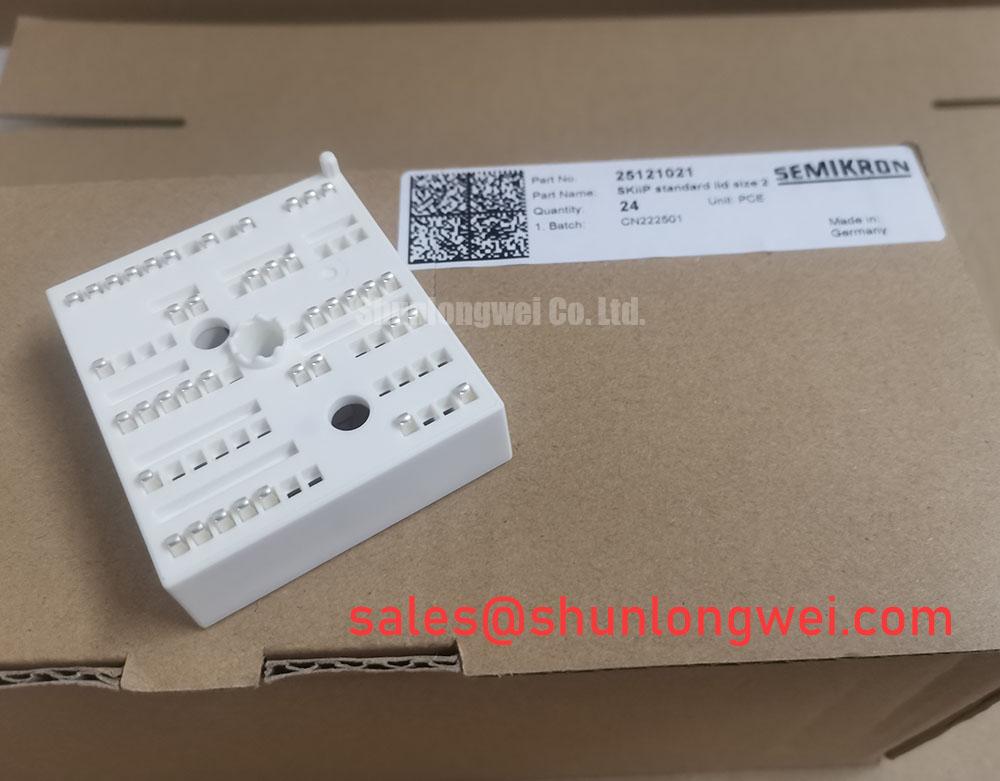
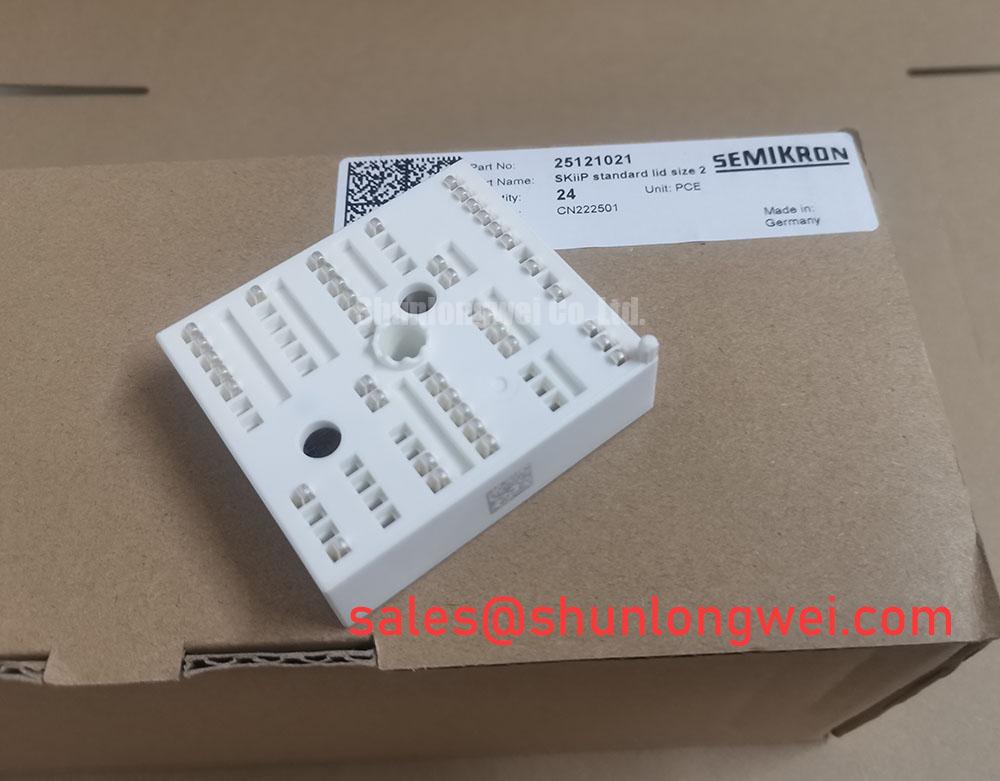
The Semikron SKiiP 25AC12T4V1 is a highly integrated Intelligent Power Module (IPM) that combines a three-phase rectifier, brake chopper, and a three-phase inverter into a single, compact unit. This Converter-Inverter-Brake (CIB) configuration, built on reliable pressure contact technology, provides a robust foundation for variable speed drives by minimizing system complexity and enhancing thermal efficiency. Its architecture is specifically structured to reduce component count and simplify assembly for engineers developing compact motor control systems.
- Core Specifications: 1200V | 25A | VCE(sat) (typ.) 1.9V
- Key Advantages: Solder-free spring contacts enhance reliability, and the integrated CIB topology reduces system footprint.
- Design Focus: Streamlines development of motor drives up to 15 kW.
Download the Official SKiiP 25AC12T4V1 Datasheet (PDF)

Technical Analysis of the Integrated CIB Design
The engineering value of the SKiiP 25AC12T4V1 is centered on its integration and advanced semiconductor technology. The module incorporates Trench 4 IGBTs, which are essential for achieving a low collector-emitter saturation voltage (VCE(sat)) of 1.9V (typical at 25A). This low VCE(sat) is analogous to reducing friction in a mechanical system; less energy is wasted as heat during conduction, which directly improves the overall efficiency of the motor drive. The result is lower operating temperatures and reduced requirements for extensive cooling systems.
Furthermore, the module is equipped with robust and soft-switching freewheeling diodes featuring CAL (Controlled Axial Lifetime) technology. This technology minimizes reverse recovery losses and voltage overshoots during switching operations, which is critical for reducing electromagnetic interference (EMI) and improving the reliability of the entire power stage. The use of solder-free, pressure-mounted spring contacts for electrical connections eliminates a common failure point—solder fatigue—thereby increasing the module’s power cycling capability and operational lifespan.
Optimized Application Scenarios
The specific characteristics of the SKiiP 25AC12T4V1 make it a strong candidate for a range of power conversion applications:
- Variable Frequency Drives (VFDs): The all-in-one CIB topology significantly shrinks the physical footprint and simplifies the bill of materials, enabling more compact and cost-effective inverter designs.
- Industrial Motor Control: For systems like pumps, fans, and conveyors, the module’s thermal efficiency and robust CAL diodes ensure reliable operation under demanding industrial conditions.
- Servo Drives: The soft-switching characteristics of the freewheeling diodes contribute to cleaner power signals and precise control, which are beneficial in high-performance servo applications.
- Uninterruptible Power Supplies (UPS): The integrated rectifier and inverter stages provide a solid foundation for developing efficient and reliable online UPS systems.
This module is best matched for inverter applications requiring up to 26 kVA and typical motor power of 15 kW.
Key Specifications of the SKiiP 25AC12T4V1
| Absolute Maximum Ratings (Tcase = 25°C unless otherwise specified) | |
|---|---|
| Collector-Emitter Voltage (VCES), Inverter | 1200V |
| DC Collector Current (IC), Inverter | 25A (Tcase = 25°C) / 20A (Tcase = 70°C) |
| Repetitive Peak Diode Current (IFRM), Rectifier | 160A |
| Operating Junction Temperature (Tj) | -40°C to +175°C |
| Electrical Characteristics (Tj = 25°C unless otherwise specified) | |
| Collector-Emitter Saturation Voltage (VCE(sat)) @ 25A | 1.9V (typ.) / 2.35V (max.) |
| Gate-Emitter Threshold Voltage (VGE(th)) | 5.8V (typ.) |
| Forward Voltage Drop (VF) @ 25A, CAL Diode | 1.9V (typ.) |
| Thermal Resistance, Junction to Case (Rth(j-c)), per IGBT | 1.7 K/W (max.) |
Engineer’s FAQ
What does the “CIB” configuration in the SKiiP 25AC12T4V1 signify?
CIB stands for Converter-Inverter-Brake. It means the module integrates three distinct power stages into one package: a three-phase diode bridge rectifier (Converter) to convert AC to DC, a three-phase IGBT bridge (Inverter) to convert DC back to variable-frequency AC for motor control, and an IGBT with a freewheeling diode (Brake) to dissipate regenerative energy.
What are the primary thermal management considerations for this module?
Effective thermal management requires ensuring a low-resistance thermal path from the module’s baseplate to the heatsink. The datasheet specifies a maximum thermal resistance from junction to case (Rth(j-c)) of 1.7 K/W for each inverter IGBT. Engineers must select a heatsink with an appropriately low thermal resistance (Rth(c-s) + Rth(s-a)) to keep the junction temperature below the 175°C maximum under worst-case operating conditions.
How does the pressure contact system benefit reliability?
The pressure contact system uses springs to create electrical and thermal connections instead of solder joints. This design avoids solder fatigue, a common failure mechanism in power modules caused by repeated temperature cycling. This makes the SKiiP 25AC12T4V1 more robust for applications with frequent load changes.
Is an external gate driver required?
No, as an Intelligent Power Module (IPM), the SKiiP 25AC12T4V1 includes an integrated gate driver board. This simplifies the design process by removing the need for external driver circuitry and providing optimized switching control for the internal IGBTs.
Enabling Compact and Reliable Power Design
This module provides a technically sound solution for engineers tasked with developing efficient and space-constrained motor drives. The combination of Trench 4 IGBTs, CAL diodes, and a fully integrated CIB topology within a pressure-contact package offers a direct path to reducing both system size and development time. It allows for the creation of power conversion systems where performance and long-term reliability are engineered from the core.