SKKT280/22E Thyristor Module: A Technical Analysis for High-Power AC Control
SKKT280/22E Thyristor Module for High Power AC Control
Technical Analysis of the Semikron SKKT280/22E Module
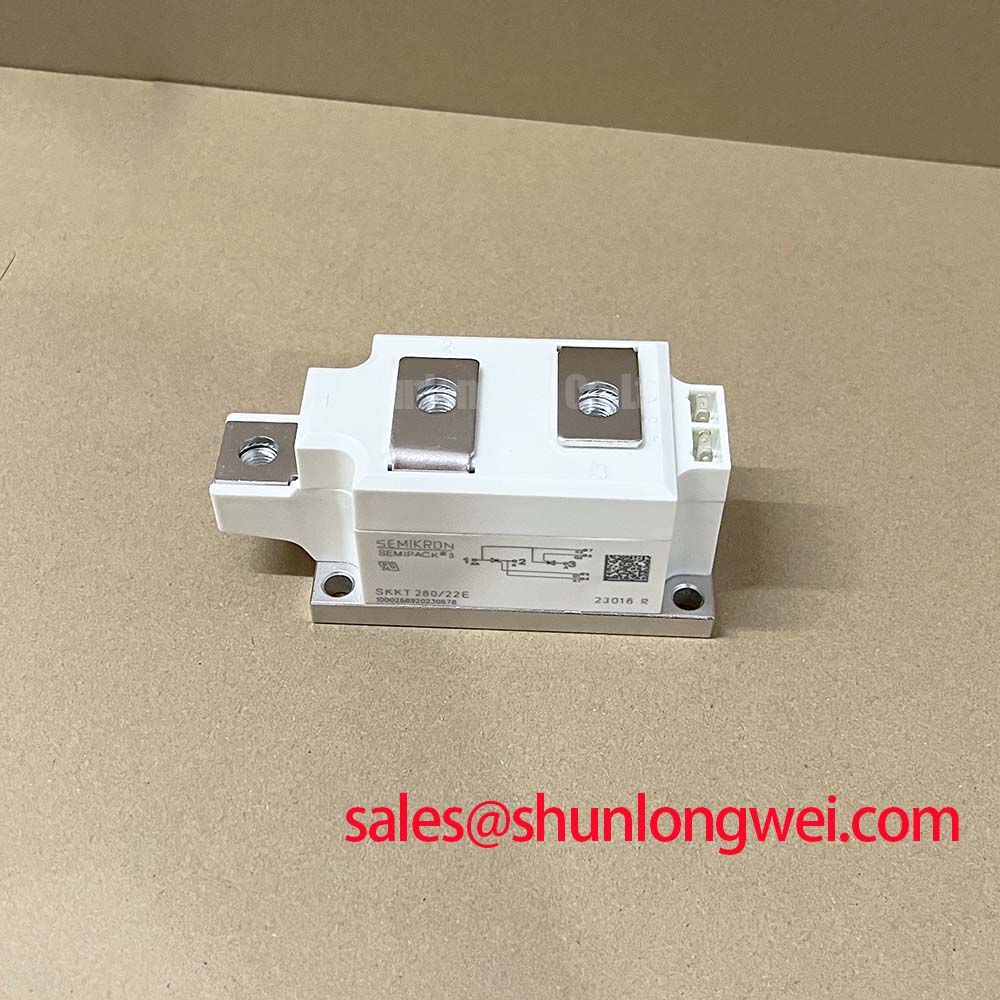
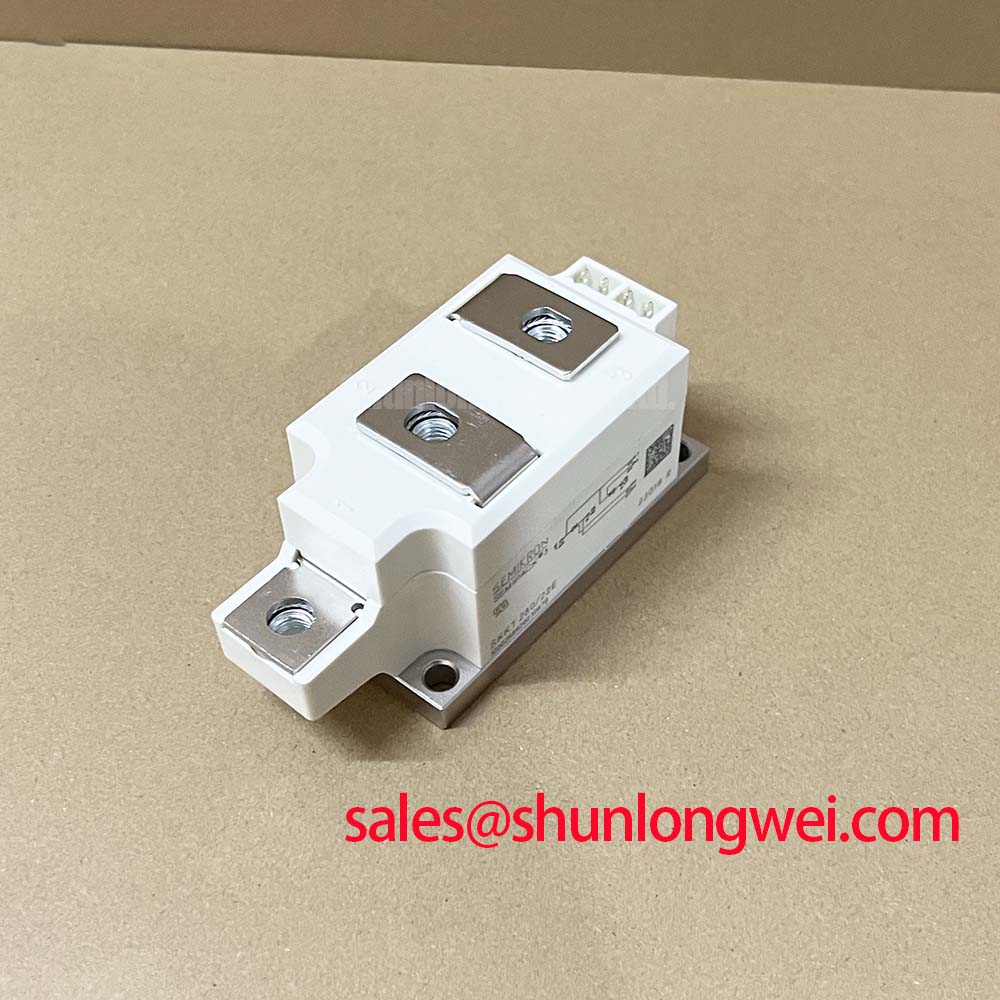
The SKKT280/22E is a high-reliability Thyristor Module manufactured by Semikron, engineered for robust control in high-power AC applications. Its core value proposition lies in its high voltage capability combined with a thermally efficient package, enabling durable and stable performance in demanding industrial environments.
- Core Specifications: 2200V | 280A | SEMIPACK® 3
- Key Engineering Advantages: High electrical blocking safety margin, efficient heat dissipation via an isolated baseplate.
- Primary Function: Provides reliable phase angle control for large AC loads, enabling precise power regulation.
Download Official Datasheet (PDF)
Engineered for Durability and Thermal Stability
A key design element of the SKKT280/22E module is its high repetitive peak off-state and reverse voltage (VDRM/VRRM) rating of 2200V. This provides a substantial engineering safety margin for systems operating on high-voltage AC lines, protecting the device against unexpected voltage transients that can occur in industrial settings. This high voltage headroom is critical for ensuring long-term operational reliability in applications like AC motor starters and industrial heating controls.
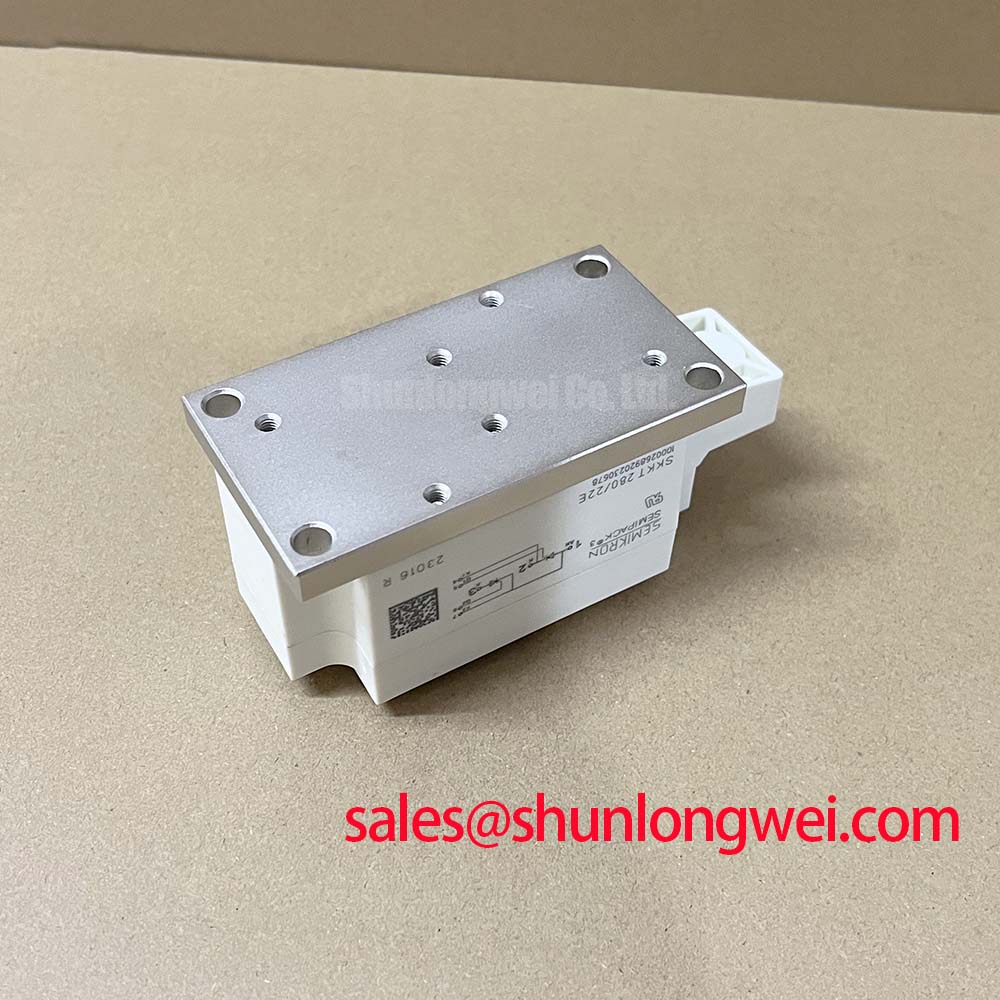
Effective thermal management is fundamental to power semiconductor longevity. The SKKT280/22E addresses this with an aluminum nitride ceramic insulated metal baseplate. This construction provides excellent electrical isolation while ensuring efficient heat transfer from the semiconductor junctions to the heatsink. The thermal resistance from junction to case (Rth(j-c)) is specified at 0.11 K/W per chip. This can be thought of like the width of a pipe; a lower value signifies a wider pipe, allowing heat to flow away more easily, thus keeping the device within its safe operating temperature and enhancing system reliability.
Optimized Application Scenarios
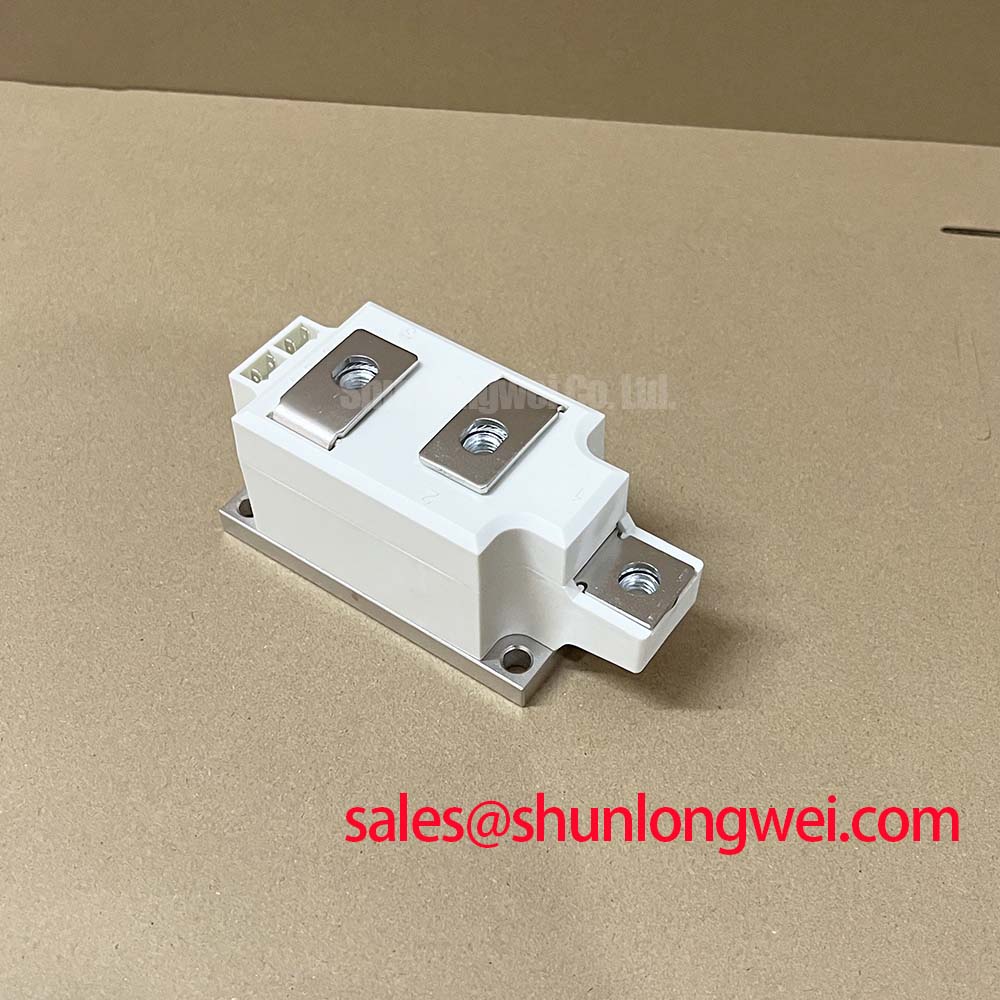
The technical specifications of the SKKT280/22E make it a strong candidate for several specific industrial applications:
- AC Motor Soft Starters: The module’s high surge current capability (ITSM = 8500 A for 10 ms) allows it to withstand the large inrush currents typical when starting heavy induction motors.
- Industrial Temperature Control: For applications like large industrial ovens or chemical process heating, its ability to perform precise phase-angle control enables accurate power regulation to heating elements.
- High-Power Rectifier Bridges: The dual thyristor configuration is well-suited for constructing controlled rectifiers for DC power supplies and DC motor drives.
- Professional Light Dimming: In high-power lighting systems for theaters and studios, this module provides smooth and reliable control of the AC waveform to dim large lighting arrays without flicker.
This module is a best-fit for line-frequency AC power control systems requiring high reliability and robust thermal performance for currents up to 280A.
Key Specifications of the SKKT280/22E
| Absolute Maximum Ratings (Tj = 125 °C unless otherwise specified) | |
|---|---|
| Repetitive Peak Reverse Voltage (VRRM) | 2200 V |
| Average On-State Current (ITAV) @ 85°C | 280 A |
| RMS On-State Current (ITRMS) | 440 A |
| Surge Non-Repetitive On-State Current (ITSM) @ 10 ms, 50 Hz | 8500 A |
| Operating Junction Temperature Range (Tvj) | -40 to +125 °C |
| Thermal and Mechanical Characteristics | |
| Thermal Resistance, Junction to Case (Rth(j-c)) per chip | 0.11 K/W |
| Isolation Test Voltage (Visol), 1 min | 4000 V |
| Mounting Torque (to heatsink) | 4.25 … 5.75 Nm |
Note: These specifications are derived from the official manufacturer’s datasheet. For complete design-in data, refer to the document.
Engineer’s Frequently Asked Questions
1. What is the correct way to calculate heatsink requirements for the SKKT280/22E?
To determine the required heatsink, calculate the total power dissipation (P_avg) based on your application’s RMS current and duty cycle using the graphs in the datasheet. Then, use the formula Rth(c-a) = (Tj_max – Ta_max) / P_avg – Rth(j-c) – Rth(c-s). Use the datasheet values for max junction temperature (Tj_max), junction-to-case thermal resistance (Rth(j-c)), and case-to-heatsink resistance (Rth(c-s)) to find the maximum allowable heatsink thermal resistance (Rth(c-a)).
2. What are the key mounting considerations for this SEMIPACK 3 module?
For optimal thermal transfer, ensure the heatsink surface is flat and clean. Apply a thin, uniform layer of thermal compound before mounting. Use M5 screws and tighten to the specified torque of 4.25 to 5.75 Nm to avoid damaging the module’s baseplate or creating thermal voids. Uneven torque can lead to inefficient cooling and reduced device lifetime.
3. Is the SKKT280/22E suitable for high-frequency applications?
No. This is a phase-control thyristor (SCR) module designed for low-frequency applications, typically at line frequencies of 50/60 Hz. Its turn-off time (tq) characteristics are not suited for high-frequency switching found in applications like switch-mode power supplies (SMPS). For those designs, consider IGBT modules or SiC MOSFETs.
The SKKT280/22E module provides a foundation for developing highly reliable and efficient high-power control systems. Its combination of a high voltage rating, proven thermal design, and robust construction enables engineers to deliver durable solutions for demanding industrial power conversion challenges.