Starpower GD75P1Y120C6SN: A High-Efficiency 1200V 75A PIM for Industrial Power Conversion
Starpower GD75P1Y120C6SN 1200V 75A PIM IGBT Module
The Starpower GD75P1Y120C6SN is a highly integrated Power Integrated Module (PIM) that leverages Trench FS (Field Stop) IGBT technology to deliver high efficiency in industrial power conversion. By consolidating a three-phase rectifier, a three-phase inverter stage, a dedicated brake chopper, and an internal thermistor into a single thermal-efficient package, this module facilitates a significant reduction in system volume. Its core value proposition lies in the balance between high current density and low conduction losses, making it a reliable building block for medium-power motor control systems.
- Core Specifications: 1200V $V_{CES}$ | 75A Continuous Collector Current ($T_C=80^circ C$) | 1.85V $V_{CE(sat)}$ Typical.
- Engineering Advantages: Low switching losses via Trench FS technology and simplified thermal monitoring with an integrated NTC.
- Design Efficiency: The PIM architecture minimizes the need for complex external busbar structures, addressing common concerns regarding parasitic inductance in high-frequency switching environments.
Download Official Datasheet (PDF)
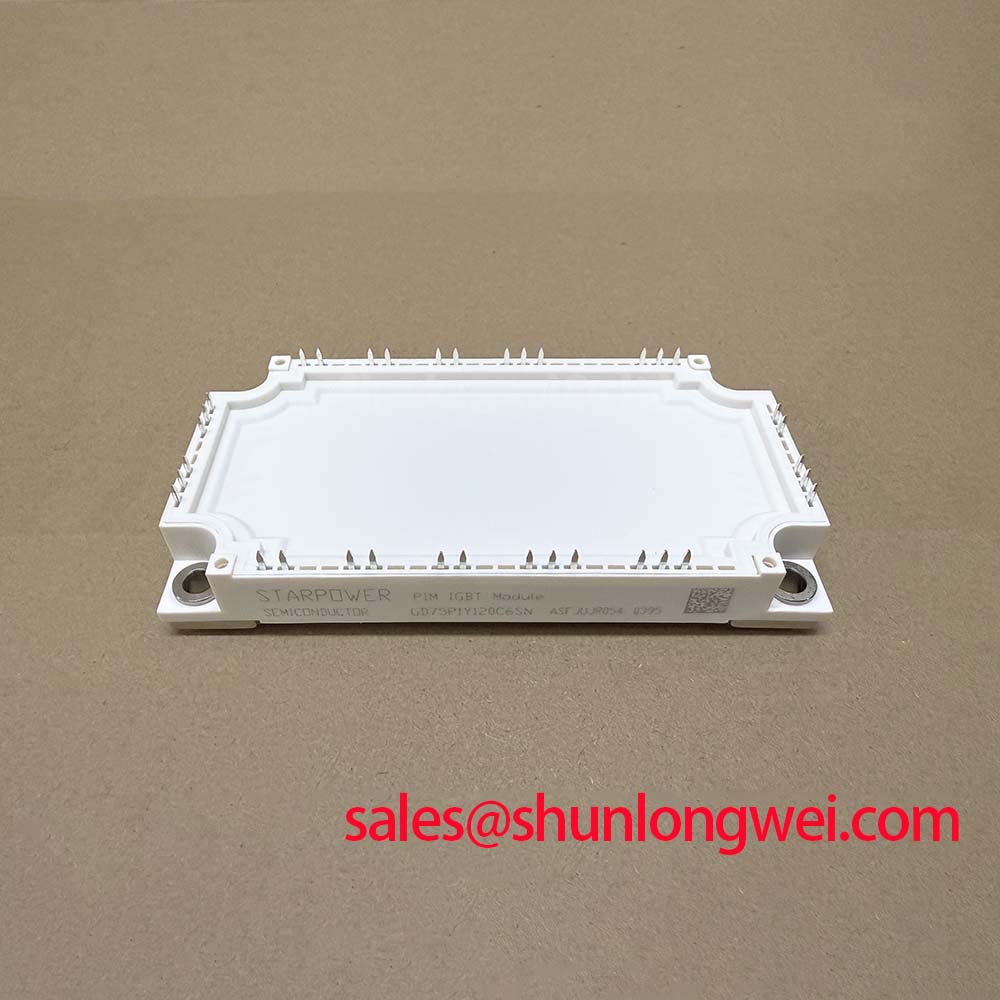
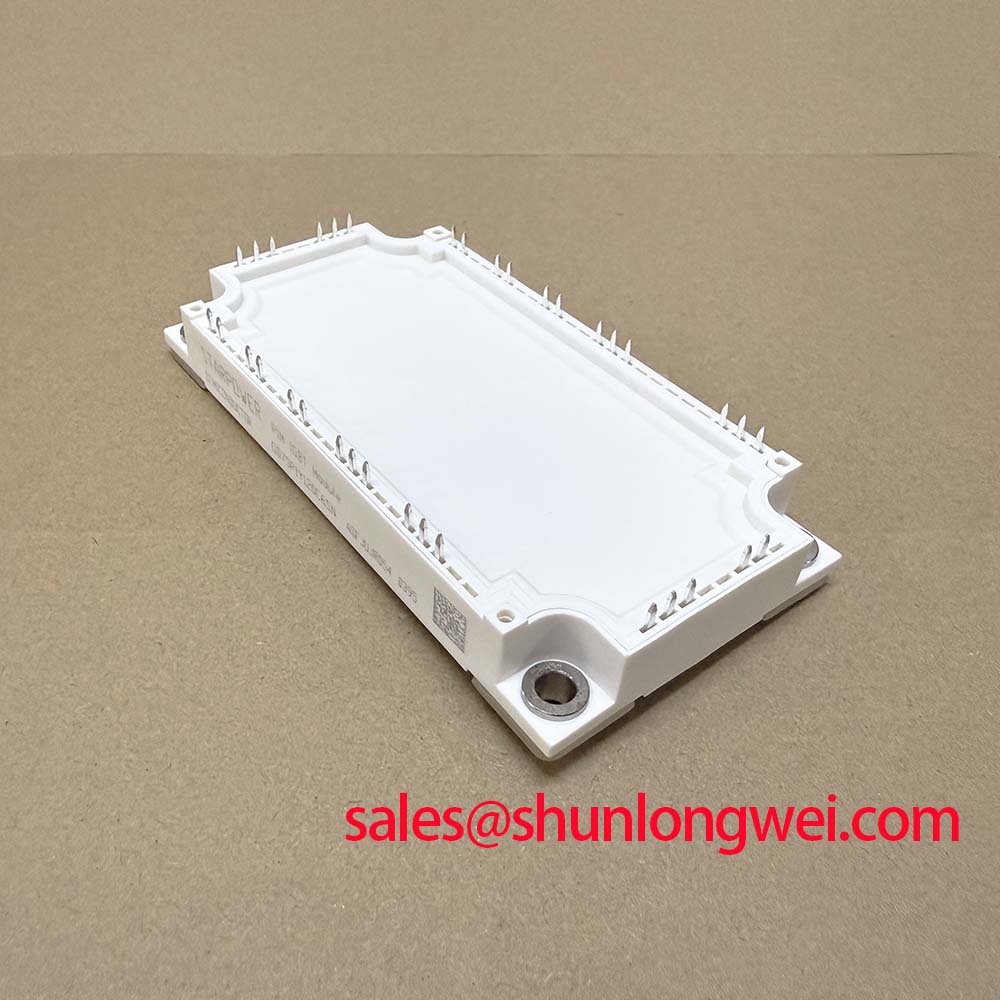
Technical Analysis: Trench FS Architecture and Thermal Stability
The engineering utility of the GD75P1Y120C6SN is rooted in its Trench FS IGBT structure. Unlike traditional non-punch-through (NPT) designs, the Field Stop layer allows for a thinner chip while maintaining a high breakdown voltage. This reduction in silicon thickness directly lowers the saturation voltage ($V_{CE(sat)}$), which is typically 1.85V at rated current. For the hardware engineer, this means lower conduction losses during the “on” state, which translates to a reduced thermal load on the heatsink assembly.
To understand the importance of $V_{CE(sat)}$, one can use a simple analogy: think of the saturation voltage as the friction inside a water pipe. The lower the friction, the more energy flows through the pipe to perform work, and the less energy is wasted as heat against the pipe walls. In high-power systems, minimizing this “voltage friction” is essential to preventing thermal runaway and extending the module’s operating life under heavy cyclical loads.
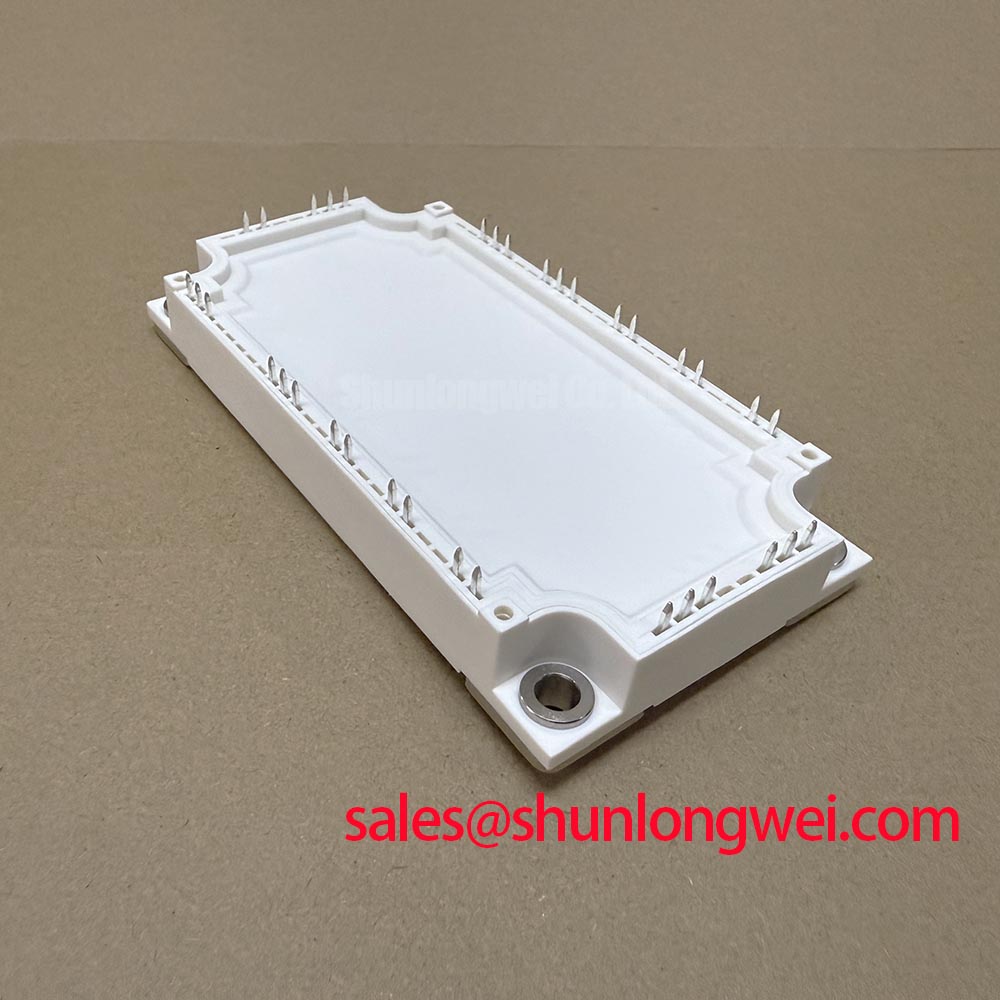
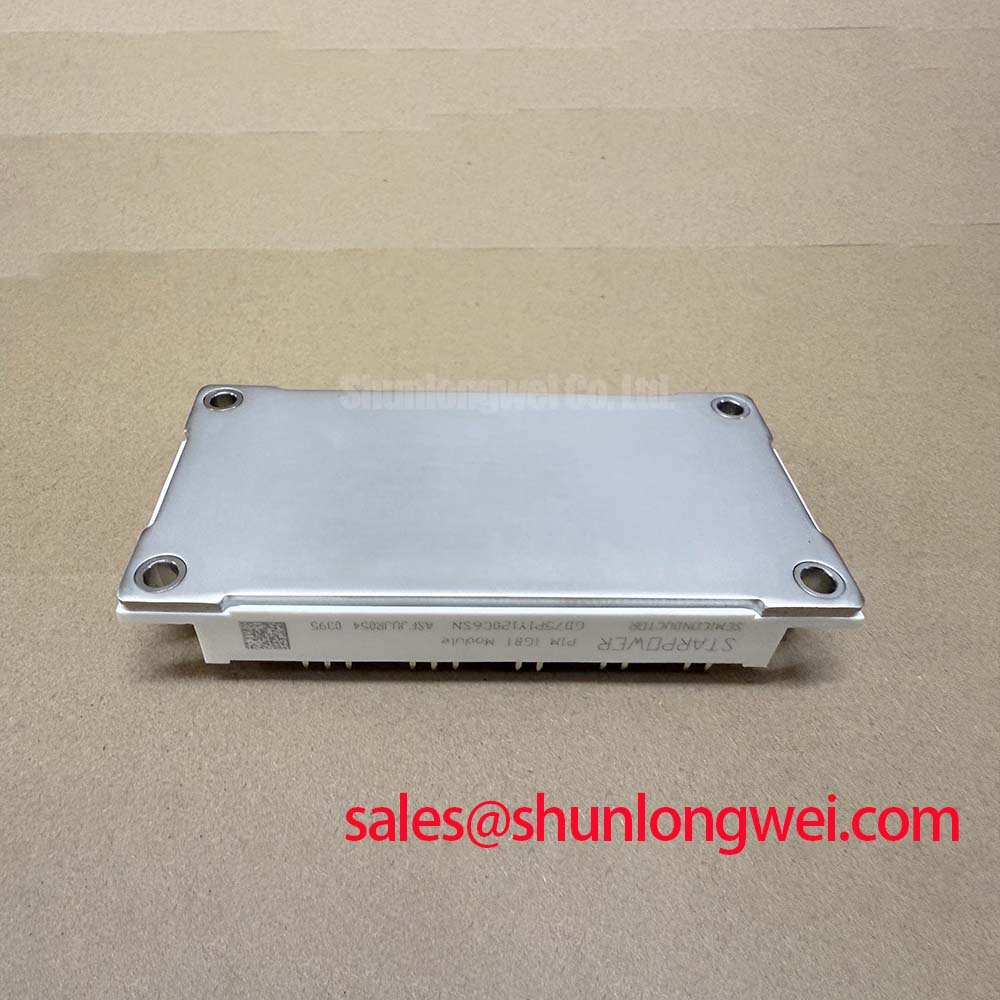
Integration is the second pillar of this module’s performance. By choosing a PIM vs. discrete IGBT approach, designers eliminate the variance in parasitic inductance that typically occurs when wiring separate rectifier and inverter stages. The internal NTC (Negative Temperature Coefficient) thermistor provides real-time telemetry of the junction’s thermal state, allowing the control logic to implement proactive derating or shutdown protocols before critical limits are reached. This level of integrated protection is a fundamental requirement for achieving high-reliability industrial certifications.
Optimized Application Scenarios
The GD75P1Y120C6SN is engineered for environments where power density and integration are prioritized. Specific applications include:
- Variable Frequency Drives (VFDs): The 75A rating at $T_C=80^circ C$ is ideal for standard 30-45kW motor drives, where the integrated brake chopper simplifies the management of regenerative energy.
- Industrial Servo Drives: Trench FS technology provides the fast switching transitions and low $E_{off}$ required for high-precision motion control.
- Solar Inverters: The 1200V rating provides the necessary safety margin for DC link voltages in commercial photovoltaic installations.
- Uninterruptible Power Supplies (UPS): Its compact PIM footprint allows for higher power density in modular UPS racks.
The GD75P1Y120C6SN provides a high-reliability platform for three-phase motor control, combining low conduction losses with comprehensive thermal management in a compact PIM package.
Key Specification Parameters
| Parameter Group | Metric | Value (Typical/Max) |
|---|---|---|
| Absolute Maximums | Collector-Emitter Voltage ($V_{CES}$) | 1200V |
| Absolute Maximums | Continuous Collector Current ($I_C$) | 75A (@ $T_C=80^circ C$) |
| Electrical Characteristics | IGBT Saturation Voltage ($V_{CE(sat)}$) | 1.85V (@ $T_j=25^circ C$) |
| Electrical Characteristics | Gate-Emitter Threshold Voltage ($V_{GE(th)}$) | 5.0V to 7.0V |
| Thermal Properties | Isolation Voltage ($V_{isol}$) | 2500V (AC, 1 min) |
| NTC Thermistor | Resistance ($R_{25}$) | 5.0 kΩ |
Engineer FAQ
1. What are the specific thermal management requirements for this module?
The GD75P1Y120C6SN requires a high-quality thermal interface material (TIM) and precise mounting torque (3.0 to 6.0 N.m) to ensure even contact with the heatsink. Proper application of TIM prevents air gaps that could increase the case-to-sink thermal resistance.
2. How does Trench FS technology compare to standard IGBTs in VFD applications?
Trench FS (Field Stop) technology, as found in the GD75P1Y120C6SN, provides a significantly thinner die which reduces the stored charge. This leads to faster switching times and lower energy loss per cycle compared to older generations, specifically improving efficiency in high-speed pulse width modulation (PWM) strategies.
3. Can the integrated NTC be used for over-temperature protection directly?
While the NTC provides accurate resistance values relative to temperature, it must be integrated into a comparator or MCU-based sensing circuit. The control logic should be programmed to trigger a “soft shut down” or derating if the temperature exceeds the safe operating area (SOA) limits defined in the datasheet.
4. Is the brake chopper current rating the same as the inverter stages?
According to the datasheet, the brake chopper IGBT typically shares similar current handling capabilities (approx. 75A) as the main inverter stages, allowing for symmetrical braking performance in motor drive applications.
Conclusion
The Starpower GD75P1Y120C6SN serves as an efficient and compact solution for industrial engineers seeking to optimize power density in 1200V systems. Its Field Stop Trench architecture significantly reduces energy dissipation, while the integrated PIM topology simplifies mechanical design and enhances overall system reliability. By incorporating the rectifier, inverter, and thermal sensing into a single unit, this module streamlines the path from initial design to certified industrial hardware.