TDK-Lambda PF1000A-360: A Technical Analysis of a High-Density 1kW PFC Module
## TDK-Lambda PF1000A-360 1008W AC-DC Power Module
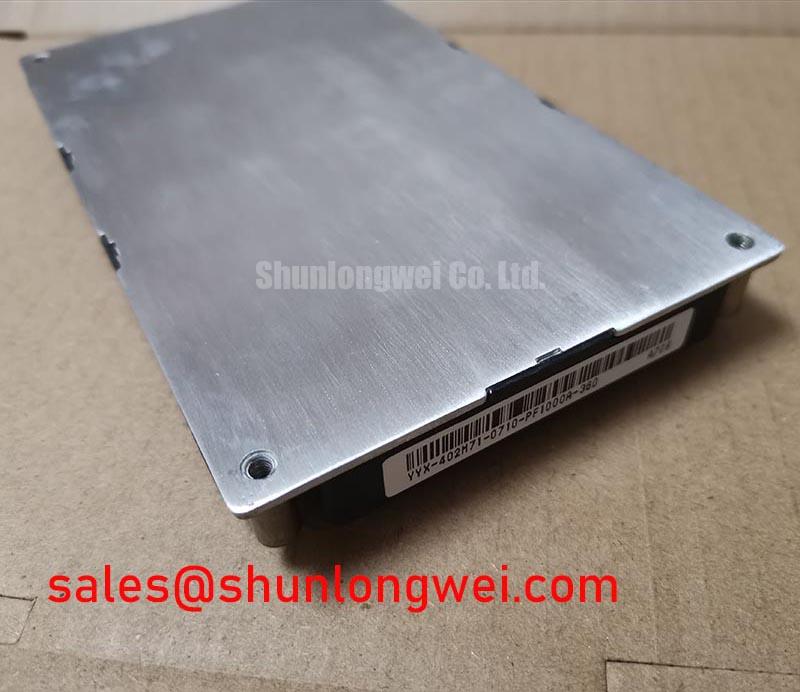
The TDK-Lambda PF1000A-360 is a full-brick AC-DC power factor correction (PFC) module that delivers a regulated high-voltage DC output from a universal AC input. It is engineered for high power density and efficiency, providing a robust front-end solution for distributed power architectures. By integrating PFC and AC rectification into a single, low-profile package, this module simplifies system design for applications demanding high power in a compact footprint.
* **Core Specifications**: 85-265VAC Input | 360VDC Output | 1008W Power
* **Key Advantages**: High efficiency up to 95% minimizes waste heat; allows for simple conduction cooling via its baseplate.
* **System Integration**: Features enable parallel operation for increased power, alongside remote on/off and ‘DC good’ signals for streamlined control.
Download Official Datasheet (PDF)

Technical Analysis for System Design
The standout feature of the PF1000A-360 is its combination of high power output and high efficiency in a conduction-cooled package. An efficiency rating of up to 95% is critical for thermal management. Think of thermal impedance like a water pipe’s width; a lower impedance (and higher efficiency) means heat flows out more easily, preventing the module from overheating. This high efficiency directly reduces the amount of waste heat generated, allowing designers to use smaller heatsinks or rely solely on a cold plate, which is essential for sealed enclosures or space-constrained systems. For a deeper look into thermal strategy, consider reviewing guides on advanced thermal design.
The module’s architecture provides a regulated 360VDC bus, which is a foundational element in distributed power systems. Instead of designing a custom AC front-end from scratch, engineers can use this off-the-shelf module to power downstream, isolated DC-DC converters. This approach accelerates development time and reduces design risk. Furthermore, the datasheet confirms the ability to connect modules in parallel for higher power or N+1 redundancy. This is achieved through a dedicated current share pin, ensuring balanced load distribution across units without complex external circuitry. This scalability is a significant advantage for systems with evolving power requirements.
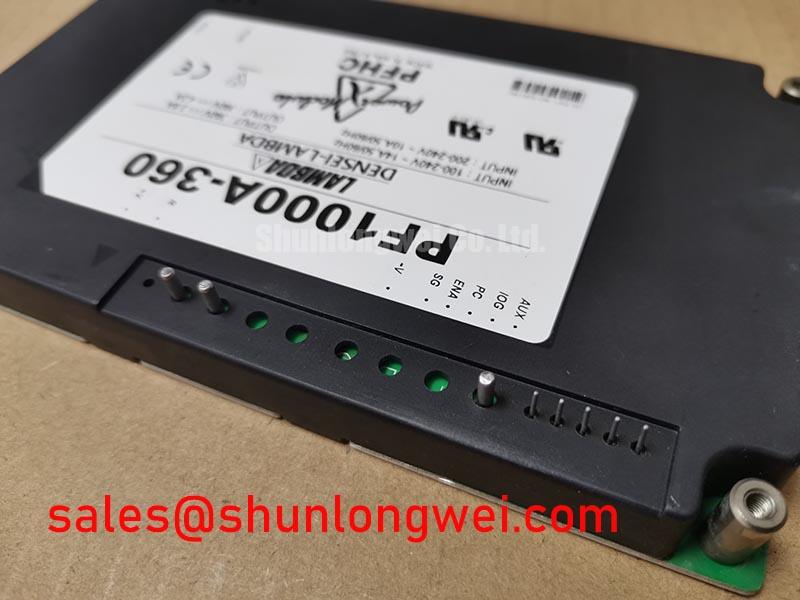
The PF1000A-360 also includes several control and monitoring functions that enhance system reliability. It features an ‘inverter good’ (ENA) signal and an auxiliary voltage output (12V at 20mA). The ENA signal provides a clear status indication that the PFC output is stable and within regulation, which can be used to sequence the turn-on of downstream converters. This prevents the downstream converters from operating with an unstable input voltage, a common cause of system faults. This level of integrated control is a key aspect of modern power semiconductors.

Optimized Application Scenarios
* **Custom Power Supplies:** The module’s full-brick form factor and 360VDC output make it an ideal front-end for custom power solutions. Its high efficiency simplifies the overall thermal design.
* **Distributed Power Architectures:** For systems using multiple downstream DC-DC converters, the PF1000A-360 provides a stable, high-voltage bus, and its parallel capability allows for easy scaling.
* **Industrial & Test Equipment:** The wide operating baseplate temperature of -20°C to +85°C and robust construction are well-suited for demanding industrial environments.
* **LED Lighting Systems:** Its high power output and excellent power factor correction (0.95 typical) are valuable for driving large-scale commercial or industrial LED arrays.
With its high power density and conduction cooling, this module is best matched for high-reliability systems where forced-air cooling is not viable.
PF1000A-360 Key Specifications
| Parameter | Specification | Notes |
|---|---|---|
| Input Characteristics | ||
| Input Voltage Range | 85 to 265VAC | Single Phase |
| Power Factor | 0.95 (Typical) | At 230VAC, 100% Load |
| Output Characteristics | ||
| Output Voltage | 360VDC | Fixed |
| Maximum Output Power | 1008W / 1512W | 1008W at 85-265VAC, 1512W at 170-265VAC input. |
| Maximum Output Current | 2.8A / 4.2A | 2.8A at 115VAC, 4.2A at 230VAC input. |
| Performance & Mechanical | ||
| Efficiency | 95% (Typical) | At 230VAC, 100% Load |
| Operating Baseplate Temp. | -20°C to +85°C | Derating may apply |
| Dimensions (W x H x D) | 86 x 12.7 x 146 mm | Nominal values |
Engineer FAQ
How can I increase the total output power beyond 1512W?
The PF1000A-360 is designed for scalability. According to the datasheet, you can connect multiple units in parallel. By utilizing the ‘CS’ (Current Share) pin, the modules will actively balance the load among themselves, enabling higher power output for your system.
What are the cooling requirements for this module?
This module is designed for conduction cooling through its aluminum baseplate. The baseplate temperature must be maintained between -20°C and +85°C. Effective thermal management requires mounting the module firmly to a heatsink or cold plate with a suitable thermal interface material to ensure heat is wicked away efficiently.
Is the output isolated from the input?
No. The datasheet specifies that the input is not isolated from the output. This module serves as a non-isolated front-end PFC stage. System-level isolation must be implemented by the downstream DC-DC converters that are powered by this module.
What safety certifications does the PF1000A-360 hold?
The module is certified to major ITE (Information Technology Equipment) safety standards, including UL62368-1, CSA62368-1, and EN62368-1, ensuring compliance for use in commercial and industrial equipment.
Enabling Compact High-Power Designs
The TDK-Lambda PF1000A-360 offers a direct path to developing high-density, efficient, and scalable power systems. By providing over 1kW of regulated DC power in a compact, conduction-cooled package, it empowers engineers to build sophisticated equipment without the complexities of designing a custom AC front-end from discrete components.