Technical Analysis of the IXYS MCD310-16io1 Thyristor/Diode Module: 1600V 320A Industrial Power Control
MCD310-16io1 IXYS Thyristor/Diode Module | 1600V 320A Power Block
Introduction to Industrial Power Control with MCD310-16io1
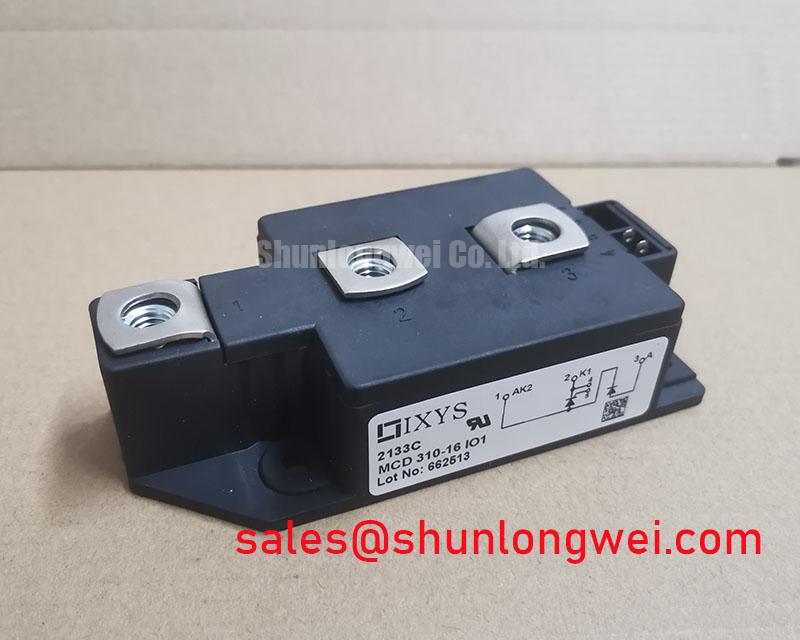
The MCD310-16io1 is a high-performance Thyristor/Diode module engineered by IXYS (Littelfuse) to serve as a cornerstone for heavy-duty industrial rectification and power modulation. This dual-component power block integrates a phase-leg configuration consisting of one SCR (Silicon Controlled Rectifier) and one diode, optimized for space-constrained environments requiring high current density and voltage isolation.
- Core Specifications: 1600V Blocking Voltage | 320A Average Current ($I_{TAV}$) | 520A RMS Current ($I_{TRMS}$)
- Key Engineering Values: Enhanced surge current handling and simplified thermal management via a specialized copper baseplate.
For engineers calculating heatsink sizing for variable torque motor drives, the MCD310-16io1 offers a predictable thermal path, facilitating reliable operation even under fluctuating load conditions. This module effectively addresses the challenge of managing high-current transients without compromising the longevity of the silicon dies.
Download Official MCD310-16io1 Datasheet (PDF)
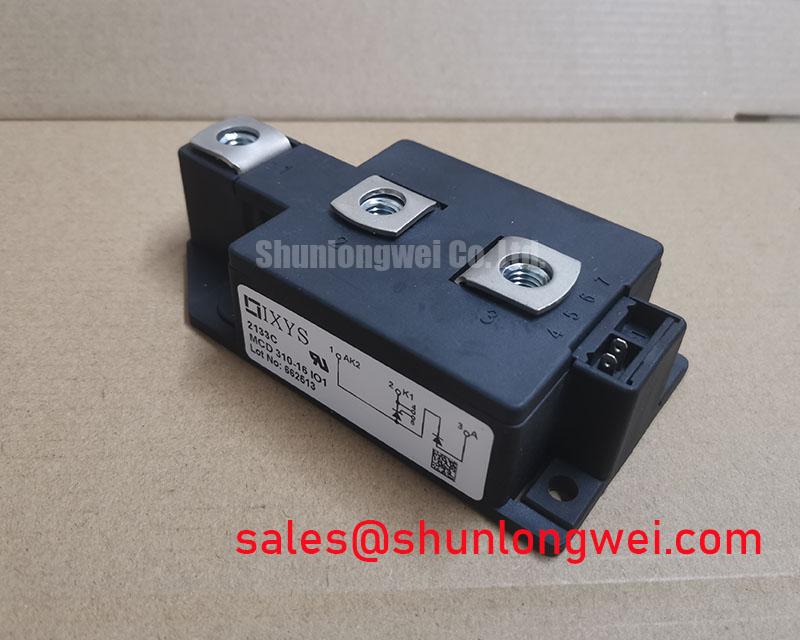
Technical Analysis: Precision Surge and Thermal Design
The MCD310-16io1 utilizes advanced glass passivation technology for its semiconductor chips. This process ensures exceptional electrical stability and low leakage current over the device’s operational lifespan. By stabilizing the junction-surface interface, IXYS provides a module that maintains its 1600V blocking capability even in humid or harsh industrial atmospheres.
One of the most critical parameters for this module is its Surge Current Rating ($I_{TSM}$), which reaches up to 10,000A (at 50Hz). In the event of a downstream fault, the device’s high I²t rating allows for effective coordination with high-speed semiconductor fuses. To understand its significance, one can compare the I²t rating to the physical robustness of a dam; a higher value indicates the device can “withstand a larger flood” of energy during a brief failure window before the internal structure is compromised.
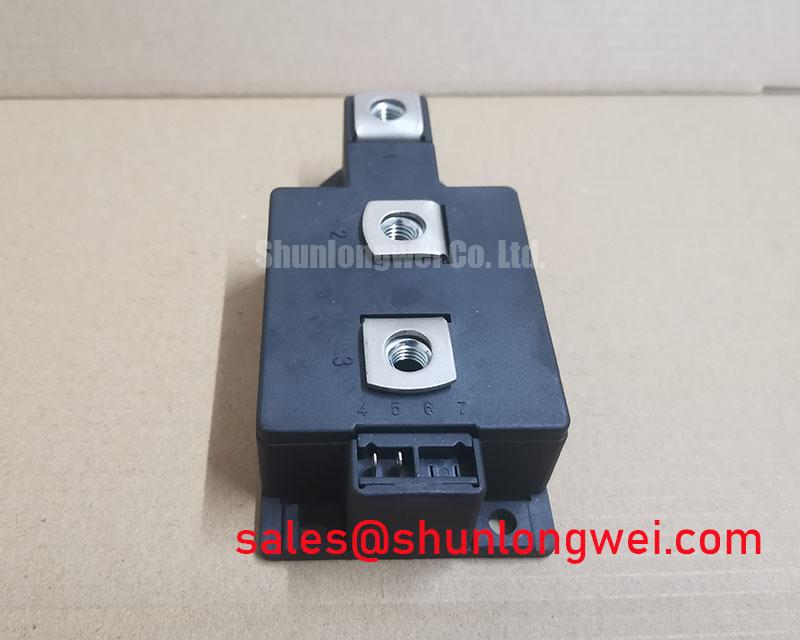
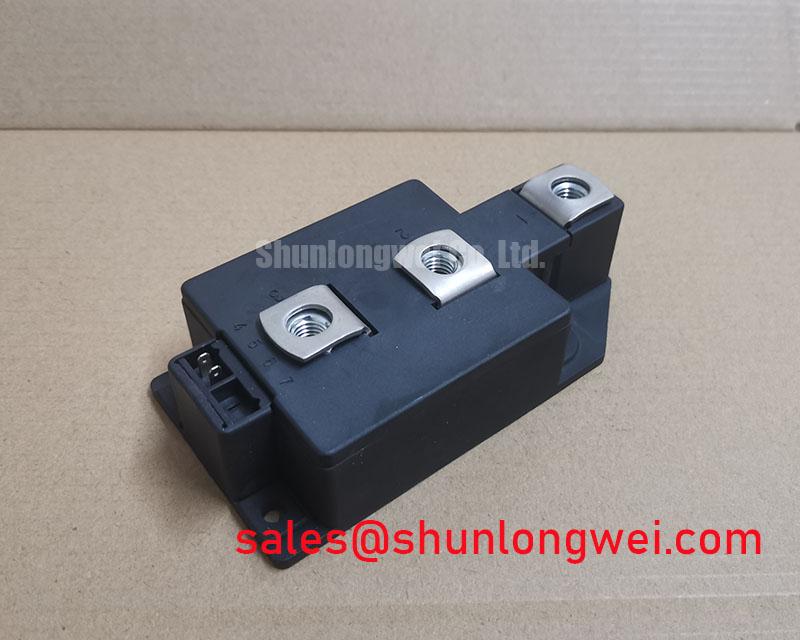
Thermal management is bolstered by the isolated copper baseplate. With a junction-to-case thermal resistance ($R_{thJC}$) of 0.13 K/W for the thyristor, heat generated during high-conduction cycles is rapidly shunted to the external cooling system. This minimizes the junction temperature ($T_vj$) swings, which is the primary driver of thermal fatigue in power semiconductors.
Optimized Application Scenarios
The unique blend of high blocking voltage and current capacity makes the MCD310-16io1 a versatile component for several demanding sectors:
- Motor Soft Starters: Specifically designed to manage high inrush currents during motor acceleration phases.
- Industrial AC/DC Power Supplies: Acts as a robust input rectification stage for systems requiring 380V-480V mains compatibility.
- Controlled Heater Circuits: Provides precise phase control for resistive heating loads in manufacturing processes.
- Uninterruptible Power Supplies (UPS): Used in the bypass and charging circuits where high reliability is non-negotiable.
Best Match Conclusion: The MCD310-16io1 is ideal for 480V industrial line applications requiring robust 320A average current delivery and superior surge fault protection.
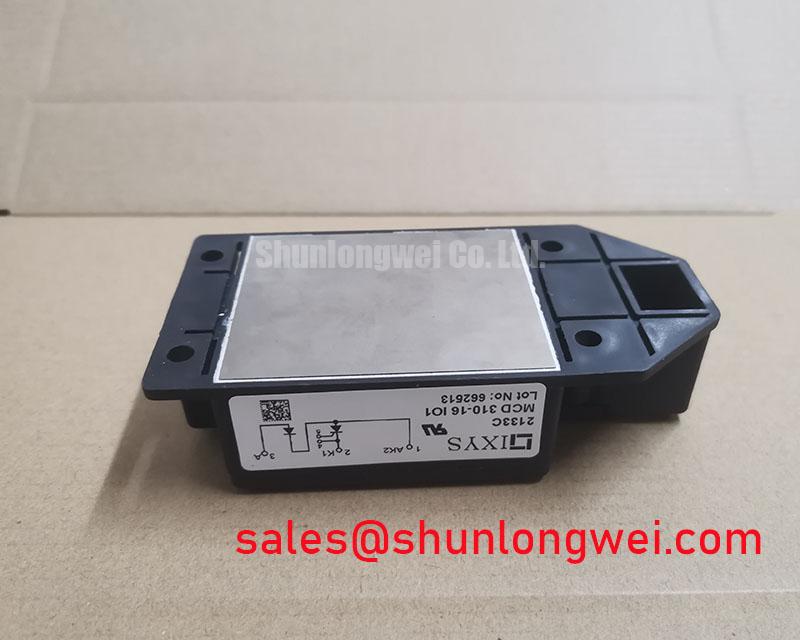
Key Specifications Table
| Parameter Group | Symbol | Value |
|---|---|---|
| Voltage Ratings | VDRM / VRRM | 1600 V |
| VISOL (RMS for 1 min) | 3600 V~ | |
| Current Ratings | ITAV (TC = 85°C) | 320 A |
| ITRMS | 520 A | |
| ITSM (50Hz, Sine) | 10,000 A | |
| Thermal/Mechanical | RthJC (Thyristor) | 0.13 K/W |
| Mounting Torque | 4.5 – 7 Nm |
Engineer’s FAQ
Q1: What is the recommended mounting torque for the MCD310-16io1?
A: To ensure optimal thermal contact and electrical connectivity, the mounting torque should be maintained between 4.5 and 7 Nm. Under-tightening increases thermal resistance, while over-tightening can stress the internal isolation layer.
Q2: Can this module be used in a 3-phase bridge configuration?
A: Yes. In a standard 3-phase controlled rectifier bridge, three MCD310-16io1 modules would be required to form the controlled legs of the circuit.
Q3: How do I calculate the heat dissipation for a 200A load?
A: Refer to the “Forward Current vs. Forward Voltage Drop” and “Power Dissipation per Thyristor” curves in the datasheet. Total dissipation is roughly the product of the forward voltage drop (VT) and the average current, further adjusted by the duty cycle.
The IXYS MCD310-16io1 provides engineers with a verified path to high-voltage industrial power control. By leveraging its superior surge handling and low thermal resistance, designers can achieve robust system performance that meets the rigorous demands of modern industrial infrastructure.