Tianma TM104SDH01 10.4-Inch SVGA Industrial TFT-LCD: Technical Specifications, Architecture, and Application Guide
TM104SDH01 Tianma 10.4-Inch SVGA Industrial TFT-LCD Display
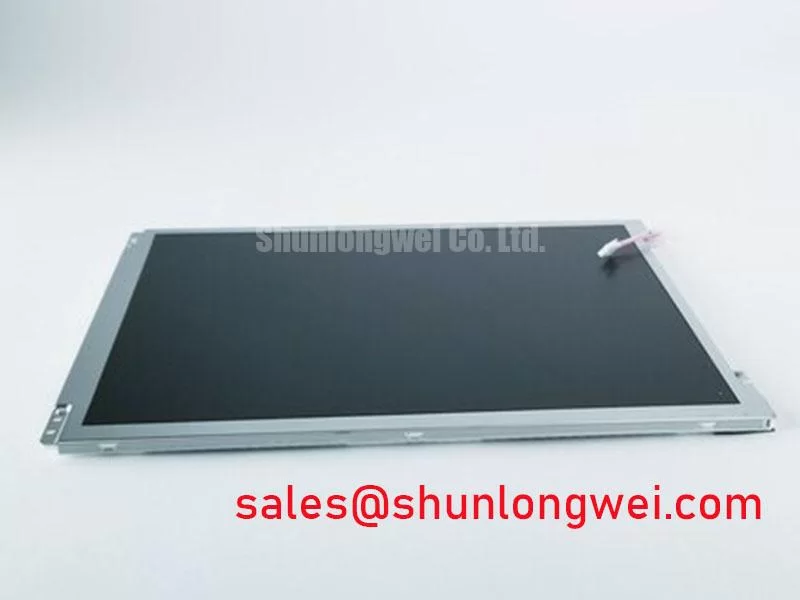
The TM104SDH01 is a 10.4-inch SVGA industrial-grade TFT-LCD module manufactured by Tianma, delivering balanced optical performance and long-term operating durability across wide temperature ranges.
- Core Specifications: 800 × 600 Resolution | 400 cd/m² Luminance | 500:1 Contrast Ratio | 20-pin LVDS Interface
- Engineering Advantages: Direct 1-channel LVDS signaling simplifies host interfacing, while an integrated white LED backlight structure ensures high optical efficiency without high-voltage inverter overhead.
- Design Considerations: Addresses thermal stability questions during sub-zero cold start (-20°C) through optimized liquid crystal response times and stable 3.3V logic compatibility.

Technical Architecture and Electro-Optical Analysis
The TM104SDH01 utilizes a normally white, transmissive a-Si TFT matrix configured for 6-bit or 8-bit digital color input via a standard 1-channel LVDS receiver. With 800 × 600 active pixels arranged in an RGB vertical stripe over a 211.2 × 158.4 mm active area, the display delivers a 0.264 × 0.264 mm pixel pitch. This dot pitch yields balanced graphic clarity suitable for industrial SCADA and legacy instrumentation retrofits without demanding high GPU rendering overhead.
To understand the optical response, one can think of liquid crystal switching like a mechanical valve governing fluid flow: at nominal 25°C operating temperatures, the combined rise and decay response time ($T_r + T_d$) measures 20 ms (typical). This switching speed minimizes ghosting during active data waveform refresh cycles. System designers must also implement proper LVDS signal integrity routing to preserve differential skew tolerance across the 20-pin interface.

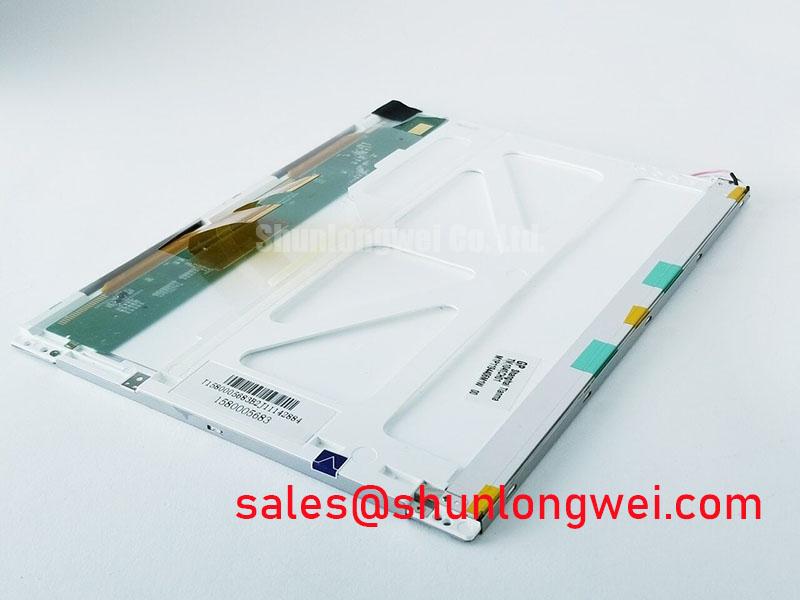

Optical readability is driven by an edge-lit LED backlight assembly delivering 400 cd/m² nominal surface luminance at a contrast ratio of 500:1. The viewing envelope reaches 70°/70° horizontal (left/right) and 60°/70° vertical (up/down at CR ≥ 10), with the 12 o’clock viewing direction optimized for operator consoles. Proper execution of backlight PWM dimming helps sustain optical uniformities and prevent driver overheating during 24/7 industrial duty cycles.
Recommended Application Environments
- Factory Automation & HMIs: Matches standard 4:3 cabinet cutouts while meeting industrial touch and display standards.
- CNC Machinery Consoles: SVGA native resolution pairs cleanly with embedded Linux and RTOS control engines without requiring image scaling.
- Test & Measurement Equipment: 500:1 contrast and 262K/16.7M selectable color reproduction support precise multi-channel waveform visualization.
- Legacy System Retrofits: Standard 20-pin LVDS mapping eases replacement of obsolete 10.4-inch CCFL panels using compatible LED driver rails.
Optimum compatibility is achieved in fixed enclosure installations requiring standard 4:3 aspect ratio SVGA visualization under ambient industrial lighting conditions.
Key Electrical and Mechanical Specifications
| Parameter Category | Specification | Typical Value / Rating | Unit |
|---|---|---|---|
| Mechanical | Diagonal Size | 10.4 | inch |
| Active Area (W × H) | 211.20 × 158.40 | mm | |
| Outline Dimensions (W × H × D) | 236.00 × 176.90 × 5.60 | mm | |
| Module Weight | 280 (typ.) | g | |
| Electrical | Logic Supply Voltage ($V_{DD}$) | 3.0 to 3.6 (3.3 typ.) | V |
| Logic Current Consumption ($I_{DD}$) | 280 (typ.) | mA | |
| Data Interface Protocol | 1-Channel LVDS (6-bit / 8-bit) | — | |
| Optical | Surface Luminance | 400 | cd/m² |
| Contrast Ratio | 500:1 | — | |
| Viewing Angles (L/R/U/D) | 70 / 70 / 60 / 70 (CR ≥ 10) | deg | |
| Environmental | Operating Temperature | -20 to +70 | °C |
| Storage Temperature | -30 to +80 | °C |
Engineering FAQ
What is the pinout configuration and connector type for the TM104SDH01?
The display uses a standard 20-pin Hirose DF19G-20P-1H (or fully compatible equivalent) interface connector. It carries 3.3V power rails, ground returns, and differential LVDS channel pairs (RxIN0±, RxIN1±, RxIN2±, RxCLK±, and optional RxIN3± for 8-bit color mode).
How should the LED backlight driving circuit be calculated?
The LED backlight consists of series-parallel string arrays requiring a dedicated constant-current boost driver. Refer to the manufacturer datasheet for exact forward current ($I_F$) per string to prevent thermal runaway and ensure adherence to backlight lifespan standards.
Can the TM104SDH01 operate under strong mechanical vibration?
Yes, the panel’s mechanical perimeter and lightweight 280 g frame withstand typical industrial vibration levels when mounted using uniform torque across all four bezel mounting tabs, following vibration resistance design practices.
The TM104SDH01 provides a robust, proven display platform that enables hardware engineers to deploy reliable visual interfaces in automation cabinets, instrumentation racks, and industrial terminals.