Toshiba LT084AC3700: 8.4-inch SVGA Industrial LCD Module for Legacy System Continuity
Toshiba LT084AC3700 | 8.4-inch SVGA Industrial TFT-LCD Module
Precise Industrial Visuals for Legacy System Continuity
The Toshiba LT084AC3700 is a high-performance 8.4-inch TFT-LCD module specifically engineered to provide visual stability and interface compatibility for industrial systems. As modern displays pivot toward consumer-grade LED standards, this module stands as a critical resource for maintaining legacy infrastructure that relies on exact physical and electrical footprints. It features an SVGA resolution and a robust CMOS interface, making it a staple for high-reliability instrumentation.
- Core Specifications: 800 x 600 (SVGA) | 250 cd/m² Brightness | CMOS 1-ch (6-bit) Interface
- Key Advantage: Direct parallel signaling minimizes processing latency, while the 4:3 aspect ratio ensures perfect scaling for legacy software GUIs.
- Engineering Insight: For engineers asking how to maintain older CNC or medical consoles, the LT084AC3700 provides a verified drop-in solution that avoids the costly redesign of control electronics required by modern serial LVDS panels.
Explore our LCD Core Technology resources for integration support.
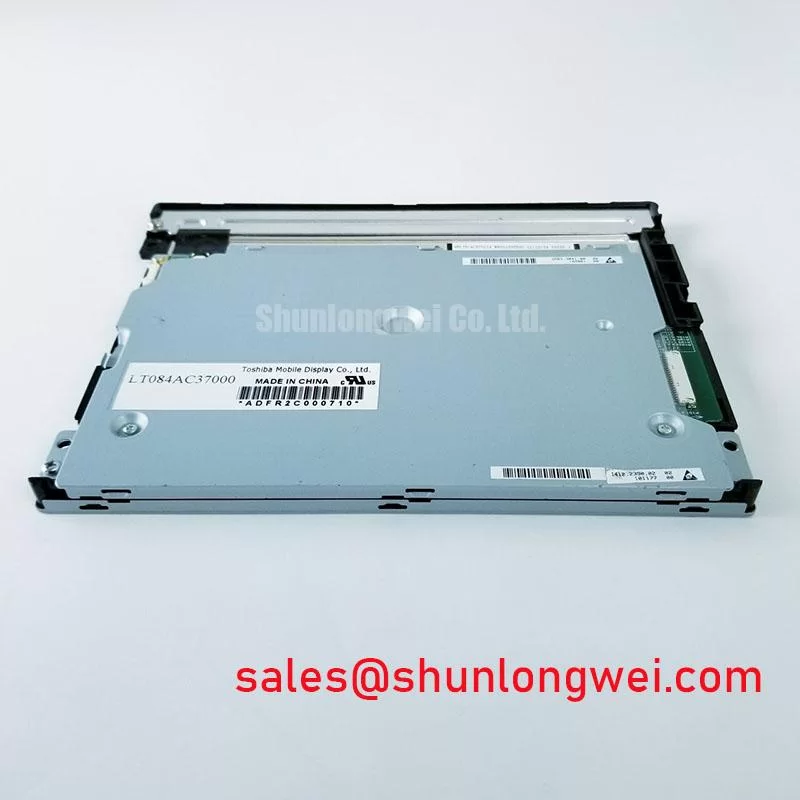
Technical Analysis: Signal Integrity and Optical Precision
The LT084AC3700 utilizes a 1-channel CMOS (6-bit) interface, supporting a palette of 262,144 colors. In an era of serialized high-speed data, the parallel CMOS interface offers a distinct advantage in specific industrial environments: it operates without the complex clock-recovery overhead of modern protocols. Think of the CMOS data lines like a multi-lane highway; because every bit has its own dedicated path, the timing remains deterministic and predictable, which is essential for real-time monitoring systems where jitter cannot be tolerated.
Optical performance is defined by a 500:1 contrast ratio and a TN (Twisted Nematic) transmissive mode. While IPS technology offers wider angles, the TN mode used in the LT084AC3700 is optimized for “Normally White” operation, ensuring that the screen remains legible even if power management logic fails. The dual CCFL (Cold Cathode Fluorescent Lamp) backlight system provides a uniform 250 nits of luminance, balanced for indoor control room environments where excessive glare is mitigated by the panel’s specialized surface treatment.
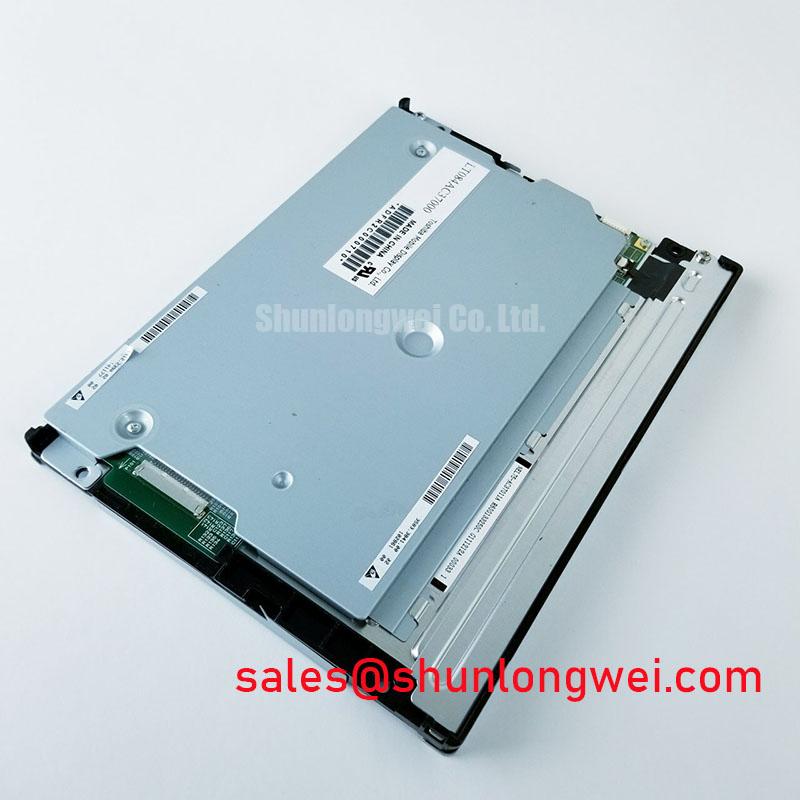
Optimized Application Scenarios
The mechanical and electrical characteristics of the LT084AC3700 make it highly effective in the following sectors:
- CNC Machinery Displays: The 800×600 resolution aligns perfectly with industrial G-code visualizers, providing sharp vector rendering without interpolation artifacts.
- Medical Diagnostic Equipment: Reliable color reproduction and 6-bit depth are sufficient for vital sign monitoring and legacy ultrasound interfaces.
- Factory Automation HMIs: Built to withstand the rigors of 24/7 operation, its thermal management is simplified by the transmissive design.
- Marine Instrumentation: The high contrast ratio assists in reading critical data under varying cabin light conditions.
Best Match Conclusion: This module is the optimal choice for maintenance cycles in systems where the 41-pin CMOS interface architecture is non-negotiable for system uptime.
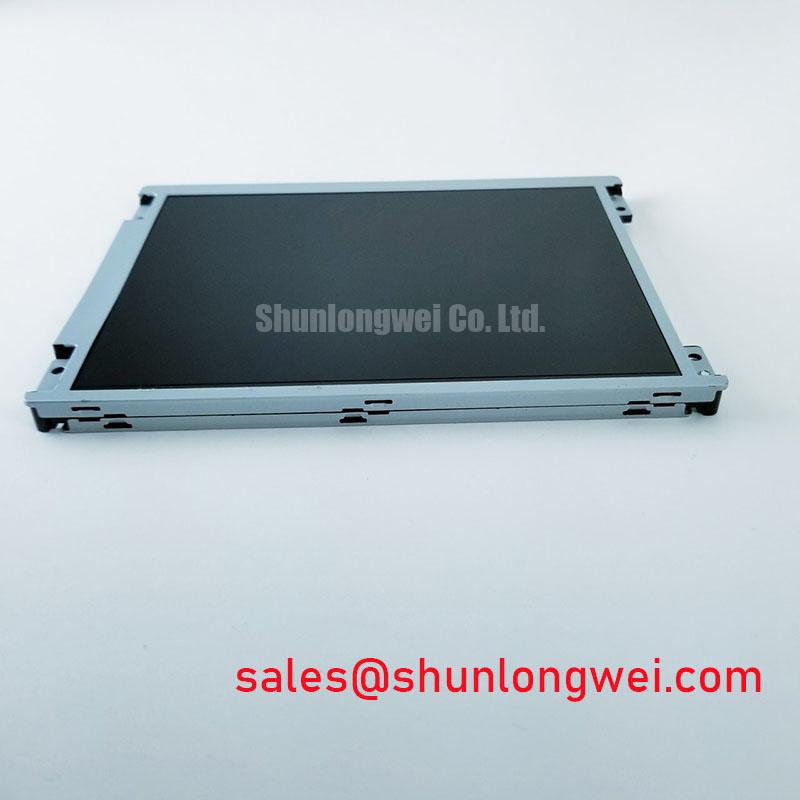
Critical Specifications Table
| Category | Parameter | Value |
|---|---|---|
| Physical Dimensions | Screen Size | 8.4 inches (Diagonal) |
| Active Area | 170.4(W) × 127.8(H) mm | |
| Resolution | 800 (RGB) × 600 (SVGA) | |
| Electrical & Interface | Interface Type | CMOS (1-ch, 6-bit) |
| Input Voltage (VDD) | 3.3V (Typical) | |
| Connector | 41-pin Header | |
| Optical Performance | Luminance | 250 cd/m² |
| Contrast Ratio | 500:1 (Typical) | |
| Viewing Angles | 60/60/40/50 (L/R/U/D) |
Engineer FAQ
Q1: Is the LT084AC3700 compatible with LED drivers?
A: No. This specific model utilizes a CCFL backlight system which requires a high-voltage AC inverter. Replacing the CCFL with LED strips requires custom mechanical modification and is not recommended for maintaining original safety certifications.
Q2: How does the CMOS interface timing differ from LVDS?
A: Unlike LVDS, which serializes data to reduce wire count, the LT084AC3700 uses parallel signaling. Timing is managed via a direct Dot Clock (DCLK) and H-Sync/V-Sync pulses. This requires careful signal integrity management over longer ribbon cables to avoid EMI.
Q3: What is the expected backlight lifespan for this industrial display?
A: Typical CCFL lifespan for industrial panels ranges from 25,000 to 50,000 hours. For strategies on extending operational life, refer to our guide on proactive management of industrial LCD backlight lifespan.
Q4: Can this display operate in extreme temperature environments?
A: The LT084AC3700 is designed for standard industrial operating ranges (0°C to +50°C). For applications requiring broader thermal performance, see our industrial reliability guide.
The Toshiba LT084AC3700 remains a cornerstone component for specialized industrial visual systems. By delivering deterministic signal performance through its CMOS interface and maintaining the SVGA 4:3 standard, it allows engineers to ensure the continued reliability and precision of critical machinery without the risks associated with modern interface conversion.