Toshiba LTM10C210: A Technical Review for Industrial Applications
Toshiba LTM10C210 10.4″ VGA Color TFT-LCD Module
Introduction to the LTM10C210 Industrial Display
The Toshiba LTM10C210 is a 10.4-inch amorphous silicon (a-Si) TFT-LCD module engineered for reliability and streamlined integration in industrial applications. This display’s defining feature is its integrated CCFL backlight inverter, which simplifies system architecture and reduces external component dependency. It delivers proven performance for HMIs, control systems, and legacy equipment upgrades, providing a dependable visual interface built on established technology.
- Core Specifications: 640×480 (VGA) | 200 cd/m² Brightness | Built-in CCFL Inverter
- Key Advantages: Simplified power supply design, reduced system complexity, and mechanical compatibility for straightforward equipment retrofits.
- Design Simplification: The integrated inverter removes the need to source, qualify, and shield a separate backlight driver, accelerating development time.
Download the Official LTM10C210 Datasheet (PDF)


Technical Analysis for System Integration
The most significant engineering advantage of the LTM10C210 is its built-in backlight inverter. This integration provides a single module solution for both display data and illumination. For a design engineer, this eliminates the process of selecting, testing, and housing a separate CCFL driver board. It also minimizes EMI/RFI risks by keeping high-voltage backlight traces contained within the module’s shielded assembly. Think of the integrated inverter as a pre-qualified power supply for the display’s lighting; it removes the complex task of matching an external driver, simplifying the system’s power tree and mechanical layout. This is particularly valuable in maintaining the vibration and shock resistance of the final assembly.
This module’s visual characteristics are optimized for industrial environments. The 640×480 VGA resolution on a 10.4-inch screen provides a pixel density of 76 PPI, which is effective for rendering clear text, schematics, and control buttons in typical smart factory HMI applications. The typical brightness of 200 cd/m² and a contrast ratio of 250:1 are specified for readability in indoor factory and control room lighting. While not intended for direct sunlight, these specifications represent a deliberate balance between clear visibility, low power consumption (7.3W typical), and long-term operational stability, which are often prioritized over peak brightness in 24/7 industrial machinery.
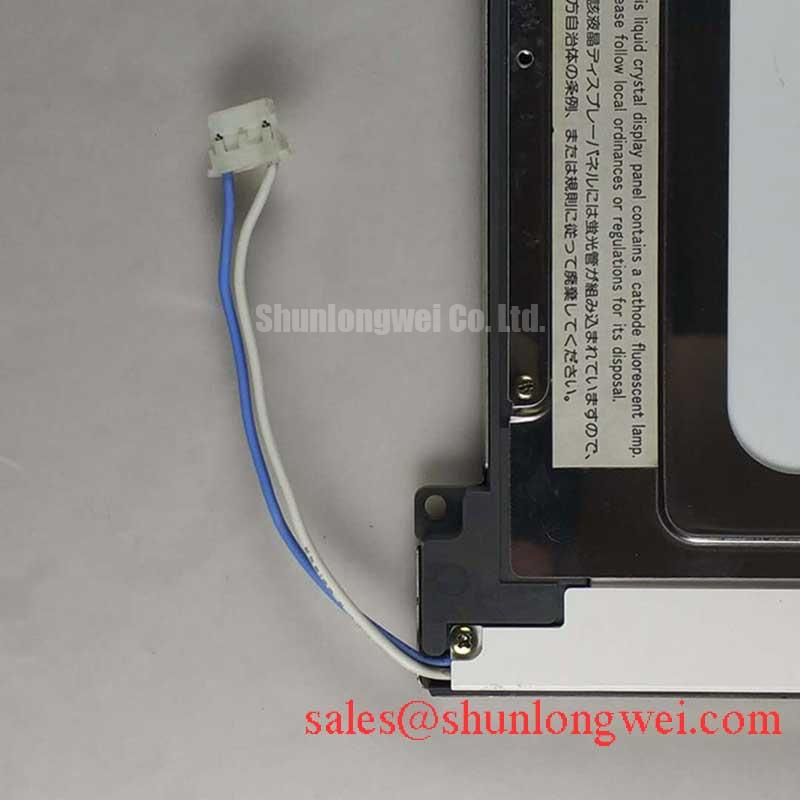

Optimized Application Scenarios
- Industrial Control Panels: The 10.4″ form factor and VGA resolution are an industry standard, making the LTM10C210 ideal for CNC machines, PLCs, and process control interfaces where reliability is paramount.
- Legacy System Retrofits: Its specified mechanical compatibility with the LTM10C209H enables it to serve as a drop-in replacement, extending the life of existing equipment without costly redesigns.
- Test and Measurement Equipment: The integrated design saves valuable internal space and simplifies the BOM for benchtop instruments that require a clear and stable data display.
- Medical Monitoring Systems: Provides a dependable display for patient monitoring and diagnostic equipment where consistent, long-life performance is a primary requirement.
The module’s balance of integrated features, standard resolution, and proven CCFL backlight technology makes it an excellent match for long-lifecycle industrial and medical devices.
Key Specifications of the LTM10C210
| Display & Optical Characteristics | |
|---|---|
| Screen Size | 10.4 inches |
| Resolution | 640(RGB) x 480 [VGA] |
| Active Area | 211.2(H) x 158.4(V) mm |
| Brightness | 200 cd/m² (Typ.) |
| Contrast Ratio | 250:1 (Typ.) |
| Viewing Angle (CR≥10) | 60/60/50/50 (Typ.)(L/R/U/D) |
| Display Colors | 262,144 (6-bit) |
| Electrical & Interface | |
| Interface Type | Parallel RGB (1 ch, 6-bit) |
| Logic Power Supply | 5.0V (Typ.) |
| Backlight System | 2 pcs CCFL, with inverter, 50k hours (Typ.) |
| Mechanical & Environmental | |
| Outline Dimensions | 265(W) x 188.8(H) x 12.0(D) max mm |
| Weight | 650g (Typ.) |
| Operating Temperature | 0°C to +50°C |
| Storage Temperature | -20°C to +60°C |
Engineer FAQ for the LTM10C210
1. Can the LTM10C210 be used as a drop-in replacement for an older LTM10C209H display?
Yes, the datasheet indicates that the LTM10C210 is fully mechanically compatible with the LTM10C209H, making it a strong candidate for direct replacement in systems using the older model. Pin assignments and electrical characteristics should still be verified against both datasheets to ensure a seamless transition.
2. What are the power supply requirements for operating the LTM10C210?
The module requires two main power sources. The logic circuitry needs a stable +5.0V supply. The integrated CCFL inverter also requires its own power source, which is not detailed in the summary datasheet but is typically a higher voltage DC input (e.g., 12V), which the inverter then boosts to drive the lamps. Refer to the full datasheet for the inverter’s specific voltage and current requirements.
3. What is the backlight’s specified lifetime?
The dual CCFL backlight system has a typical lifetime of 50,000 hours. This figure is defined as the time until the lamp’s brightness falls to 50% of its initial value under specified operating conditions. This long lifespan is crucial for applications requiring continuous, long-term operation. You can learn more about managing backlight lifespan in our guide to proactive backlight management.
4. How does the Parallel RGB interface differ from a modern LVDS interface?
The Parallel RGB interface on this module transmits color data for each pixel over separate parallel lines (6 lines for red, 6 for green, 6 for blue), along with sync signals like Hsync, Vsync, and a dot clock. In contrast, an LVDS (Low-Voltage Differential Signaling) interface serializes the data and transmits it over a few twisted pairs, which reduces the wire count and improves noise immunity over longer distances.
Design and Lifecycle Considerations
The Toshiba LTM10C210 represents a stable and highly integrated solution for industrial display needs. Its combination of a standard VGA interface, robust mechanical design, and a built-in inverter provides engineers with a component that minimizes design overhead and supports the long service life expected in industrial machinery. This focus on integration allows design teams to concentrate on system-level functionality rather than low-level display and backlight driver implementation.