Toshiba LTM12C275A: A Technical Review for Industrial HMI Applications
## Toshiba LTM12C275A 12.1″ SVGA Industrial TFT-LCD Module
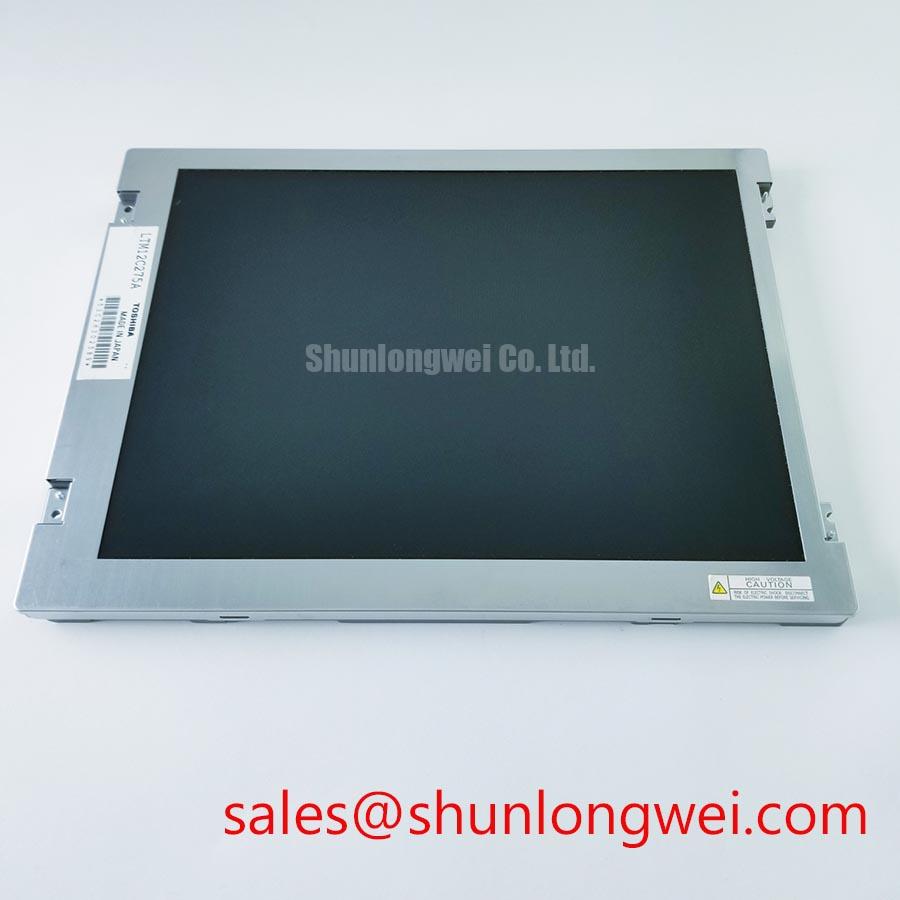
The Toshiba LTM12C275A is a 12.1-inch a-Si TFT-LCD module engineered for industrial applications requiring consistent and reliable visual performance. This display delivers clear, stable imaging through its SVGA resolution and robust backlighting system, making it a suitable component for upgrading or maintaining a wide range of legacy HMI and control systems.
* **Core Specifications:** 12.1-inch Diagonal | 800×600 (SVGA) | 350 cd/m² Brightness
* **Key Advantages:** Ensures readability in typical factory floor lighting. Provides seamless integration with existing SVGA-compatible equipment.
* **Application Focus:** A durable display solution for replacing or servicing industrial HMIs and embedded systems that require an 800×600 resolution panel.
Download The Official LTM12C275A Datasheet (PDF)


### Technical Analysis
The LTM12C275A is specified with an 800 x 600 SVGA resolution, a foundational standard for many industrial control systems developed over the past few decades. This specification is critical for long-term product lifecycle management, as it allows engineers to service or upgrade operator interfaces without costly and time-consuming modifications to the system’s software or video signal generation hardware. The native support for a 6-bit parallel RGB signal further simplifies integration with established controller boards.
With a typical brightness of 350 cd/m² and a contrast ratio of 300:1, this module is well-suited for indoor industrial environments. The brightness level is sufficient to overcome the moderate ambient lighting found in control rooms and on factory floors, ensuring that critical data and operator instructions remain legible. The contrast ratio can be visualized as the clarity between the brightest white and the darkest black. A 300:1 ratio provides the necessary definition for sharp text and clear graphics, which is vital for reducing operator error and fatigue. For more on ensuring display integrity, explore topics on industrial LCD failure analysis.

### Optimized Application Scenarios
The LTM12C275A’s specifications make it a strong candidate for several specific industrial uses:
* **Legacy HMI Systems:** Its SVGA resolution and parallel interface provide a direct-fit replacement for aging panels, extending the life of capital equipment.
* **Process Control Monitors:** The 12.1-inch screen offers enough space to clearly display process diagrams, charts, and key performance indicators.
* **Test and Measurement Equipment:** The display’s clarity and standard interface are ideal for instruments where precise data visualization is paramount.
* **Medical Instrumentation:** The reliable performance and stable brightness are suitable for non-diagnostic monitoring applications.
This module is an optimal match for systems that require a proven, long-lasting SVGA display with dependable visual performance in controlled lighting conditions.
### LTM12C275A Key Specifications
| Key Parameters | |
|---|---|
| Panel Size | 12.1-inch diagonal |
| Resolution | 800(RGB) x 600 [SVGA] |
| Display Technology | a-Si TFT-LCD, TN, Normally White |
| Luminance | 350 cd/m² (Typ.) |
| Contrast Ratio | 300:1 (Typ.) |
| Viewing Angle (H/V) | 120° / 90° (Typ.) |
| Response Time | 15/35 ms (Typ.)(Tr/Td) |
| Signal Interface | Parallel RGB (1 ch, 6-bit), 31 pins Connector |
| Backlight System | 2 pcs CCFL, 50K hours (Typ.) |
| Operating Temperature | 0°C to 50°C |
| Storage Temperature | -20°C to 60°C |
| Outline Dimensions | 275.0(W) x 205.0(H) x 17.0(D) mm |
### Engineer’s FAQ
**Q1: How can the LTM12C275A be integrated into a legacy system with a parallel RGB interface?**
The module is equipped with a 31-pin connector for a 6-bit parallel RGB interface. Integration involves matching the pinout of your controller’s video output to the display’s input connector. You must supply the correct logic voltage (VCC) of 3.3V as specified in the datasheet and ensure the timing signals (HSYNC, VSYNC, DOTCLK) meet the panel’s requirements.
**Q2: What are the primary thermal management considerations for the CCFL backlight?**
The dual CCFL backlight system generates heat. The datasheet indicates a panel surface temperature rise. It is crucial to ensure adequate ventilation around the rear of the module to dissipate this heat and maintain an operating temperature within the 0°C to 50°C range. Blocked airflow can lead to reduced backlight lifespan and potential damage to the panel. For more detailed strategies, review guides on thermal management for industrial displays.
**Q3: The datasheet is marked as “Tentative.” What does this mean for a new design?**
A “Tentative” status on a datasheet typically indicates that the specifications are preliminary and subject to change by the manufacturer. For new system designs, it is critical to confirm the final specifications with the manufacturer or an authorized distributor before committing to mass production. This ensures your design accommodates any potential updates to electrical or mechanical characteristics.
**Q4: What is the typical power consumption of this module?**
The datasheet specifies the panel’s power consumption for the logic board and the backlight separately. The logic board typically consumes around 1.0W. The backlight inverter and lamps will consume additional power, which is dependent on the brightness setting. Engineers should budget for the total power consumption to ensure the system’s power supply is adequately sized.
### Design & Lifecycle Considerations
The LTM12C275A provides a straightforward and effective display solution for systems built around the SVGA standard. Its combination of adequate brightness, established interface technology, and a durable CCFL backlight system delivers the performance required for many industrial HMI and control applications. Proper engineering for shock and vibration and thermal management will further enhance its operational reliability.