UG-9664HDDAG01: A High-Performance 1.1-inch 96×64 RGB PMOLED Display Module with SSD1331 Driver
96×64 RGB Dot Matrix PMOLED Display Module: UG-9664HDDAG01
Introduction to High-Fidelity Miniaturized Visualization
The Univision UG-9664HDDAG01 is a high-performance 1.1-inch Passive Matrix Organic Light-Emitting Diode (PMOLED) display module. This module provides a 96×64 resolution with 65,000 colors, driven by the robust SSD1331 controller. Its primary Unique Value Proposition (UVP) lies in its self-emissive nature, which eliminates the need for a bulky backlight, resulting in an ultra-slim profile and an infinite contrast ratio that is unreachable by standard LCD technologies. It represents a significant step forward in industrial display core technology for handheld instrumentation.
- Core Specifications: 96×64 Resolution | 65k RGB Colors | SSD1331 Driver IC
- Key Engineering Advantages: Superior sunlight readability and zero backlight bleed for dark-room operation.
- Design Intent: Engineers often ask “how to achieve high-visibility color UI in extreme cold?” The UG-9664HDDAG01 answers this with a native operating range down to -30°C.
Download Official Datasheet (PDF Reference)
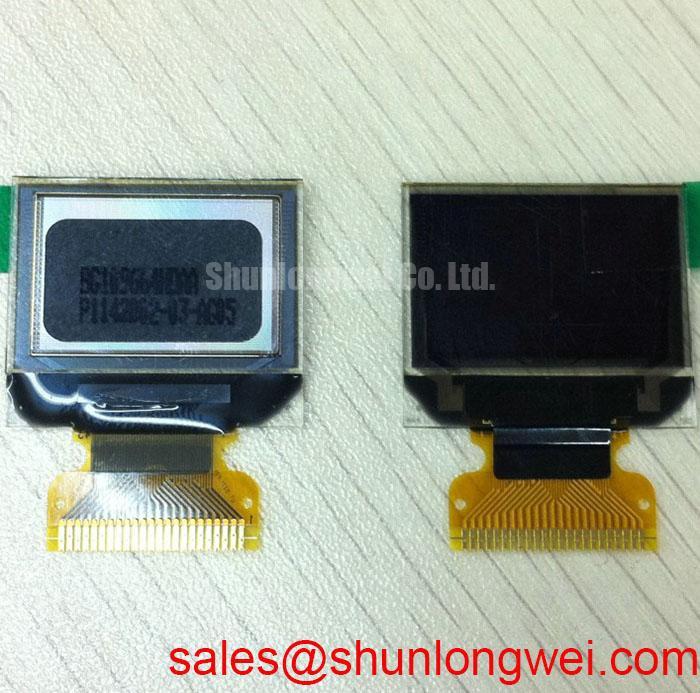


Technical Analysis: Self-Emissive Architecture and Driver Intelligence
The technical superiority of the UG-9664HDDAG01 is rooted in its organic emissive layer. Unlike Thin-Film Transistor (TFT) LCDs that require a constant backlight, each pixel in this PMOLED acts as its own light source. This leads to a contrast ratio typically exceeding 2000:1. In engineering terms, this means the “off” state is absolute black, drawing near-zero current. This is particularly critical for operator well-being, as it reduces eye strain in high-contrast environments.
Consider the Contrast Ratio analogy: standard LCDs are like looking at a flashlight through a piece of dark paper; some light always leaks through. The UG-9664HDDAG01 is like a glow-in-the-dark paint; if it is not supposed to be lit, it is completely dark. This fundamental difference allows for a significantly smaller Power Delivery Network (PDN) design because there is no high-current LED backlight string to manage. The logic voltage (VDD) operates at a standard 2.4V to 3.5V, while the panel drive voltage (VCC) requires 10V to 14V.
The integrated SSD1331 driver simplifies the software overhead by offering hardware-accelerated drawing commands, such as line, rectangle, and copy/paste functions. This reduces the SPI bus traffic and the processing load on the host MCU, making the UG-9664HDDAG01 ideal for systems using resource-constrained microcontrollers. Furthermore, the display’s performance in sub-zero temperatures is vastly superior to LCDs, as there are no liquid crystals to freeze or slow down, ensuring crisp frame rates in extreme cold operations.
Optimized Industrial Application Scenarios
The specific characteristics of the UG-9664HDDAG01 make it suitable for several high-demand niches:
- Portable Gas Detectors: Its high contrast ensures that emergency readings are visible in low-light industrial basements or direct sunlight.
- Medical Diagnostic Handhelds: The 65k color range allows for nuanced data visualization (like pulse waves) in a very small footprint.
- High-End Audio Gear: PMOLEDs offer a premium “blacked-out” aesthetic that blends seamlessly into dark glass front panels.
- Thermal Imaging Accessories: The fast response time prevents ghosting when displaying real-time temperature gradients.
Best Match Conclusion: For designs requiring ultra-thin integration and sunlight readability without the thermal overhead of high-power backlights, this PMOLED is the optimal choice.
Key Technical Specifications
| Parameter Group | Specification | Value |
|---|---|---|
| Display Physical | Resolution | 96 (RGB) x 64 Pixels |
| Active Area | 20.14 x 13.42 mm | |
| Module Size | 25.70 x 22.20 x 1.50 mm | |
| Electrical Ratings | Logic Supply (VDD) | 2.4V to 3.5V |
| Panel Drive (VCC) | 10.0V to 14.0V | |
| Interface | SPI / 8-bit 6800/8080 Parallel | |
| Environmental | Operating Temp | -30°C to +70°C |
| Storage Temp | -40°C to +85°C |
Engineer’s FAQ
Q: How do I interface the UG-9664HDDAG01 with a standard 3.3V SPI microcontroller?
A: The VDD line should be connected to the 3.3V supply. Ensure you use a 4-wire SPI configuration by tying the BS1 and BS2 pins to the appropriate logic levels as per the SSD1331 datasheet. Note that you still require a 12V VCC supply for the OLED panel itself.
Q: What is the typical lifetime of the organic layers in industrial use?
A: PMOLEDs have finite lifetimes influenced by brightness. At 100 cd/m², the UG-9664HDDAG01 typically offers 10,000 to 15,000 hours to half-brightness. For industrial applications, implementing software sleep modes or screen savers significantly extends operational life.
Q: Are there specific thermal considerations for the VCC supply?
A: The internal resistance of the organic layers changes slightly with temperature. It is recommended to use a regulated DC-DC converter for VCC to maintain consistent brightness across the -30°C to +70°C range, as fluctuations in voltage will directly affect current density and pixel luminance.
The UG-9664HDDAG01 remains a staple for engineers who refuse to compromise on visual clarity in space-constrained, battery-powered designs. By leveraging the SSD1331’s hardware acceleration and the inherent benefits of PMOLED technology, this module provides a reliable path to sophisticated user interfaces in the most demanding environmental conditions.