Understanding Semikron SKKQ1500/14E: High-Power AC Switch Module Features and Applications
Semikron SKKQ1500/14E | 1400V High-Power AC Switch Module
M2: High-Reliability AC Control with Pressure Contact Technology
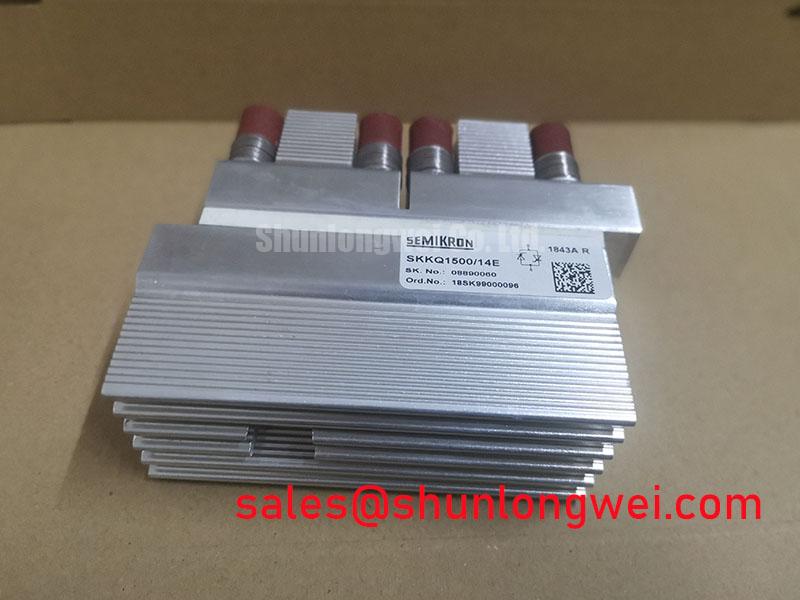
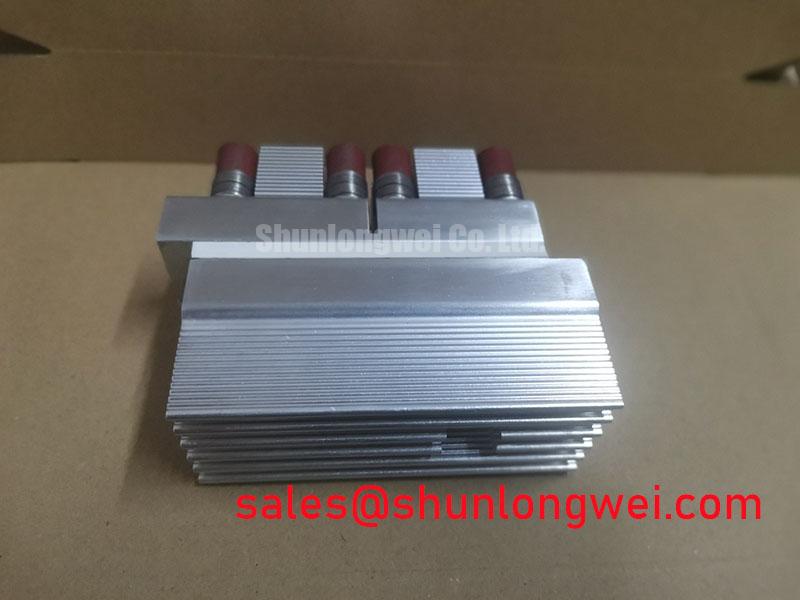
The SKKQ1500/14E is a robust AC switch module consisting of two thyristors in an anti-parallel (back-to-back) configuration, specifically engineered for high-current industrial power control. By utilizing Semikron’s advanced pressure contact technology, this module provides superior power cycling endurance and thermal reliability compared to traditional soldered alternatives. It acts as a highly integrated power semiconductor solution for applications requiring precise AC voltage regulation or static switching.
- Core Specifications: 1400V Repetitive Peak Voltage | 1500A RMS On-State Current | High Surge Current Capability
- Key Engineering Advantages: Enhanced reliability through pressure contact design; Simplified busbar integration for high-current paths.
- Thermal Management: For engineers calculating heat dissipation, the low thermal resistance of the SKKQ1500/14E ensures that high-density power systems remain within safe junction temperature limits under continuous heavy load.
Download Official SKKQ1500/14E Datasheet (PDF)

M3: Technical Analysis of Pressure Contact Reliability
The engineering core of the SKKQ1500/14E lies in its pressure contact construction. Unlike modules that rely on wire bonding or large-area solder joints, pressure contact technology employs internal springs and meticulously machined surfaces to maintain electrical and thermal conductivity. This design prevents the common failure mode of “solder fatigue,” which often occurs during rapid thermal cycles in industrial environments. By maintaining consistent mechanical pressure, the module ensures long-term stability even in systems where the load fluctuates frequently.
When analyzing the electrical characteristics, the 1400V rating provides a significant safety margin for 400V and 480V AC line systems, protecting against transient overvoltages. To visualize the importance of its thermal resistance ($R_{th(j-c)}$), one can compare it to a wide water pipe: a lower resistance value allows heat (the water) to flow away from the thyristor junction much faster, preventing the “flood” of thermal runaway. This rapid heat transfer is essential for maintaining the I²t rating necessary for proper fuse coordination and protection.
M4: Optimized Application Scenarios
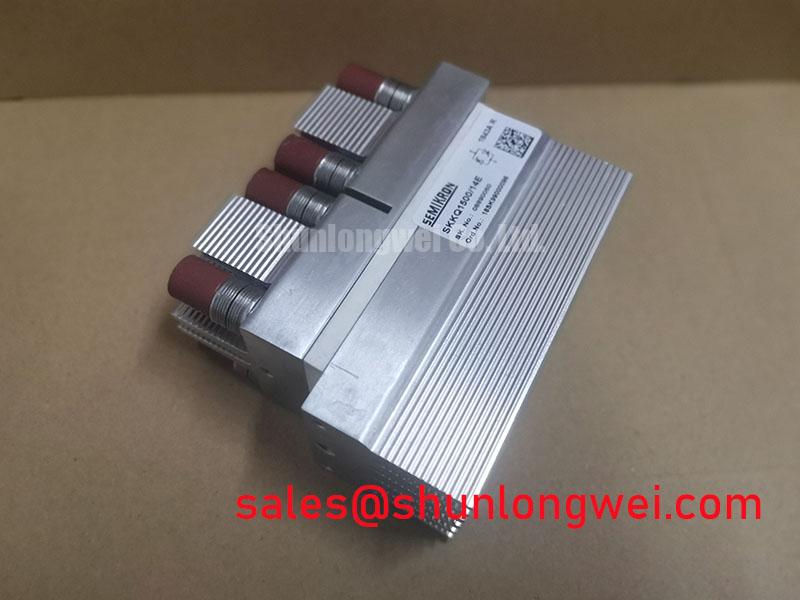
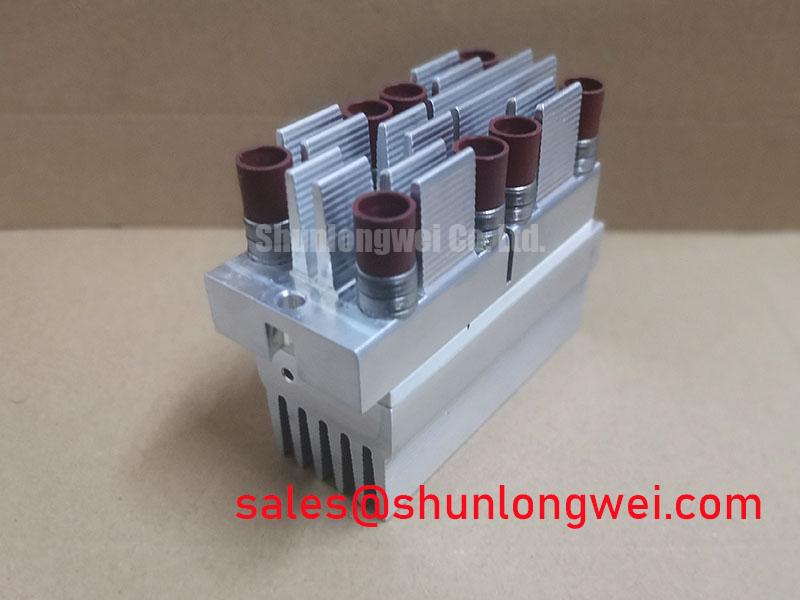
- Industrial Soft Starters: The high surge current capability ($I_{TSM}$) handles the massive inrush currents typical of large induction motor startups.
- Industrial Heating Control: Precise phase-angle control enables stable temperature regulation in electric furnaces and glass manufacturing, where reliability under continuous duty is paramount.
- Static AC Switches: Ideal for contactless switching in UPS systems or power factor correction banks, eliminating the mechanical wear associated with traditional contactors.
- Welding Power Supplies: The robust pressure contact design thrives in the high-frequency thermal cycling environments found in heavy-duty industrial welding.
The SKKQ1500/14E is the optimal choice for multi-megawatt AC controllers where long-term uptime and minimal maintenance are the primary design objectives.
M5: Key Technical Specifications
| Parameter | Condition / Value |
|---|---|
| Absolute Maximum Ratings | |
| Repetitive Peak Voltage ($V_{RRM}$) | 1400 V |
| RMS On-state Current ($I_{RMS}$) | 1500 A (Case Temperature dependent) |
| Surge On-state Current ($I_{TSM}$) | 28,000 A (10 ms, $T_j = 125^{circ}C$) |
| Electrical Characteristics | |
| Threshold Voltage ($V_{(TO)}$) | Approx 0.85 V ($T_j = 125^{circ}C$) |
| Critical Rate of Rise of Off-state Voltage ($dv/dt$) | 1000 V/µs |
| Thermal & Mechanical Data | |
| Thermal Resistance Junction to Case ($R_{th(j-c)}$) | 0.016 K/W (per module) |
| Mounting Torque | Busbar: 9-12 Nm | Baseplate: 5 Nm |
M6: Engineer FAQ
Q1: How should I determine the cooling requirements for the SKKQ1500/14E?
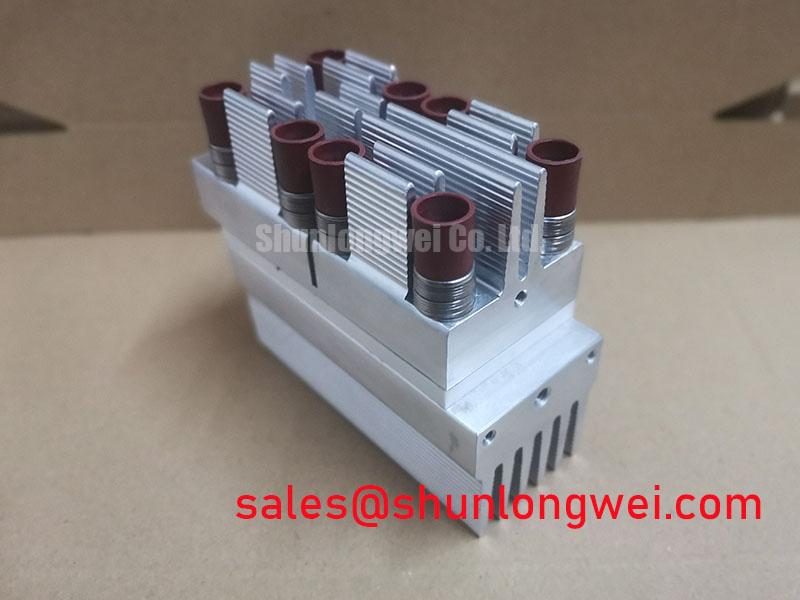
A1: Effective thermal management is critical. Total power dissipation ($P_{tot}$) must be calculated using the threshold voltage and slope resistance provided in the datasheet, ensuring the heatsink $R_{th(c-s)}$ is sufficient to keep the junction temperature ($T_j$) below $125^{circ}C$ under worst-case ambient conditions.
Q2: What are the risks of incorrect mounting torque for this high-current module?
A2: For a 1500A device, contact resistance is a major heat source. Under-tightening busbar terminals can lead to localized arcing or melting, while over-tightening may damage the internal pressure contact assembly. Always adhere to the 9-12 Nm torque specification for main terminals.
Q3: Does the SKKQ1500/14E require external snubber circuits?
A3: While the module has high $dv/dt$ immunity (1000 V/µs), an external RC snubber is typically recommended in inductive switching applications to suppress transient voltage spikes and protect the thyristors from exceeding $V_{RRM}$.
M7: Empowering High-Power System Design
The SKKQ1500/14E stands as a benchmark for reliability in megawatt-scale AC power control. By integrating anti-parallel thyristors into a single, pressure-contact-optimized housing, it empowers engineers to design more compact, resilient industrial systems. Whether managing high-torque soft starts or precise thermal loads, this module provides the electrical headroom and mechanical durability required for the most demanding mission-critical infrastructure.