Vicor V24C12H100BL: High-Efficiency 100W 24V to 12V DC-DC Micro Converter with ZCS/ZVS Technology
Vicor V24C12H100BL 24V to 12V 100W DC-DC Micro Converter
Industrial Power Efficiency with Proprietary ZCS/ZVS Switching
The V24C12H100BL is a high-performance DC-DC converter module within Vicor’s Micro family, engineered to provide 100W of regulated 12V power from a wide 24V nominal input range (18-36V). This H-Grade module is defined by its superior thermal envelope and proprietary Zero-Current and Zero-Voltage Switching (ZCS/ZVS) architecture, which effectively decouples power density from switching frequency constraints. By utilizing this advanced topology, the module minimizes electromagnetic interference and thermal stress in high-density industrial designs.
- Core Specifications: 24V Input (18-36V Range) | 12V Output | 100W Max Power
- Key Advantage 1: H-Grade thermal performance rated for baseplate temperatures from -40°C to +100°C.
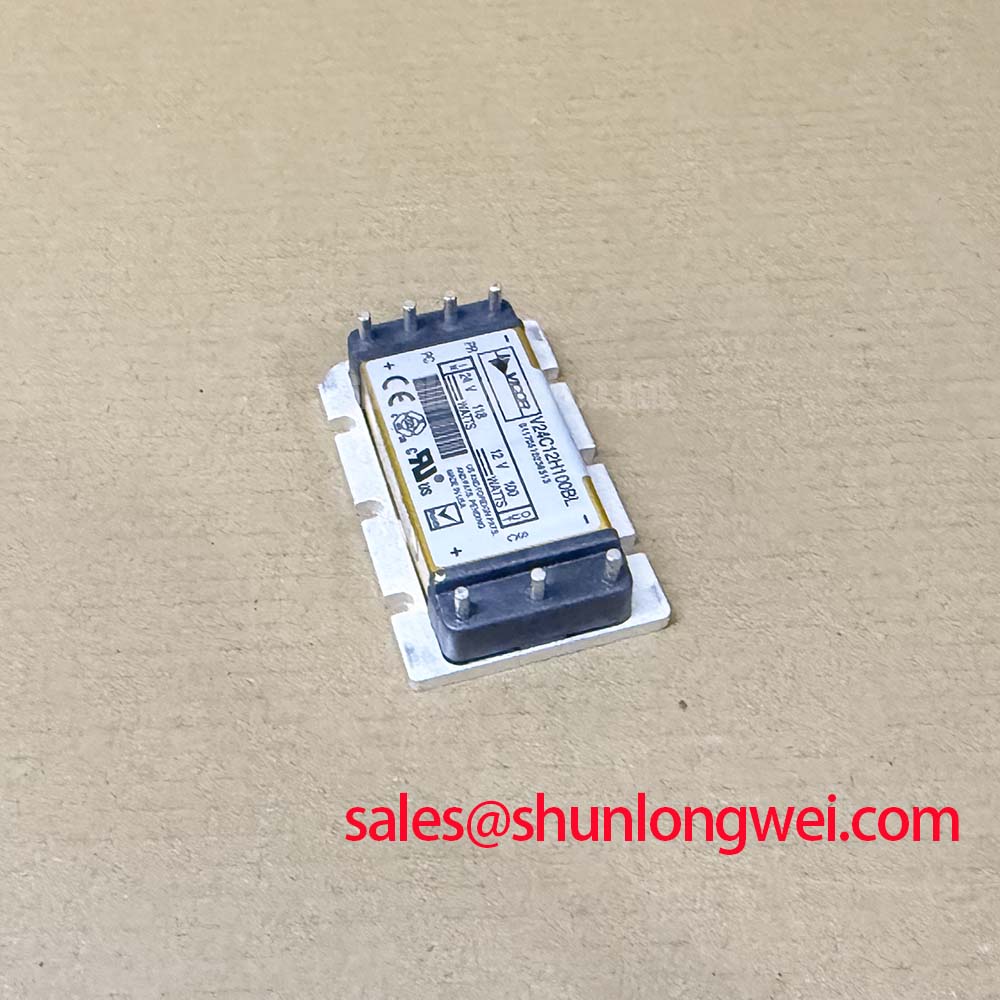
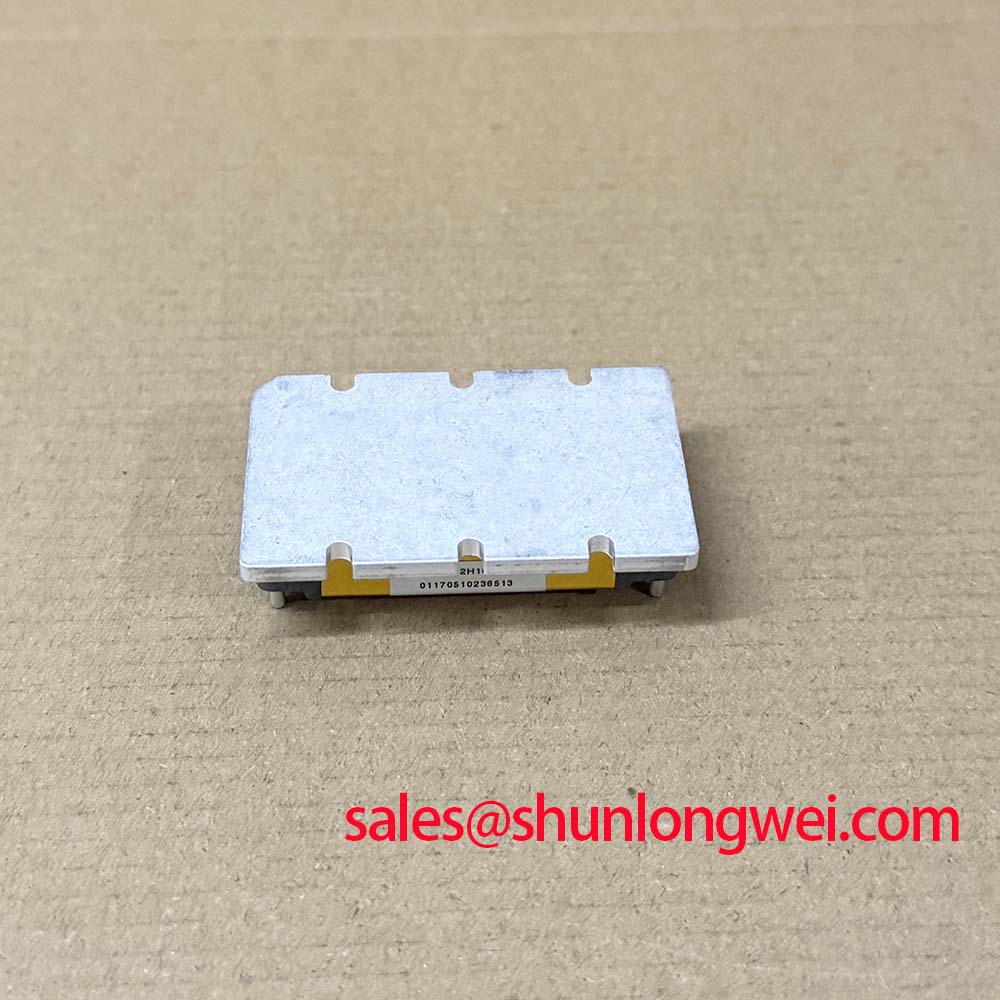
- Key Advantage 2: Integrated slotted baseplate (BL) significantly enhances surface area for convective or conductive thermal management strategies.
Engineers often inquire about the specific noise profiles of high-density modules; the V24C12H100BL addresses this through its ZCS/ZVS mechanism, which inherently reduces the high-frequency harmonic content compared to traditional hard-switching PWM converters.
Download Official V24C12H100BL Datasheet (PDF)

Technical Analysis: Engineering Beyond Switching Losses
The engineering significance of the V24C12H100BL lies in its departure from standard pulse-width modulation. Traditional converters suffer from high switching losses because the transistors transition while current is flowing and voltage is high. You can visualize switching losses as the heat generated by friction when trying to shift gears in a moving vehicle without using a clutch. Vicor’s ZCS/ZVS technology acts as the “clutch,” ensuring the transition happens only when current or voltage is at zero. This allows the V24C12H100BL to operate at much higher frequencies than conventional modules without a corresponding increase in heat, facilitating its exceptional power density.
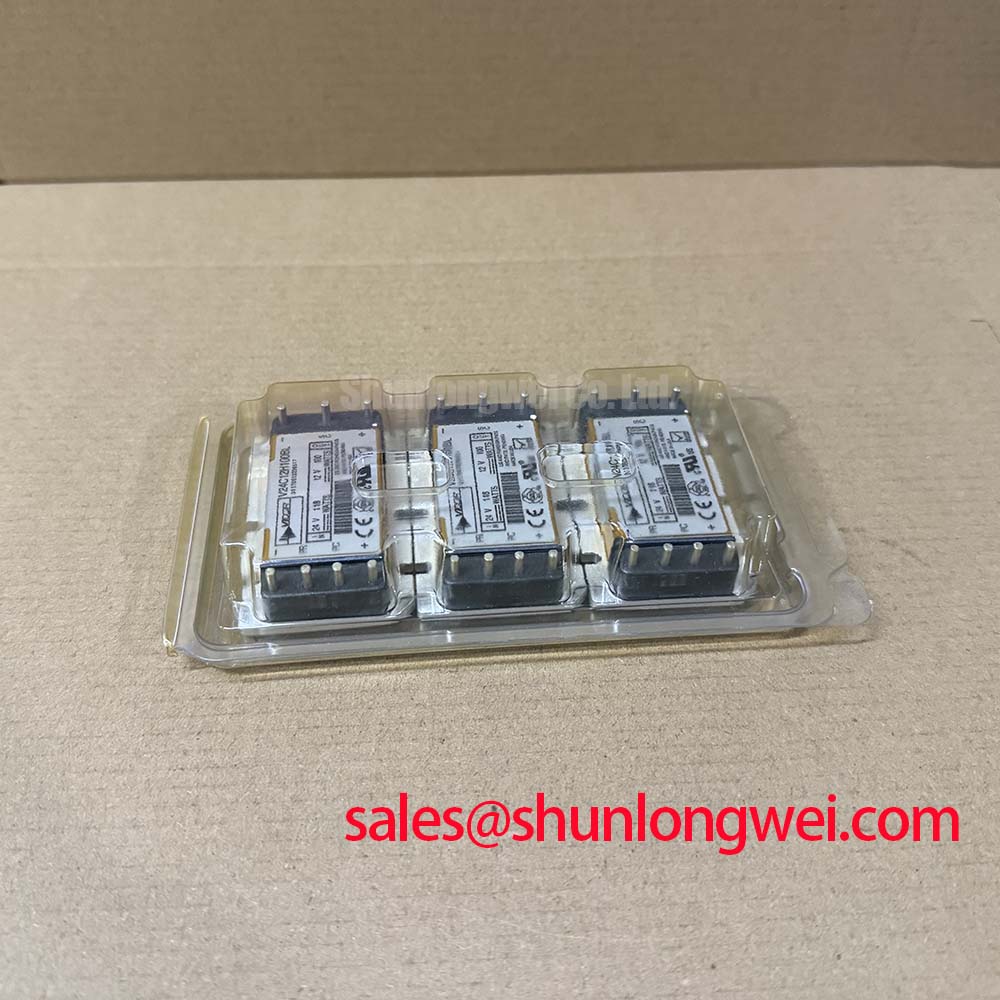
Thermal stability is a critical factor for long-term system insulation and reliability. The H-Grade designation ensures that the internal components and packaging materials are characterized for consistent performance across extreme temperature gradients. This resilience is paired with an isolated baseplate design that provides a high dielectric barrier, essential for maintaining signal integrity in complex medical and industrial power systems. The module’s ability to maintain a low output ripple while under a full 8.33A load makes it a stable secondary-side regulator for sensitive analog circuitry.
Optimized Application Scenarios
- Transportation Systems: The wide 18-36V input range is perfectly suited for battery-backed 24V rails common in heavy machinery and rolling stock, where voltage fluctuations are frequent.
- Defense and Aerospace: The H-Grade rating ensures the module remains operational in unpressurized or non-climate-controlled environments where baseplate temperatures can swing rapidly.
- Communications Infrastructure: Utilizing ZCS technology allows for a low-noise floor, which is vital for microwave backhaul equipment and cellular base station amplifiers.
- Industrial Automation: The compact Micro footprint (quarter-brick size) allows for decentralized power architectures, reducing I2R losses on the system motherboard.
Best Match: The V24C12H100BL is most effective in space-constrained industrial designs requiring high-grade thermal reliability and low radiated EMI signatures.
Key Specifications Table
| Category | Parameter | Value |
|---|---|---|
| Input Ratings | Voltage (Nominal) | 24 Vdc |
| Input Range | 18 – 36 Vdc | |
| Input Surge (100ms) | 50 Vdc | |
| Output Characteristics | Output Voltage | 12 Vdc |
| Output Power | 100 Watts | |
| Maximum Current | 8.33 Amps | |
| Thermal & Safety | Operating Temp (H-Grade) | -40°C to +100°C |
| Isolation Voltage | 3,000 Vrms (In to Out) |
Engineer’s FAQ
Q1: What is the benefit of the slotted baseplate (BL) version for the V24C12H100BL?
The slotted baseplate provides increased surface area for heat dissipation and allows for more flexible mounting of heatsinks. It is specifically designed to improve thermal transfer in air-cooled environments or systems with high-density component packing where airflow may be turbulent.
Q2: Can the output voltage of this module be adjusted?
Yes, the V24C12H100BL features a SC (Secondary Control) pin that allows for output voltage trimming. By using external resistors, the output can typically be adjusted from 10% to 110% of the nominal voltage, allowing engineers to compensate for line drops or specific load requirements.
Q3: How does the module handle input overvoltage conditions?
The module includes internal protection circuitry that monitors input levels. While it is rated for a continuous range up to 36V, it can withstand a peak surge of 50V for up to 100ms. Exceeding these limits without proper front-end filtering may trigger a protective shutdown to prevent internal component damage.
Q4: What are the isolation requirements for using this in industrial control?
The module provides 3,000 Vrms of isolation between the input and output. This high level of isolation is crucial for protecting control-side electronics from high-voltage transients on the primary power bus and meeting stringent safety standards for industrial equipment.
The Vicor V24C12H100BL provides a robust, low-noise power conversion solution for engineers who cannot compromise on space or thermal efficiency. Its ZCS/ZVS architecture ensures that high power density is achieved alongside a reliable H-grade operating life.