VVZ24-12IO1: 1200V Three-Phase Rectifier Bridge with Brake Chopper Technical Overview and Applications
VVZ24-12IO1 Three-Phase Rectifier Bridge with Brake Chopper
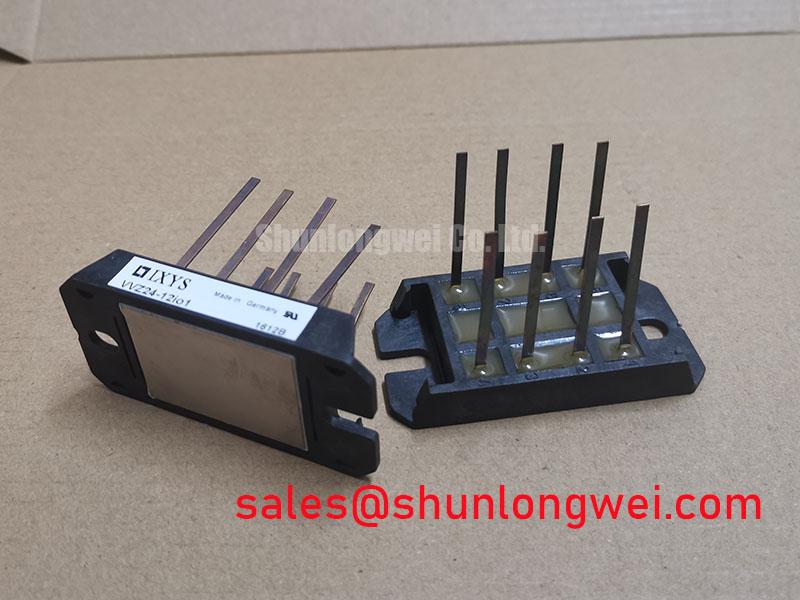
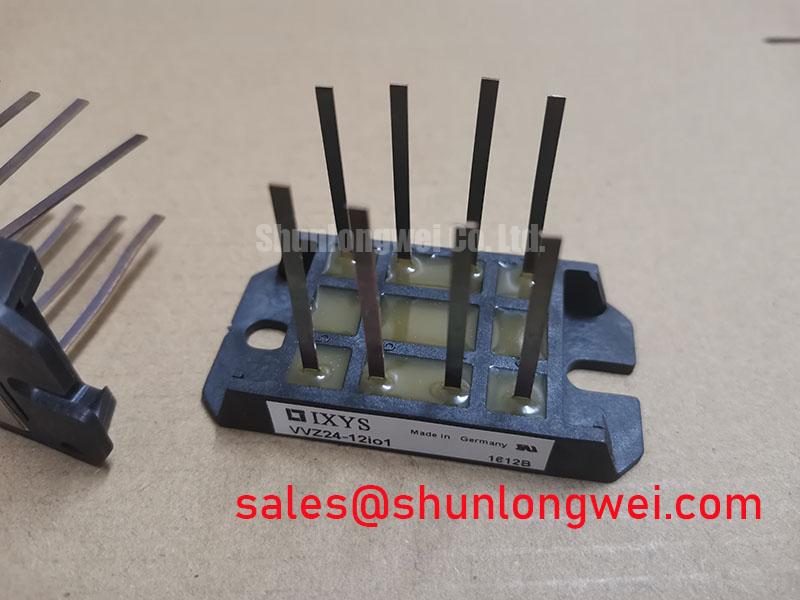
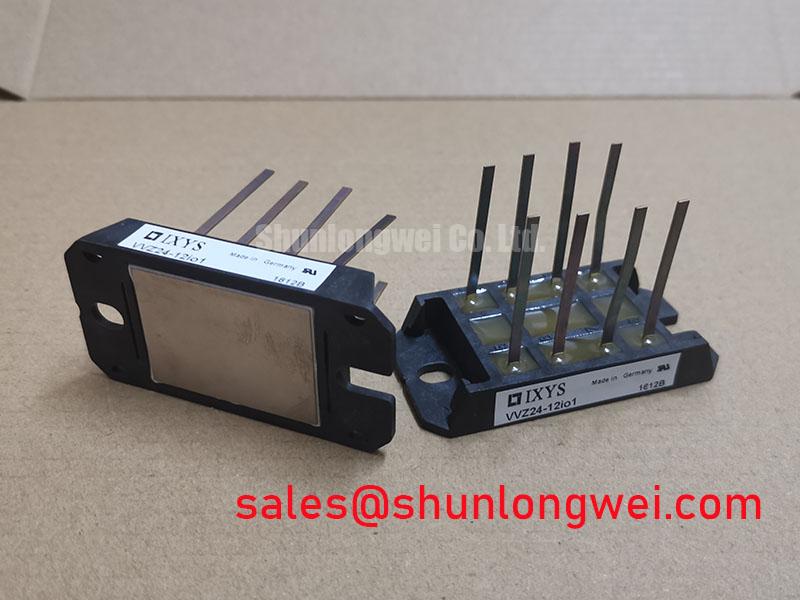
The VVZ24-12IO1 is a highly integrated power semiconductor module manufactured by IXYS (now part of Littelfuse), designed to consolidate three-phase AC rectification and DC braking into a single, compact ECO-PAC1 footprint. This module is engineered to provide a robust front-end for industrial drives, offering a blocking voltage of 1200V and an output current capacity suitable for small to medium power applications. By utilizing an integrated thyristor (SCR) for the brake chopper, the VVZ24-12IO1 simplifies the complexity of dynamic braking circuits in motor control systems.
- Core Specifications: 1200V VRRM | 28A IdAV (Rectifier) | 21A ITAV (Chopper)
- Key Engineering Benefits: Reduced component count through high integration and enhanced thermal reliability via a DCB substrate.
- Design Efficiency: The module addresses the common challenge of “how to manage high-voltage transients in 480V mains” by providing a generous 1200V safety margin.
Download Official VVZ24-12IO1 Datasheet (PDF)
Technical Analysis of Thermal and Electrical Integration
The engineering core of the VVZ24-12IO1 lies in its Direct Copper Bonded (DCB) ceramic substrate. This material technology provides 2500V~ isolation while maintaining exceptionally low thermal resistance between the silicon junctions and the mounting base. You can think of the DCB substrate as a wide thermal highway; it allows heat to exit the module rapidly toward the heatsink, effectively preventing the “traffic jams” of heat that lead to premature semiconductor failure. This is critical for power semiconductors operating under continuous heavy loads.
Electrically, the VVZ24-12IO1 features a three-phase rectifier bridge composed of six diodes and a seventh thyristor (SCR) used specifically for brake chopper control. The use of planar passivated chips ensures long-term stability and low leakage currents even at high operating temperatures. This high level of integration minimizes parasitic inductance between the rectifier output and the braking stage, which is a common source of voltage spikes in discrete component layouts. For engineers focusing on thermal design and Zth curves, the ECO-PAC1 package provides predictable thermal performance across varying duty cycles.
Optimized Application Scenarios
The VVZ24-12IO1 is particularly effective in the following industrial environments:
- Variable Frequency Drives (VFDs): Serves as a combined input stage and overvoltage protection via braking, specifically for motors requiring frequent deceleration.
- Servo Drive Systems: Provides compact power management where space is limited, utilizing the isolated baseplate for safety and simplified mounting.
- Uninterruptible Power Supplies (UPS): Acts as a reliable input rectifier with the ability to discharge DC link capacitors during maintenance or fault conditions.
- Power Supplies: Ideal for industrial AC-to-DC conversion where the brake chopper can be repurposed for inrush current limiting or voltage regulation.
Best Fit Conclusion: The VVZ24-12IO1 is the optimal choice for engineers seeking to minimize PCB footprint while ensuring high surge current handling in 400V/480V AC drive systems.
Key Specifications Table
| Parameter Group | Specific Parameter | Value (Max/Typ) |
|---|---|---|
| Absolute Maximum Ratings | Max. Repetitive Reverse Voltage (VRRM) | 1200 V |
| Output Current IdAV (TC = 85°C) | 28 A | |
| Brake Chopper (Thyristor) | Average Forward Current (ITAV) | 21 A |
| Surge Current ITSM (10ms, sine) | 200 A | |
| Thermal & Isolation | Isolation Voltage (VISOL) | 2500 V~ |
| Operating Temperature Range (TVJ) | -40 to +150 °C |
Engineer FAQ
Q1: What are the advantages of the ECO-PAC1 package used in the VVZ24-12IO1?
A1: The ECO-PAC1 package features gold-plated pins for excellent solderability and resistance to oxidation. It uses a low-profile design that reduces parasitic inductance and facilitates easy automated assembly compared to traditional screw-terminal modules.
Q2: Can the brake chopper thyristor be controlled with a standard PWM signal?
A2: Since the chopper is a thyristor (SCR) and not an IGBT, it requires a gate pulse to trigger and will remain conductive until the current falls below the holding current (usually near zero). It is typically used for lower frequency switching or as a crowbar/discharge element rather than high-frequency PWM braking.
Q3: How should I calculate the heatsink requirements for this module?
A3: You must sum the power dissipation of the bridge diodes and the chopper thyristor based on your expected current levels. Use the junction-to-case thermal resistance (RthJC) provided in the datasheet to ensure the virtual junction temperature remains below 150°C during worst-case load conditions. Applying high-quality thermal interface material is essential for maintaining the system’s power density.
The VVZ24-12IO1 represents a mature, high-reliability solution for industrial power conversion. By combining robust planar chip technology with advanced DCB isolation, it empowers engineers to build more compact and thermally stable motor control units without compromising on electrical safety or surge resilience.