7MBR100U4B120 IGBT Module: A Technical Analysis and Application Guide
“`html
Fuji 7MBR100U4B120: 1200V 100A 7-in-1 IGBT PIM Module
Introduction to the 7MBR100U4B120 Power Integrated Module
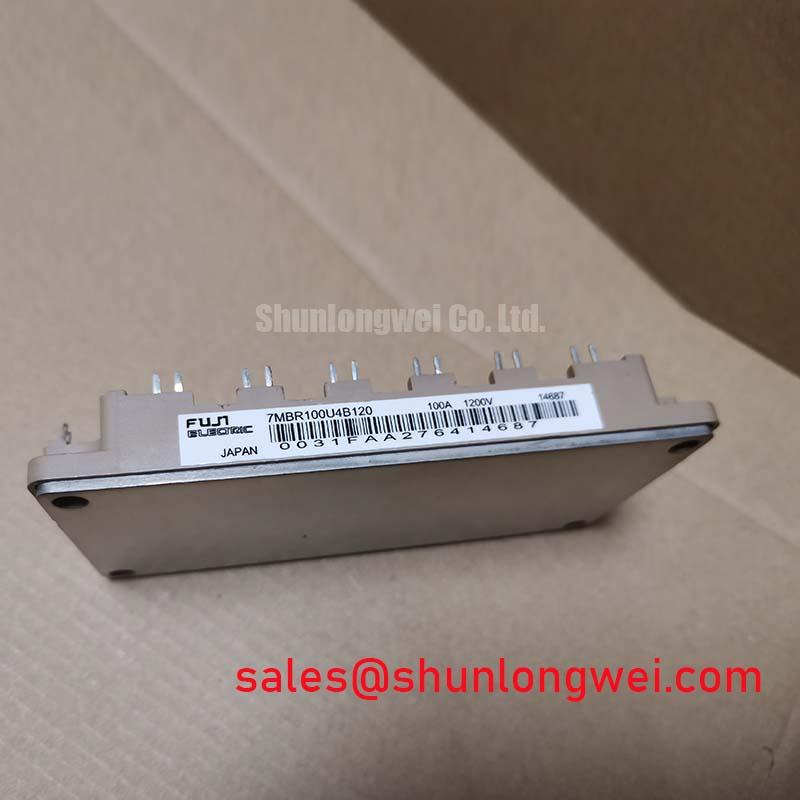
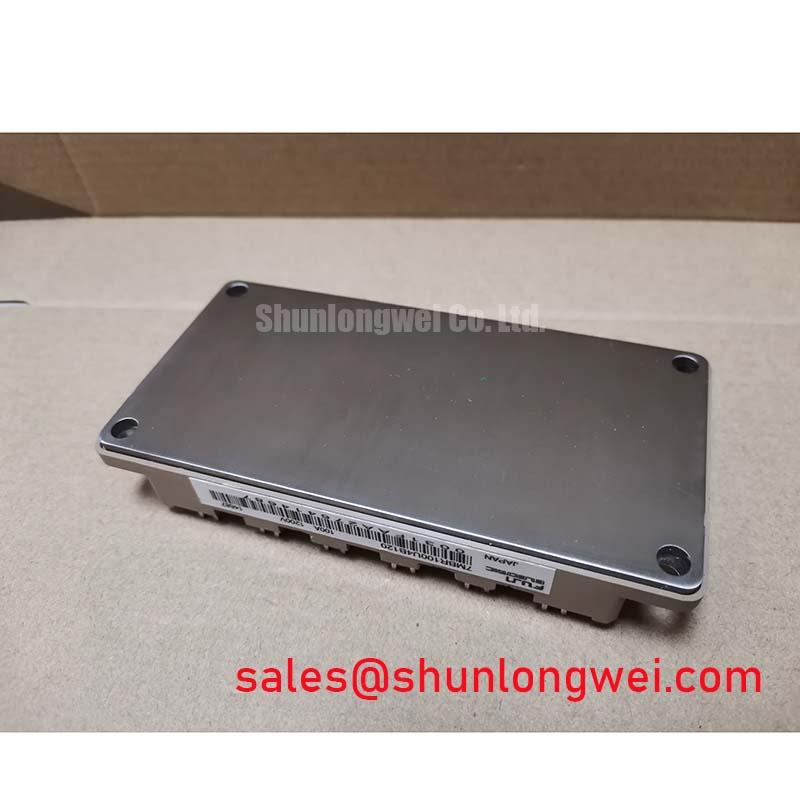
The Fuji Electric 7MBR100U4B120 is a highly integrated Power Integrated Module (PIM) that combines a full three-phase inverter, brake chopper, and diode converter bridge into a single, compact M711 package. This 7-in-1 module streamlines the power stage design for low- to medium-power motor drives by minimizing component count, simplifying assembly, and enhancing overall system reliability. It offers a robust foundation for developing efficient and compact power conversion systems.
- Core Specifications: Inverter: 1200V | 100A; Rectifier: 1600V | 100A
- Key Advantages: Reduces system size and assembly costs, simplifies thermal design.
- Integrated Topology: Contains a 3-phase rectifier, brake chopper, and 3-phase inverter, reducing external wiring and parasitic inductance.
Download the Official 7MBR100U4B120 Datasheet (PDF)
Technical Analysis: The Value of High Integration
The primary engineering advantage of the 7MBR100U4B120 is its 7-in-1 configuration, a core feature of many PIM designs. By housing the AC-to-DC converter, DC-link brake circuit, and DC-to-AC inverter within one module, it eliminates the need for multiple discrete components and complex busbar interconnects. This integration directly reduces stray inductance within the power circuit, which is a critical factor in minimizing voltage overshoot during fast switching operations. Consequently, engineers can often simplify or eliminate external snubber circuits, saving valuable PCB space and reducing the bill of materials (BOM).
Efficient thermal management is fundamental to power module reliability. The 7MBR100U4B120 datasheet specifies the thermal resistance from junction to case (Rth(j-c)) for each internal component. Think of thermal resistance as the width of a pipe; a lower value indicates a wider pipe that allows heat to flow away from the semiconductor die more easily. This module’s specified thermal characteristics, combined with a single mounting baseplate, allow for a simplified and centralized heatsink design. Furthermore, the inclusion of an integrated NTC thermistor provides a direct method for monitoring module temperature, enabling robust over-temperature protection and enhancing long-term operational safety.
Optimized Application Scenarios
The architecture of the 7MBR100U4B120 is optimized for specific industrial applications where space, reliability, and ease of assembly are paramount.
- Variable Frequency Drives (VFDs): The all-in-one topology including a converter, brake, and inverter is a perfect match for compact VFDs used to control three-phase AC motors.
- Servo Drives: The integrated brake chopper is particularly valuable for servo applications, as it provides a ready-made circuit to dissipate regenerative energy during rapid deceleration cycles.
- Industrial Pumps and Fans: For constant or variable torque applications like pumps and fans, this module provides a cost-effective and reliable power core, reducing design complexity.
- General-Purpose Inverters: Its robust voltage and current ratings make it a versatile building block for various power conversion tasks in the sub-50kW range.
This module is an optimal choice for motor drive systems up to ~37 kW that benefit from a compact, highly integrated power stage.
Key Specifications of the 7MBR100U4B120
The following specifications are derived from the official datasheet. Engineers should always consult the complete document for comprehensive design data.
| Inverter Section (Per IGBT) | |
|---|---|
| Collector-Emitter Voltage (V_CES) | 1200V |
| DC Collector Current (I_C) @ Tc=80°C | 100A |
| Collector-Emitter Saturation Voltage (V_CE(sat)) @ 100A | 2.3V (Typ) / 2.8V (Max) |
| Converter Section (Per Diode) | |
| Repetitive Peak Reverse Voltage (V_RRM) | 1600V |
| Average Forward Current (I_F(AV)) | 100A |
| Thermal and Control Characteristics | |
| Operating Junction Temperature (T_j) | +150°C (Max) |
| NTC Thermistor Resistance @ 25°C | 50 kΩ ±5% |
Engineer FAQ
- 1. What is the internal circuit configuration of the 7MBR100U4B120?
- The 7MBR100U4B120 is a 7-in-1 Power Integrated Module (PIM). It contains a three-phase diode bridge rectifier for AC-to-DC conversion, a single IGBT with an anti-parallel diode for the brake chopper circuit, and a three-phase bridge of six IGBTs with anti-parallel diodes for the DC-to-AC inverter stage.
- 2. How should I approach heatsink selection for this PIM?
- Heatsink selection requires calculating the total power loss from all active components (rectifier diodes and inverter/brake IGBTs/diodes) under your specific load conditions. Use the thermal resistance (Rth) values from the datasheet to determine the required heatsink-to-ambient thermal resistance needed to keep the junction temperature (Tj) below the 150°C maximum. A guide on mastering IGBT thermal design can provide further context.
- 3. What is the recommended gate drive voltage for the IGBTs?
- The datasheet specifies a recommended gate-emitter voltage (V_GE) of +15V for turn-on and a range of -8V to -15V for turn-off. Using a negative voltage for turn-off provides better noise immunity and helps prevent parasitic turn-on events.
- 4. Can this module be used for applications powered by a 480V AC line?
- Yes. The 1200V rating of the inverter IGBTs provides sufficient voltage margin for operation on a 480V AC line, which typically produces a DC bus voltage of around 678V (480V * √2). This margin is essential for handling voltage spikes and ensuring reliable performance in industrial environments. For further reading, see our analysis on preventing IGBT latch-up.
Enabling Compact and Reliable Power System Design
The Fuji Electric 7MBR100U4B120 offers a streamlined and robust solution for power electronics engineers. By integrating the core components of a motor drive into a single module, it empowers designers to achieve their goals of system compactness, simplified assembly, and dependable thermal performance, accelerating the development of next-generation industrial power systems.
“`