MD200S16M3: A Robust 1600V, 200A Rectifier for High-Power Industrial Applications
## MD200S16M3: 1600V 200A Three Phase Diode Bridge Rectifier
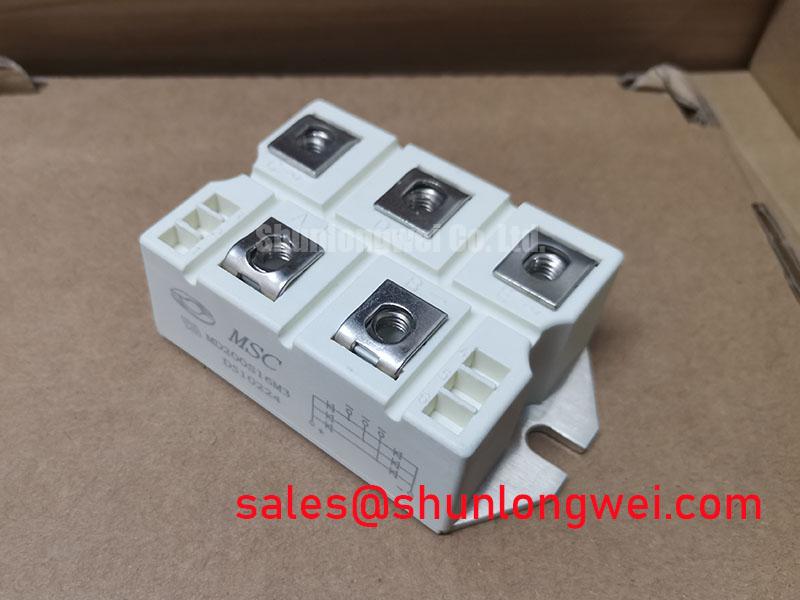
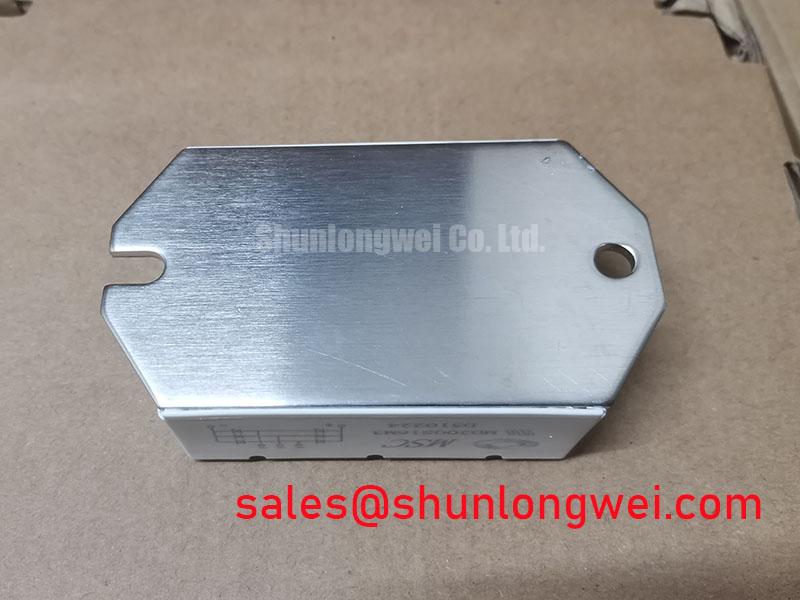
The MD200S16M3 is a three-phase diode bridge rectifier engineered for high-power industrial applications, offering robust thermal management through its electrically isolated baseplate. This design simplifies assembly and enhances system reliability by providing efficient heat transfer away from the glass-passivated diode chips. The module is built to handle substantial power loads common in demanding industrial environments.
* **Core Specifications**: 1600V VRRM | 200A ID @ Tc=100°C | 3000V Isolation
* **Key Advantages**: Facilitates superior heat dissipation, simplifies mounting to heatsinks, and provides a high safety margin in high-voltage circuits.
* **Engineered for Reliability**: The use of an aluminum oxide DBC ceramic baseplate ensures high electrical isolation while maintaining low thermal resistance for stable operation.
Download Official Datasheet (PDF)

Technical Analysis for Power System Design
The MD200S16M3’s high repetitive peak reverse voltage (VRRM) of 1600V makes it a durable component for rectifying three-phase AC power from 480V to 600V mains, providing a significant safety margin against line transients. Its ability to conduct a continuous average forward current (ID) of 200A at a case temperature of 100°C demonstrates its capacity for sustained high-power operation, a critical requirement for heavy industrial machinery.
Effective thermal management is central to the module’s performance. The junction-to-case thermal resistance (Rth(j-c)) per diode is specified at 0.45 °C/W. This parameter is like the width of a heat escape tunnel; a lower value indicates a wider, more effective path for heat to travel from the active silicon junction to the module’s baseplate. This efficiency in heat transfer is crucial for preventing thermal runaway and ensuring operational stability under continuous full-load conditions.
Furthermore, the module features a high isolation voltage (Visol) of 3000V (RMS, 50Hz, 1 min). This high level of electrical isolation between the terminals and the mounting baseplate simplifies mechanical assembly by allowing the module to be mounted directly to a grounded chassis or heatsink without requiring additional insulating materials. This reduces component count, minimizes assembly complexity, and contributes to a more compact and reliable system design. Learn more about how an isolated baseplate enhances reliability.
Optimized Application Scenarios
The specific characteristics of the MD200S16M3 make it suitable for several high-power rectification tasks:
- Input Rectifiers for Variable Frequency Drives (VFDs): The 200A current rating is well-suited for the front-end rectification stage of large AC motor drives.
- Industrial Power Supplies: Its 1600V blocking voltage provides the necessary robustness for high-power DC supply units operating in electrically noisy industrial settings.
- Battery Charger Rectifiers: Efficiently converts high-power AC to DC for large-scale industrial battery charging systems.
- DC Motor Field Supplies: Provides reliable rectified power for the field coils of large DC motors.
This module is an optimal match for high-power rectification stages where efficient thermal management and high voltage isolation are critical design parameters.
Key Specification Parameters
| MD200S16M3 Electrical and Thermal Specifications (Tj = 25°C unless otherwise noted) | ||
|---|---|---|
| Parameter | Value | Conditions |
| Repetitive Peak Reverse Voltage (VRRM) | 1600 V | – |
| Average Forward Current (ID) | 200 A | Three Phase, Full Wave, Tc=100°C |
| Peak Forward Surge Current (IFSM) | 2240 A | t=10ms, Tvj = 45°C |
| Forward Voltage (VFM) | 1.70 V (Max) | IF = 300A |
| Isolation Voltage (Visol) | 3000 V | a.c. 50Hz; r.m.s.; 1min |
| Thermal Resistance, Junction to Case (Rth(j-c)) | 0.45 °C/W | Per Diode |
| Operating Junction Temperature (Tvj) | -40 to +150 °C | – |
Note: These parameters are based on the manufacturer’s datasheet and are provided for reference. For complete and verified information, always consult the official PDF documentation.
Engineer’s FAQ
1. What is the recommended mounting torque for the MD200S16M3 terminals and heatsink?
The datasheet specifies a mounting torque of 5 Nm (±15%) for both the M6 terminals and the M6 heatsink mounting screws. Applying the correct torque is critical for ensuring low-resistance electrical connections and optimal thermal contact with the heatsink.
2. Does the electrically isolated baseplate eliminate the need for thermal interface material?
While the baseplate is electrically isolated, applying a thin, uniform layer of thermal grease or a thermal pad is still necessary. This material fills microscopic air gaps between the module and the heatsink, significantly improving heat transfer by reducing the case-to-sink thermal resistance (Rth(c-s)), which is approximately 0.025 °C/W for the module. Explore our resources on thermal management for more details.
3. How much power is dissipated at the rated forward current?
Power loss is primarily determined by the forward voltage drop (VFM). According to the datasheet, the maximum VFM is 1.70V at 300A. While operating at the continuous 200A rating, the VFM will be slightly lower. Using the typical VFM of 1.45V at 300A as a reference, an engineer can calculate conduction losses (Power Loss ≈ VFM × IF(AV)) per diode to properly size the cooling system. Accurate loss modeling is key for reliability.
4. Can this module be used for single-phase applications?
Yes, although it is a three-phase bridge, it can be configured for single-phase, full-wave rectification. This is achieved by using two of the three AC input terminals, leaving one unused, and taking the output from the DC terminals. However, the current derating curve should be consulted, as the thermal dynamics will differ from three-phase operation. Referencing resources on power semiconductors can provide further design context.
Enabling Robust Power Conversion
By integrating high-current rectification with superior thermal dissipation and robust electrical isolation, the MD200S16M3 provides a reliable foundation for demanding industrial power conversion systems. Its design directly addresses the engineering challenges of thermal management and electrical safety, streamlining the development of high-power equipment.