SKKH460/22EH4 Technical Review: A Robust 2200V Module for Industrial Power Control
SKKH460/22EH4: 2200V Thyristor/Diode Module Technical Review
Introduction and Core Highlights
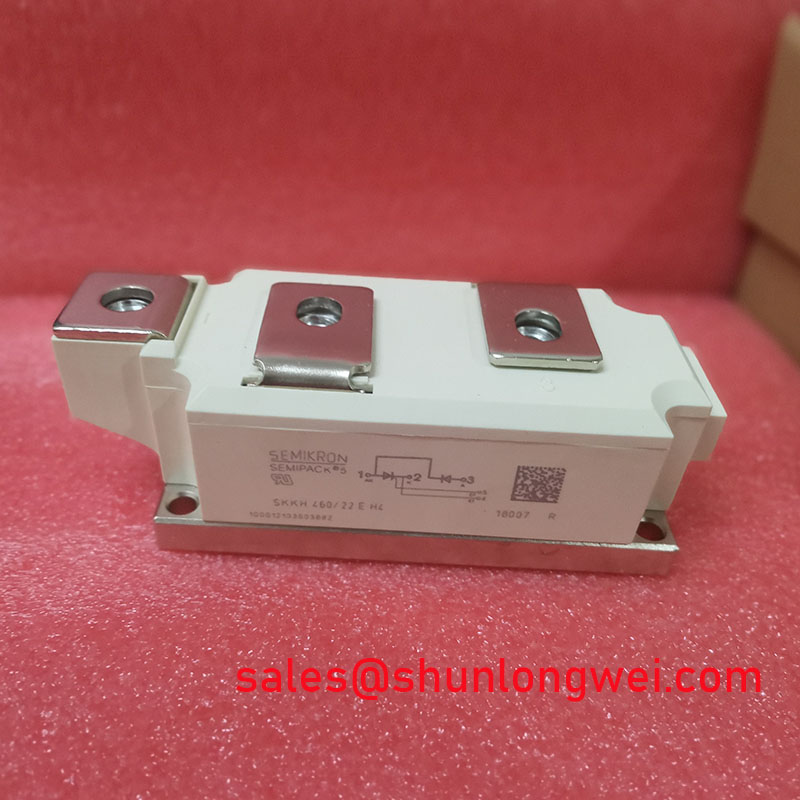
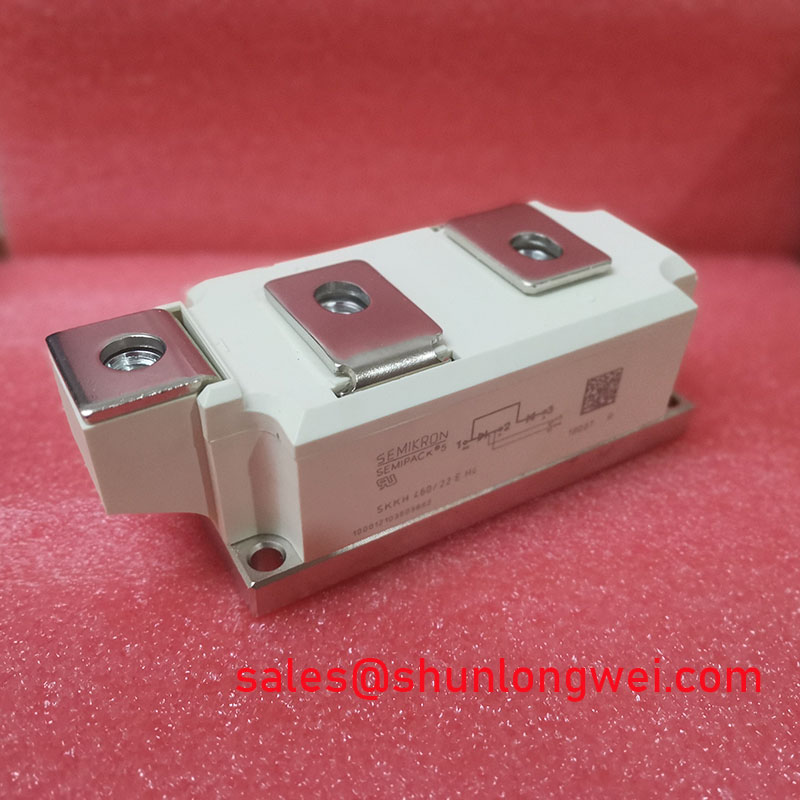
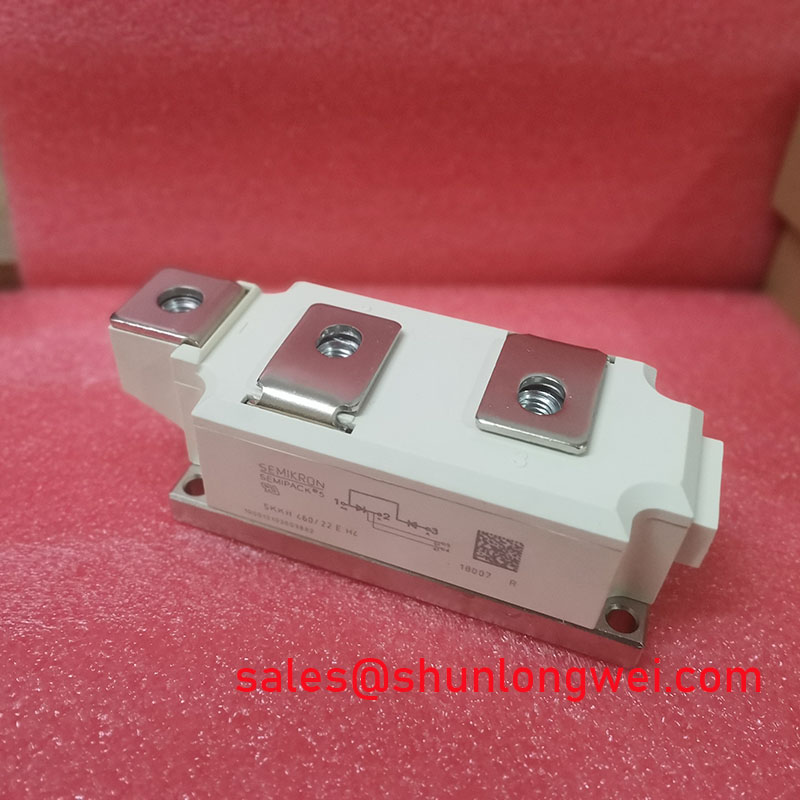
The SEMIKRON SKKH460/22EH4 is a Thyristor/Diode module engineered for high-reliability power control in demanding industrial systems. Its defining value is the combination of a high voltage rating with exceptional surge current handling and a robust thermal design, facilitated by hard soldered joints for extended operational life. This module provides a dependable foundation for managing substantial power loads, particularly in applications subject to frequent inrush currents or challenging thermal cycles.
- Core Specifications: 2200V | 455A (ITAVM) | 14500A (ITSM)
- Key Advantages: High surge current immunity enhances system protection. Low thermal resistance simplifies cooling system requirements.
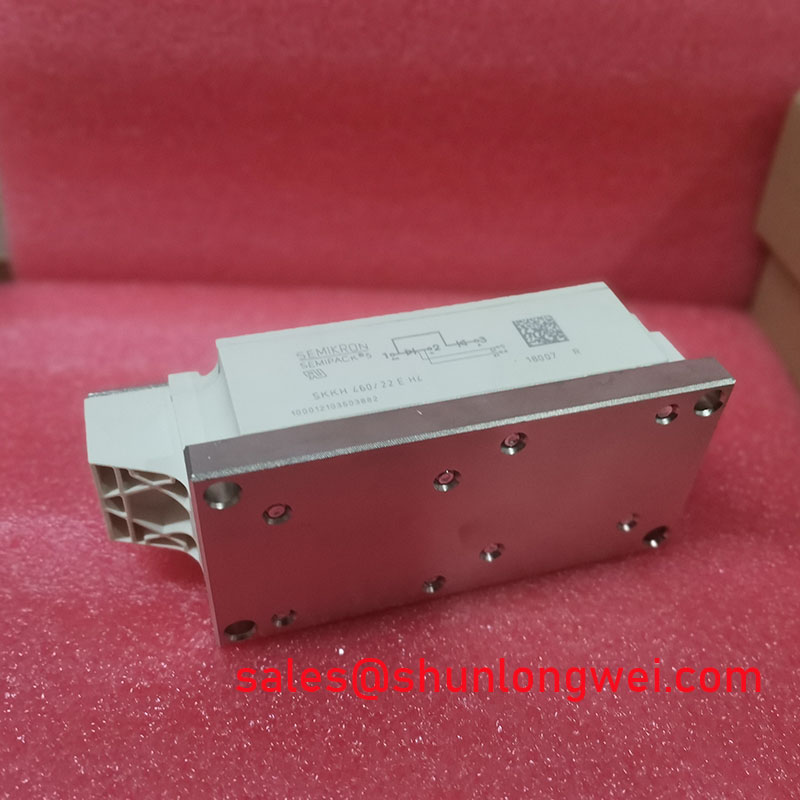
- Design Consideration: The module’s construction with hard soldered joints and a ceramic insulated baseplate directly addresses the engineering challenge of ensuring long-term reliability under severe thermal stress.
Download the Official SKKH460/22EH4 Datasheet (PDF)
Technical Analysis Focused on Robustness
A standout feature of the SKKH460/22EH4 is its non-repetitive surge current (ITSM) rating of 14,500 Amps. This high surge immunity is critical in applications like motor control, where initial startup currents can be many times the normal operating current. This capability acts as a safeguard, absorbing significant energy spikes that could otherwise damage the module or other sensitive downstream components, thereby enhancing the overall resilience of the power system.
The module’s thermal performance is central to its reliability. Its thermal resistance from junction to case (Rth(j-c)) is specified at a low 0.055 K/W per thyristor. This can be visualized like the width of a water pipe; a lower value signifies a wider pipe, allowing heat to flow away from the semiconductor junction more easily. This efficient heat transfer is structurally supported by hard soldered joints between the chip and the DCB substrate, a method known for improving endurance against the mechanical stress of repeated temperature changes, a common challenge addressed in power and thermal cycling.
Optimized Application Scenarios
The specific parameters of the SKKH460/22EH4 make it a strong candidate for several high-power applications:
- AC Motor Soft Starters: The high ITSM rating directly accommodates the large inrush currents typical of motor startup, preventing device stress and ensuring a reliable start sequence.
- High-Power Converters: Its 2200V blocking voltage provides a substantial safety margin for converters operating on high-voltage industrial mains.
- Controlled Rectifiers: The module’s ability to handle an average current of 455A, combined with its robust thermal design, is ideal for building high-capacity, reliable DC power supplies for industrial processes.
- AC Power Controllers: The low on-state voltage drop, resulting from a threshold voltage (VT0) of 0.8V and a slope resistance (rT) of 0.55 mΩ, minimizes conduction losses and improves overall system efficiency.
This module’s high surge current tolerance and thermal stability make it a prime component for industrial systems where operational uptime is critical.
Key Specification Parameters
| Maximum Ratings | |
|---|---|
| Repetitive Peak Reverse and Off-State Voltage (VRRM, VDRM) | 2200 V |
| Average On-State Current (ITAVM @ Tc=80°C) | 455 A |
| Surge On-State Current (ITSM @ 10ms, Tvj=25°C) | 14500 A |
| I²t Value (I²t @ 10ms, Tvj=25°C) | 1050000 A²s |
| Electrical Characteristics (at Tvj = 125 °C unless otherwise specified) | |
| On-State Threshold Voltage (VT0) | 0.80 V |
| On-State Slope Resistance (rT) | 0.55 mΩ |
| Gate Trigger Current (IGT @ Tvj=25°C) | Typ. 200 mA |
| Thermal and Mechanical Characteristics | |
| Operating Junction Temperature Range (Tvj) | -40 to +125 °C |
| Thermal Resistance, Junction to Case (Rth(j-c)) | ≤ 0.055 K/W (per thyristor) |
| Insulation Test Voltage (Visol, 50 Hz, 1 min) | 4000 V |
| Mounting Torque (M8 bolts) | 7 – 10 Nm |
Engineer’s FAQ
What are the recommended mounting torque specifications for the SKKH460/22EH4?
According to the datasheet, the mounting torque for the M8 mounting bolts should be between 7 and 10 Nm. For the M6 electrical terminals, the recommended torque is 3 to 5 Nm. Applying the correct torque is a crucial aspect of thermal design to ensure optimal heat transfer to the heatsink.
How does the module’s construction contribute to its long-term reliability?
The SKKH460/22EH4 is built with hard soldered joints and utilizes a robust SEMIPACK® 3 housing with an aluminium nitride ceramic insulated metal baseplate. This construction provides high resistance to thermal and mechanical stresses, resulting in superior power and thermal cycling capabilities compared to conventional designs.
What is the maximum operating junction temperature, and why is it important for system design?
The maximum allowable junction temperature (Tvj max) is 125°C. This parameter is the absolute thermal limit for the device. Engineers must use this value, along with thermal resistance data, to design an adequate cooling system (e.g., selecting a heatsink and airflow) that prevents the module from exceeding this temperature under worst-case load conditions.
Is this module suitable for high-frequency switching applications?
This is a standard thyristor/diode module primarily intended for line-frequency (50/60 Hz) phase control and rectifier applications. It is not designed for high-frequency switching (in the kHz range), where devices like IGBT modules would be more appropriate due to their faster switching characteristics.
Enabling Robust Power System Design
The SKKH460/22EH4 provides the high-voltage and high-current capabilities required for substantial industrial power control. Its architecture prioritizes resilience, with exceptional surge handling and a thermally efficient design that promote a long service life. This focus allows engineers to develop power conversion and control systems with a high degree of operational robustness and reliability.