SKD30/08A1: A Technical Review of a Robust 800V Three-Phase Bridge Rectifier
SKD30/08A1: Technical Analysis of an 800V Bridge Rectifier
Introduction to the SEMIKRON SKD30/08A1 Three-Phase Bridge Rectifier
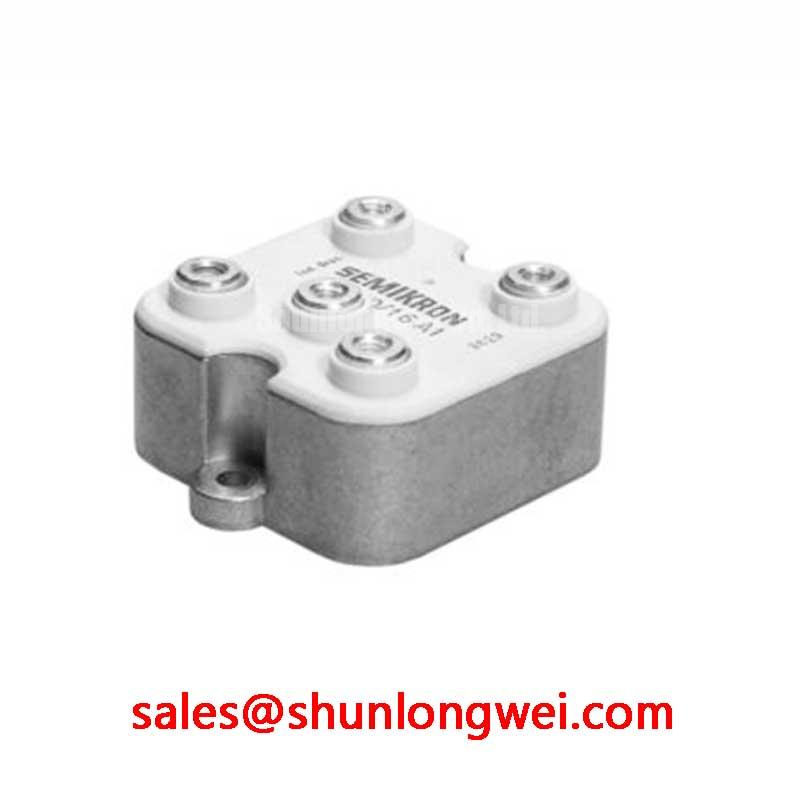
The SEMIKRON SKD30/08A1 is a three-phase bridge rectifier module engineered for robust and reliable power conversion in demanding industrial systems. Its defining characteristic is the combination of a high surge current capability within a rugged, electrically isolated metal housing, which simplifies thermal design and enhances operational survivability. This module is a foundational component for converting AC to DC power efficiently.
- Core Specifications: 800V VRRM | 30A ID | 370A IFSM.
- Key Engineering Advantages: Exceptional resilience to inrush currents and line disturbances, simplified chassis mounting, and improved safety due to its isolated baseplate.
As a core component for the front end of many power systems, it is well-suited as an input rectifier for variable frequency drives (VFDs) and other power supplies.
Download Official Datasheet (PDF)
Technical Analysis for System Integration
Robustness Against Electrical Overstress
A critical parameter for any input rectifier is its ability to withstand transient events. The SKD30/08A1 specifies a non-repetitive peak surge current (IFSM) of 370A for a 10 ms pulse. This high rating provides a substantial safety margin against the large inrush currents that occur when charging DC-link capacitors in motor drives or power supplies. This inherent robustness can reduce the need for oversized external protection components, protecting the drive’s more sensitive downstream power semiconductors from catastrophic failure during line-side anomalies.
Thermal Management and Mechanical Design
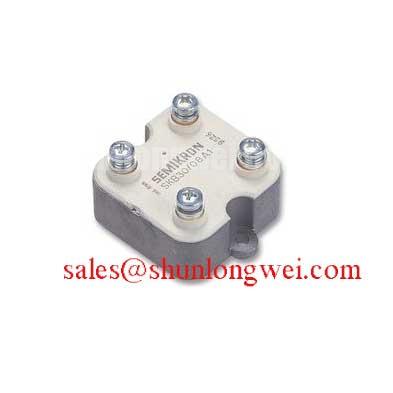
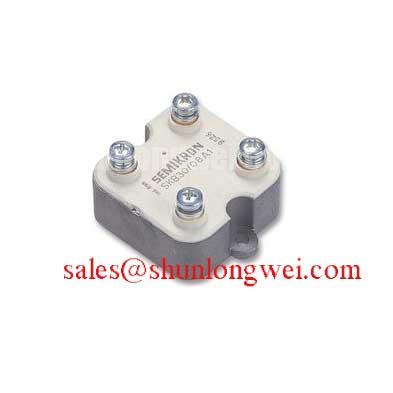
The SKD30/08A1 is housed in an isolated metal case with screw terminals, a design that directly benefits system assembly and thermal performance. The electrical isolation (rated for 3000VRMS) allows the module to be mounted directly to a grounded chassis or heatsink without requiring additional insulating layers, which would otherwise add thermal resistance. Think of thermal resistance like the width of a pipe; a lower value means heat can flow away more easily. With a specified junction-to-case thermal resistance (Rth(j-c)) of 1.2 K/W, engineers can accurately model and implement an effective cooling solution. For a deeper dive into thermal modeling, see our guide on mastering thermal design.
Optimized Application Scenarios
The technical characteristics of the SKD30/08A1 make it a strong candidate for several common industrial applications:
- Input Rectifiers for Variable Frequency Drives (VFDs): Its 30A current rating and high surge survivability are ideal for the front-end of small to mid-sized motor drives.
- General Purpose Power Supplies: The robust, easy-to-mount package and UL recognition simplify the design and certification process for industrial power supplies.
- DC Motor Field Supplies: Provides a straightforward and reliable method for creating the DC field voltage required for DC motor operation.
- Battery Charger Rectifiers: The module’s efficiency and ruggedness are well-suited for converting AC line voltage to DC for battery charging systems.
Its balance of current handling, voltage rating, and thermal performance makes it a best-fit for industrial systems requiring reliable three-phase rectification up to 30A.
Key Specifications of the SKD30/08A1
| Electrical & Thermal Characteristics (Tc = 25°C unless otherwise noted) | ||
|---|---|---|
| Parameter | Value | Notes |
| Max. Repetitive Peak Reverse Voltage (VRRM) | 800 V | Per diode |
| DC Output Current (ID) | 30 A | Tcase = 98 °C |
| Peak Forward Surge Current (IFSM) | 370 A | t = 10 ms, 50 Hz, half-sine |
| I²t Value | 680 A²s | t = 10 ms, 50 Hz |
| Max. Forward Voltage (VF) | 2.2 V | Per diode, at IF = 100 A, Tj = 25 °C |
| Thermal Resistance, Junction to Case (Rth(j-c)) | 1.2 K/W | For the complete module |
| Isolation Test Voltage (Visol) | 3000 V | t = 1 min. |
| Operating Junction Temperature (Tj) | -40 to +150 °C | |
Note: Specifications are sourced from the official SEMIKRON datasheet. For complete details, always refer to the full datasheet.
Engineer’s FAQ
- What are the primary considerations for selecting a heatsink for the SKD30/08A1?
- The primary factor is the total power dissipation, which depends on the load current and forward voltage drop. Using the thermal resistance Rth(j-c) of 1.2 K/W, you can calculate the required case-to-ambient thermal resistance (Rth(c-a)) of the heatsink to keep the junction temperature below its 150°C maximum. Always account for the maximum expected ambient temperature in your calculations.
- What is the recommended mounting torque for the electrical terminals?
- The datasheet specifies a mounting torque for the M5 terminals of 2.5 Nm. Applying the correct torque is critical for ensuring a reliable, low-resistance connection without causing mechanical stress to the module. Insufficient torque can lead to overheating, while excessive torque can damage the internal structure.
- What is the significance of the 370A IFSM rating?
- The 370A peak forward surge current rating indicates the module’s ability to survive a single, large, non-repetitive current pulse for 10 milliseconds. This is a measure of the device’s ruggedness, particularly important in applications like motor drives or power supplies where initial power-on can create high inrush currents that would destroy less robust components.
- Is this module UL recognized?
- Yes, the SKD30/08A1 is UL recognized under file number E 63 532. This pre-certification can streamline the safety approval process for final products intended for the North American market.
Enabling Robust Power System Design
The SKD30/08A1 three-phase rectifier offers a proven, mechanically sound solution for industrial power conversion. Its construction prioritizes thermal efficiency and electrical safety through its isolated base, while its high surge current rating provides the resilience necessary for long-term operation in demanding industrial environments. This focus on fundamental robustness allows engineers to build reliable and cost-effective power stages.