Semikron SKiiP 11NAB126V1: A Solder-Free 1200V CIB Power Module for Industrial Applications
Semikron SKiiP 11NAB126V1 MiniSKiiP 1200V CIB Module
Converter-Inverter-Brake Power Integration with Spring Contacts
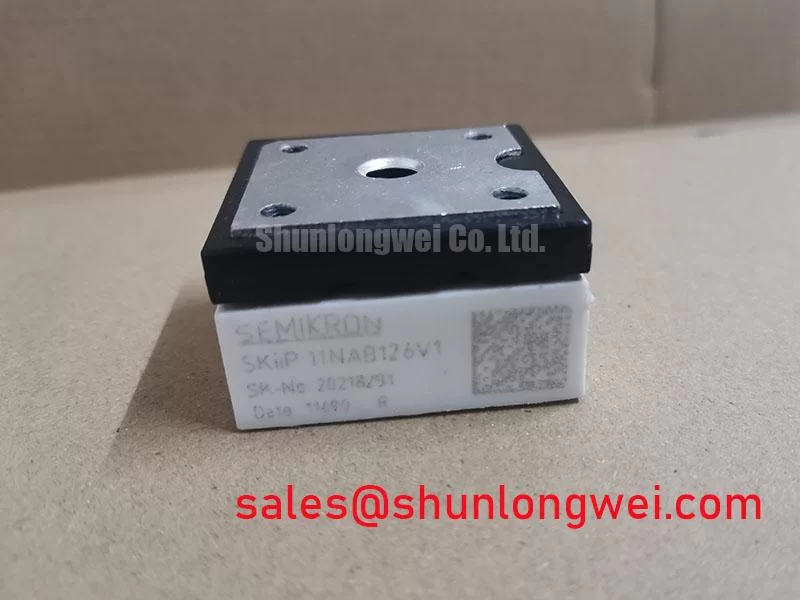
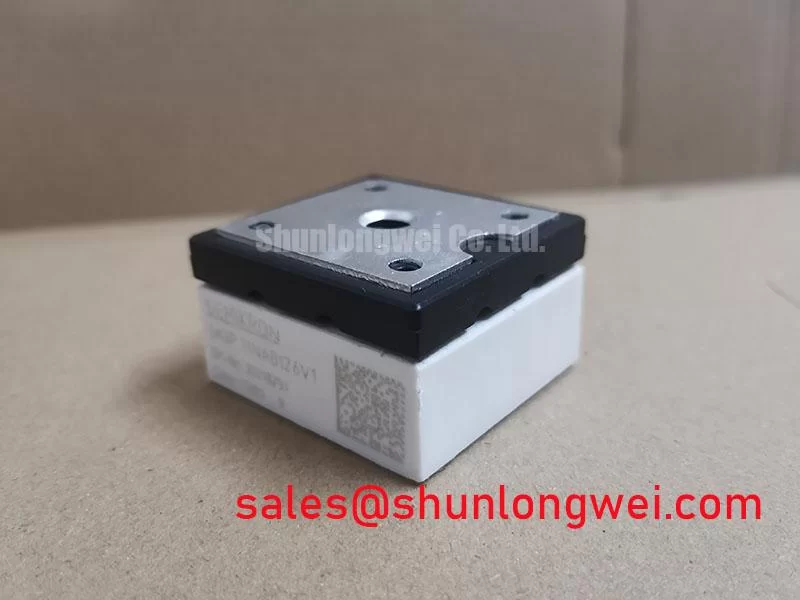
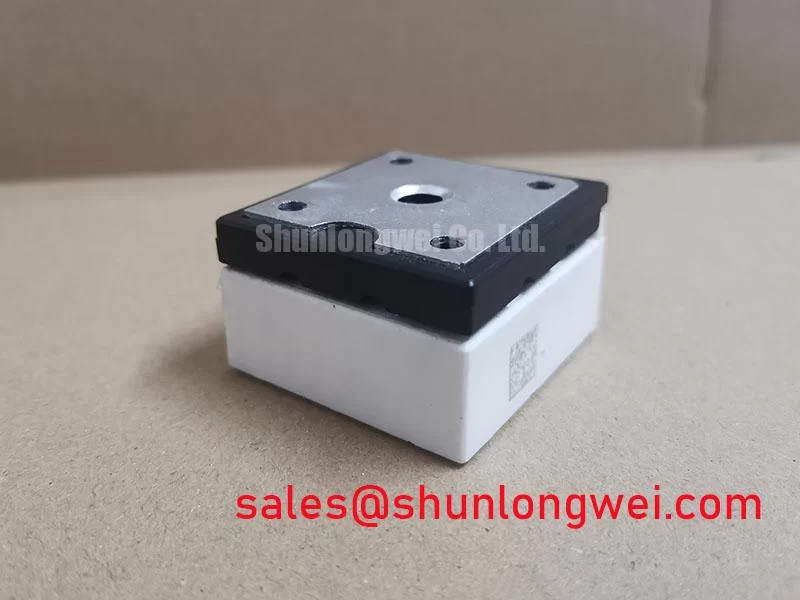
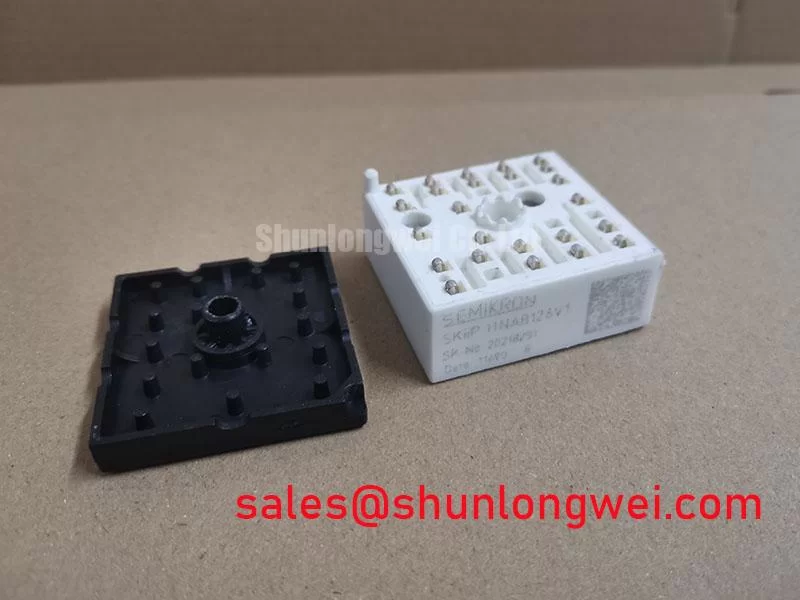
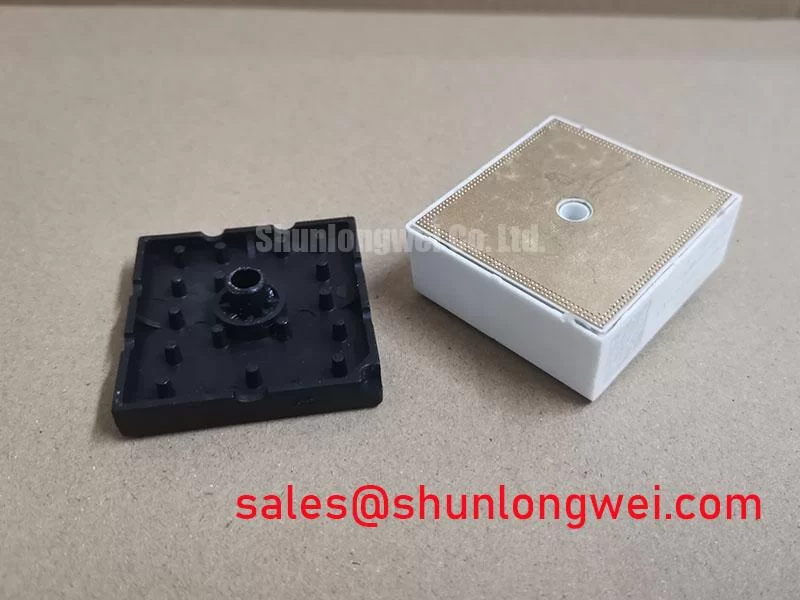
The SKiiP 11NAB126V1 is a highly integrated Converter-Inverter-Brake (CIB) power module housed in a compact MiniSKiiP 1 package size. This module combines a three-phase diode bridge rectifier, a three-phase IGBT inverter, a brake chopper, and an integrated thermal sensor. Utilizing advanced solder-free pressure contact technology, the module establishes electrical connections directly to the PCB via pressure springs, significantly reducing thermal cycling fatigue and streamlining high-volume assembly lines.
- Core Electrical Ratings: 1200V maximum collector-emitter voltage ($V_{CES}$) | 35A nominal inverter current ($I_C$) at $T_s = 70^circtext{C}$ | 1600V rectifier reverse voltage ($V_{RRM}$).
- Key Engineering Values: Solder-free spring contacts decouple the module from PCB thermal expansion stresses, while the baseplate-less architecture lowers total thermal resistance ($R_{th(j-s)}$) to the heatsink.
Download Semikron SKiiP 11NAB126V1 Datasheet (PDF)
Thermomechanical Analysis of Solder-Free Integration
The SKiiP 11NAB126V1 optimizes thermal and mechanical interfaces by omitting a traditional copper baseplate. In conventional power modules, mismatched thermal expansion coefficients between the copper baseplate, ceramic substrate, and PCB lead to solder fatigue and eventual delamination. To understand this advantage, imagine expansion joints on a bridge. Instead of cracking under temperature swings like a rigid concrete block, the joint allows movement. The spring contacts of the SKiiP 11NAB126V1 function similarly, absorbing PCB expansion stresses and eliminating solder-joint degradation.
This module uses Trench IGBT 3 technology to secure a low collector-emitter saturation voltage ($V_{CE(sat)}$) of typically 1.80V at rated currents. By reducing conduction losses, the module operates cooler under heavy loads. Real-time thermal tracking is managed by an integrated NTC thermistor, allowing immediate temperature telemetry to protect the gate driver system against overtemperature conditions.
Target Application Suitability
Integrating a rectifier, chopper, and inverter in a single housing makes this module ideal for space-constrained industrial systems. For a broader comparison of integrated designs, engineers can evaluate similar integrated CIB power modules.
- Variable Speed Drives (VFDs): The integrated brake chopper simplifies DC-bus overvoltage management during motor deceleration phases.
- Industrial Fan and Pump Systems: Solderless connections ensure reliable performance in high-vibration environments.
- Solar Inverters and UPS Systems: Trench IGBT 3 technology offers balanced switching and conduction profiles for efficient power inversion.
With 1200V isolation and 35A capacity, the SKiiP 11NAB126V1 is highly optimal for low-to-medium power industrial three-phase motor drives up to 7.5 kW.
SKiiP 11NAB126V1 Key Specifications
| Sub-System | Parameter | Conditions / Values |
|---|---|---|
| IGBT Inverter | $V_{CES}$ (Max. Voltage) | 1200 V |
| $I_C$ (Nominal Current) | 35 A ($T_s = 70^circtext{C}$), 46 A ($T_s = 25^circtext{C}$) | |
| $V_{CE(sat)}$ (Collector-Emitter Saturation) | 1.80 V (typical at $I_C = 25 A, T_j = 25^circtext{C}$) | |
| Rectifier Diode | $V_{RRM}$ (Repetitive Peak Reverse Voltage) | 1600 V |
| $I_F$ (Forward Current) | 35 A ($T_s = 80^circtext{C}$) | |
| Brake Chopper | $V_{CES}$ / $I_C$ | 1200 V / 20 A ($T_s = 70^circtext{C}$) |
| Isolation | $V_{isol}$ (AC RMS, 1 min) | 2500 V |
Engineer FAQ
Q1: What are the assembly and maintenance advantages of the pressure contact system over soldered modules?
A1: The solder-free spring contact structure of the MiniSKiiP series simplifies assembly by allowing one-step mounting where the module is clamped down with a single screw. This mechanical contact bypasses the thermal fatigue failure modes associated with solder joints. For more details on mounting architectures, see this comparative packaging analysis.
Q2: How does the lack of a copper baseplate in the SKiiP 11NAB126V1 affect the thermal design?
A2: Because there is no thick copper baseplate, the thermal path to the heatsink is shorter. However, this means there is less lateral thermal spreading directly inside the module. Thermal designers must use a highly consistent, thin layer of thermal paste and ensure that the heatsink surface flatness is within specified limits to avoid mechanical voids.
Q3: How do the ratings of this module compare to other MiniSKiiP variants?
A3: The SKiiP 11NAB126V1 provides a balanced 1200V / 35A combination. For system designs requiring different current ratings or specific gate configurations, engineers can review alternative configurations in our power semiconductors category.
The SKiiP 11NAB126V1 provides a dependable, highly integrated solution for industrial power conversion. By combining a complete CIB topology with spring contact connections, it enables engineers to optimize thermal efficiency and mechanical durability in high-demand motor drive applications.