Optrex DMF682ANF 640×480 Monochrome LCD Display: Technical Specifications and Applications
Optrex DMF682ANF 640×480 Monochrome LCD Display
Introduction and Core Highlights
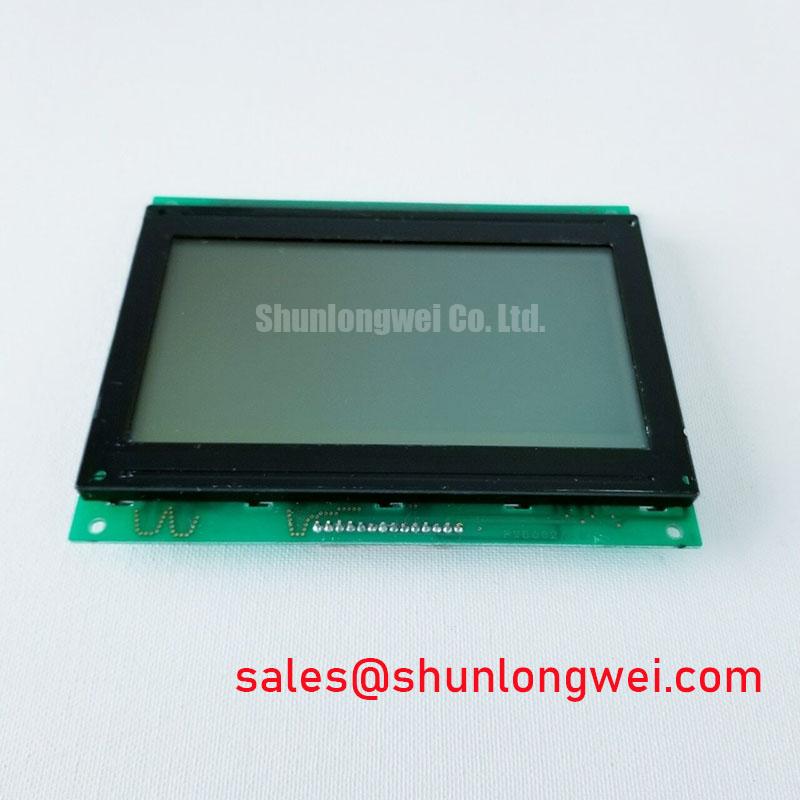
The Optrex DMF682ANF is a classic 640×480 monochrome STN graphic display module engineered for industrial HMI panels. Built for legacy control systems, it operates reliably with a 4-bit parallel interface and a built-in CCFL backlight. This module provides crisp readability in low-light settings, ensuring seamless integration into specialized machinery. Interfacing the DMF682ANF requires an external LCD controller to supply raw timing signals.
- Core Specifications: 640 x 480 Resolution | STN Monochrome | 4-bit Parallel Interface
- Key Benefits: Simplified legacy drop-in replacement, stable high-contrast visibility
Request Quote & Technical Support for DMF682ANF


Technical Analysis Around display UVP
The DMF682ANF relies on a Super-Twisted Nematic (STN) liquid crystal structure to generate its 640×480 resolution. By twisting the liquid crystal molecules up to 270 degrees, STN technology improves contrast compared to older TN displays. Because the panel does not include an onboard display controller chip, it requires external clock signals (FLM, CL1, CL2) to refresh the screen. This allows system designers to customize refresh rates and optimize performance for specific industrial machinery controllers.
Managing the external control signals for a controllerless LCD is like directing a symphony orchestra. The external controller acts as the conductor, sending precise timing signals to ensure every pixel updates at exactly the right microsecond. Without this coordination, the display would suffer from flickering or image ghosting. This configuration gives engineers direct control over power consumption and frame rates.
The CCFL backlight provides a uniform light source behind the STN panel, which is crucial for dark factory environments. The module operates with a standard +5V logic voltage. However, the liquid crystal drive voltage requires a negative power supply to maintain optimal contrast. Implementing thermal compensation circuits for this negative voltage ensures the display remains legible across its operating temperature range. This aligns with standard practices in LCD core technology, ensuring long-term rendering stability.
Optimized Application Scenarios
- Legacy CNC Machines: The DMF682ANF serves as a direct drop-in replacement for older machine tools that require a 4-bit parallel interface and specific physical dimensions.
- Industrial HMI Terminals: Ideal for control panels in process manufacturing, where raw graphical readouts are preferred over high-color interfaces. Its robust build fits well into a standard smart factory HMI setup.
- Medical Instrumentation: Suitable for legacy diagnostic equipment requiring high reliability and clear text display under controlled lighting conditions.
This display is the optimal choice for legacy industrial machinery requiring a high-reliability 640×480 monochrome replacement screen.
Key Specifications Parameter Table
| Category | Parameter | Value / Specification |
|---|---|---|
| Mechanical | Display Resolution | 640 x 480 pixels |
| Module Outline | 201.0 mm x 141.5 mm x 7.0 mm | |
| Effective Viewing Area | 154.0 mm x 117.0 mm | |
| Electrical | Supply Voltage for Logic (VDD) | 4.5V to 5.5V (5.0V Typ) |
| LCD Drive Voltage (VDD – VEE) | 15.0V to 25.0V (Temperature Dependent) | |
| Interface Type | 4-bit Parallel Graphic Data | |
| Optical & Thermal | Backlight Source | CCFL (Cold Cathode Fluorescent Lamp) |
| Operating Temperature Range | 0°C to +50°C |
Engineer FAQ
Q1: Does the DMF682ANF display include a built-in controller?
A1: No, the DMF682ANF is a controllerless graphic LCD module. It requires an external LCD controller (like the Epson SED1335 or RA8835) to drive the row/column lines and refresh the frame buffer.
Q2: What is the purpose of the negative voltage (VEE) requirement?
A2: The STN liquid crystal fluid requires a higher voltage potential than standard +5V logic to align the molecules and create contrast. A negative supply voltage, typically ranging down to -22V, is applied to VEE to regulate the contrast ratio.
Q3: How do you adjust the contrast of the DMF682ANF in environments with fluctuating temperatures?
A3: To maintain legible contrast, you must adjust the negative bias voltage as temperature changes. This is typically achieved using a thermistor-based compensation network in the power supply circuit. This ensures stable rendering during industrial LCD quality batch testing and real-world deployment.
Conclusion
The DMF682ANF remains a vital component for maintaining legacy industrial systems without requiring a complete redesign of the controller hardware. By offering mechanical continuity and reliable monochrome graphic rendering, it ensures extended service life for established manufacturing panels and utility control boards.