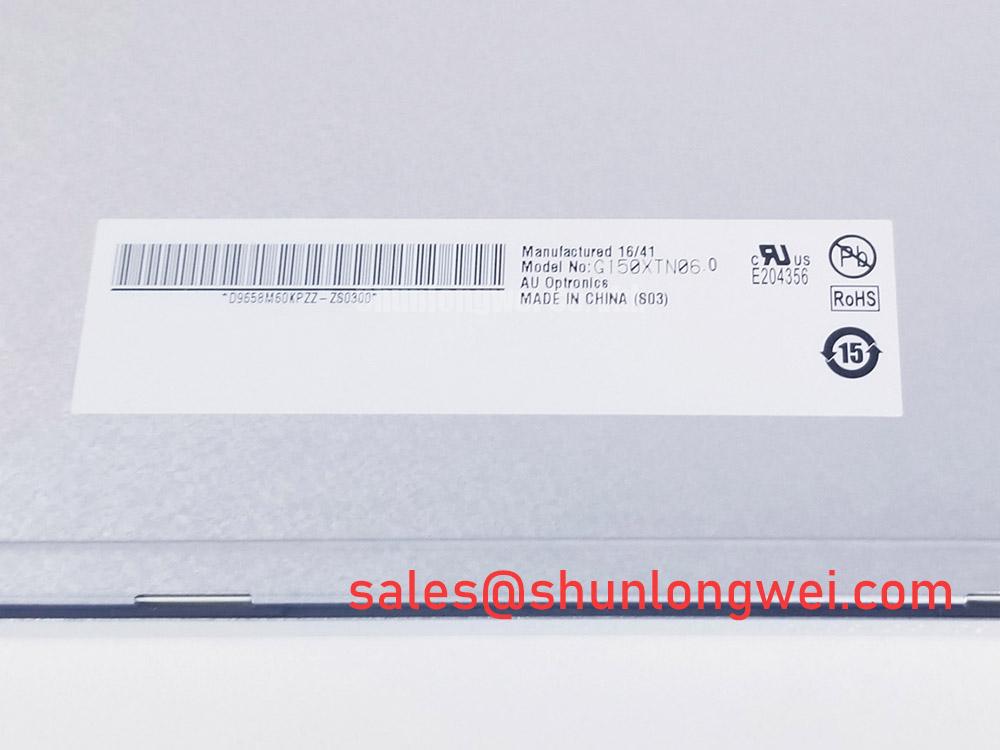
AUO G150XTN06.0: 15-Inch XGA Industrial TFT-LCD Module Technical Overview and Integration Guide
AUO G150XTN06.0 15-Inch XGA Industrial TFT-LCD Module
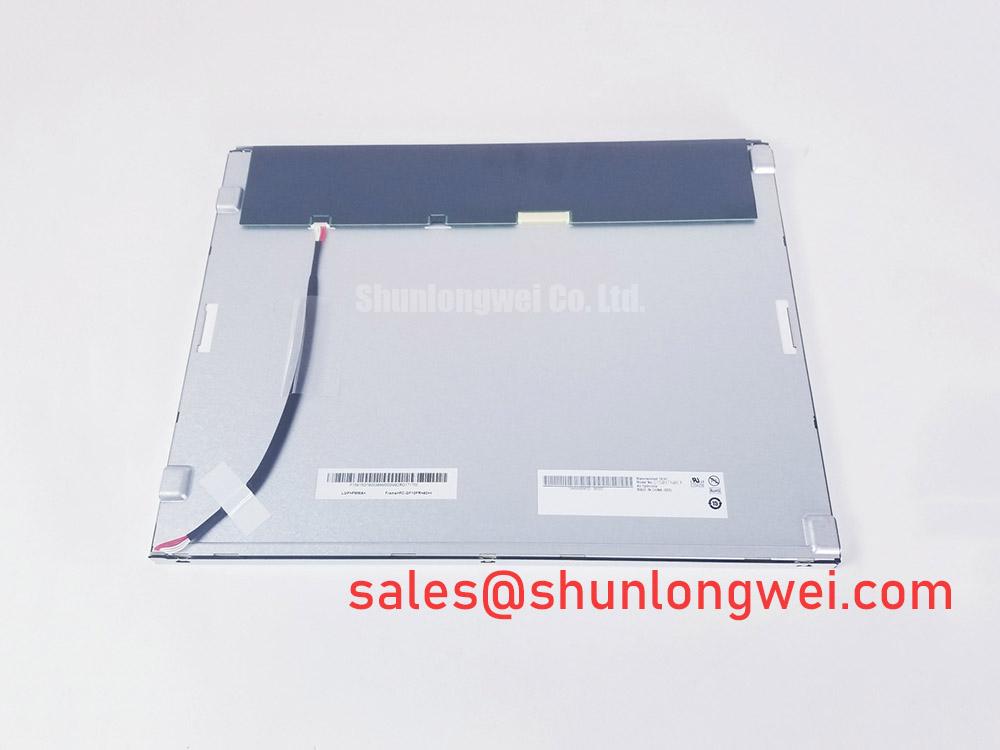
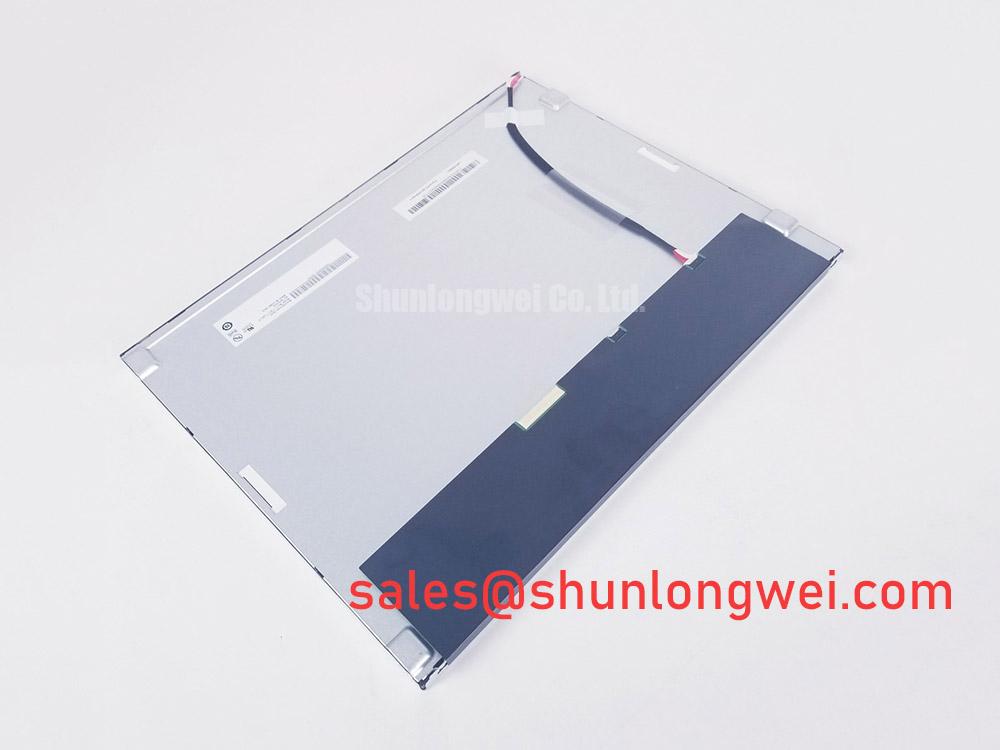
The AUO G150XTN06.0 is an industrial-grade 15.0-inch amorphous silicon TFT-LCD module delivering standard XGA resolution alongside an integrated LED backlight driver circuit. Engineered for demanding human-machine interfaces and factory automation infrastructure, this panel combines an extended operating temperature profile with long-life solid-state illumination to eliminate external inverter overhead.
- Core Specifications: 1024 × 768 Resolution | 400 cd/m² Luminance | 800:1 Contrast Ratio
- Engineering Advantages: Onboard LED driver lowers overall bill-of-materials footprint; 50,000-hour backlight life cycle ensures field longevity.
- Design Inquiry Solved: Can the G150XTN06.0 operate from a standard logic supply? Yes, it uses a 3.3V logic rail alongside a dedicated 12V supply for the integrated LED converter.
Download Official Datasheet (PDF)
Technical Architecture and Engineering Characteristics
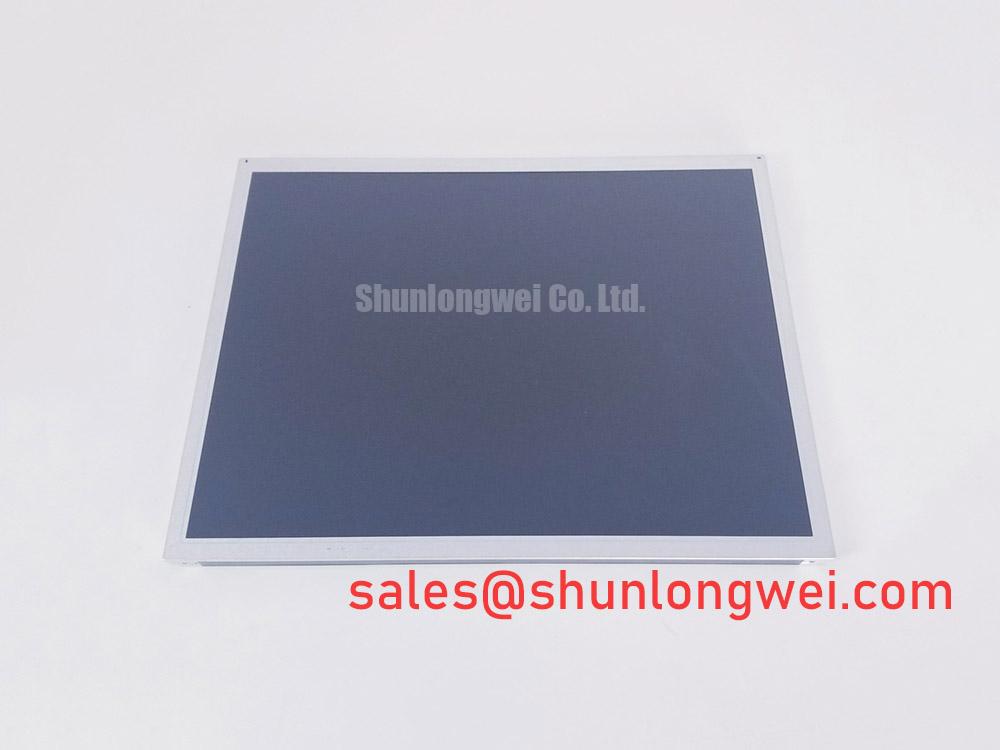
The AUO G150XTN06.0 utilizes a Normally White twisted nematic (TN) cell structure driven by a single-channel 6-bit/8-bit LVDS interface. Delivering an active area of 304.128 × 228.096 mm with a pixel pitch of 0.297 mm, it achieves crisp legibility for technical schematics and numerical readouts. The optical stack is coated with an anti-glare finish and 3H hard coating to reduce ambient reflections in open facilities.
Optical dynamics rely on a typical contrast ratio of 800:1 and an 8 ms response time (5.7 ms rise, 2.3 ms fall). Think of contrast ratio like dynamic range in an audio system: a wider margin prevents subtle greyscale tiers from washing out when background interference rises. This prevents visual errors during high-contrast graphical renders. System developers interested in wider panel families can consult our analysis of the AUO G150XTN06.B for contextual comparison.

Backlight longevity is rated at 50,000 hours minimum to half-brightness under standard 25°C operating conditions. The integrated driver board requires a 12.0V input rail and provides pulse-width modulation (PWM) dimming control. For guidance on driving schemes that prevent visual strain, explore our technical notes on LCD core technology and proper integration methods.
Optimized Application Scenarios
- CNC Machine Tool Interfaces: The 4:3 aspect ratio conforms to legacy machine tooling frameworks, while the anti-glare finish preserves readability under factory lighting.
- Industrial Workstations & Smart HMIs: Robust mechanical housing and standard 20-pin LVDS mating support rapid integration with common embedded motherboards. See our architectural guidelines on smart factory HMI specifications.
- Automated Test Equipment (ATE): Fast 8 ms grey-to-grey transition prevents trace blur during real-time waveform updates.
- Medical Diagnostic Monitors: Steady 400 cd/m² luminance and 16.2M color capabilities support precise diagnostic data visualization.
Best-fit application: Industrial automation enclosures requiring drop-in 4:3 XGA visualization with integrated backlight electronics and stable long-term operational characteristics.
Key Electrical and Optical Specifications
| Parametric Classification | ||
|---|---|---|
| Optical Performance | Luminance (Typical) | 400 cd/m² |
| Contrast Ratio (Typical) | 800:1 | |
| Viewing Angles (CR ≥ 10) | 80°/80°/70°/80° (Left/Right/Up/Down) | |
| Response Time (Tr + Td) | 8.0 ms (Typical) | |
| Electrical Ratings | Logic Supply Voltage (VDD) | 3.3 V (Typ.) |
| LED Driver Supply (VLED) | 12.0 V (Typ.) | |
| Interface Connector | LVDS 1-Channel (20-pin) | |
| Mechanical & Environmental | Active Area | 304.128(H) × 228.096(V) mm |
| Module Outline | 326.5(H) × 253.5(V) × 9.0(D) mm (Typ.) | |
| Operating Temperature Range | -30°C to +85°C | |
Integration & Application FAQ
What is the recommended method to manage signal integrity on long LVDS runs to this panel?
Maintain differential impedance at 100 Ω ± 10% on all data and clock pairs. Keep trace lengths matched within 0.5 mm per pair, and implement adequate ground planes to mitigate high-frequency radiated emissions as detailed in our guide on solving EMI issues in industrial displays.
Can the G150XTN06.0 operate in outdoor or wide-temperature installations?
The panel features an operating envelope of -30°C to +85°C. While capable of wide thermal tracking, sustained high-temperature duty cycles will accelerate LED phosphor degradation, requiring proper thermal dissipation within sealed cabinets.
What is the dimming frequency range supported by the internal LED driver?
The onboard converter accepts PWM dimming frequencies between 100 Hz and 20 kHz, enabling fine luminous adjustment without inducing audible acoustic hum or optical strobing.
Operational Continuity and Integration Assurance
The AUO G150XTN06.0 provides hardware developers with a balanced combination of mechanical maturity, stable electrical interfaces, and robust temperature resilience. Sourcing engineers and embedded designers can rely on its standard mechanical envelope and 20-pin single-channel LVDS topology to modernize legacy automation equipment or implement dependable new HMI platforms.