A Technical Analysis of the Mitsubishi PM75CL1A120 Intelligent Power Module
Mitsubishi PM75CL1A120 Intelligent Power Module Analysis
Integrated Power Stage for Efficient and Reliable Motor Control
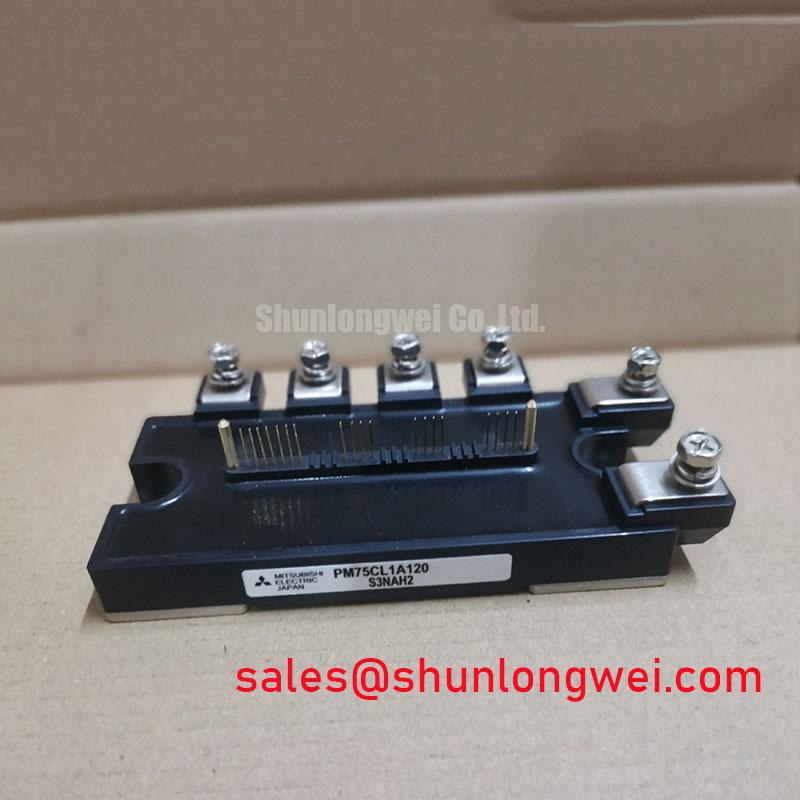
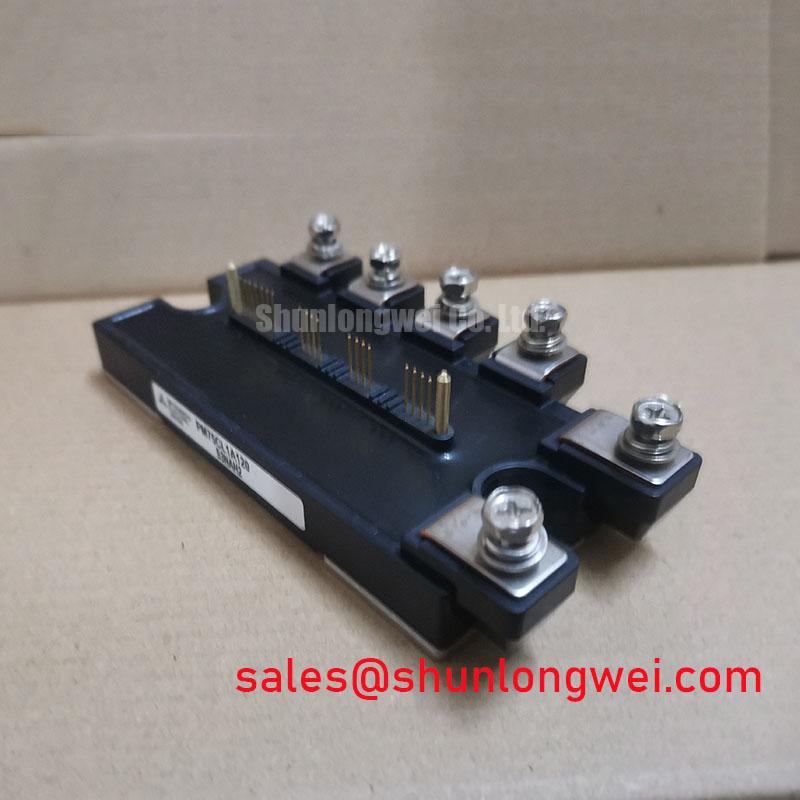
The Mitsubishi PM75CL1A120 is an L1-Series Intelligent Power Module (IPM) that integrates a three-phase IGBT inverter stage with dedicated gate drive and protection circuits. This module’s primary value is its ability to simplify system design while enhancing operational reliability through its cohesive, factory-optimized construction. By combining the power switches, drivers, and multiple protection functions into a single insulated package, it provides a validated subsystem for motor control applications.
- Core Specifications: 1200V | 75A | 3-Phase Inverter
- Key Advantages: Reduces component count and simplifies PCB layout. Features integrated over-current, short-circuit, and over-temperature protection.
- Design Intent: This IPM directly addresses the need for robust fault management in variable frequency drives by providing an error signal output for immediate system shutdown during fault conditions.
Download the official PM75CL1A120 Datasheet (PDF)
Technical Analysis of Integrated Protection
A key engineering benefit of the PM75CL1A120 is its integrated protection logic. Unlike discrete designs where protection circuits must be carefully designed and laid out externally, this IPM incorporates detection for short-circuits (SC), over-temperature (OT), and control supply under-voltage (UV). This integration is not merely about convenience; it ensures precisely matched protection that acts much faster than many external solutions, safeguarding the IGBT chips from destructive events. The module employs Mitsubishi’s 5th generation CSTBT™ (Carrier Stored Trench-Gate Bipolar Transistor) chip technology, which is optimized for a balance between conduction and switching losses.
The module’s collector-emitter saturation voltage, VCE(sat), is a critical parameter for efficiency. Think of VCE(sat) as the electrical “friction” the device presents when it’s fully on. The PM75CL1A120 specifies a typical VCE(sat) of 1.65V at a 75A collector current. A lower VCE(sat) value directly translates to lower power dissipation as heat during operation. This reduces the demands on the cooling system, potentially allowing for a smaller heatsink and a more compact overall system design. This is a crucial aspect of managing the system’s thermal performance and long-term reliability.

Optimized Application Scenarios
The characteristics of the PM75CL1A120 make it particularly suitable for specific industrial applications where reliability and simplified design are paramount.
- General Purpose Inverters: The module’s robust, integrated protection against short-circuits and over-current events is vital for drives that may encounter unpredictable load conditions.
- AC Servo Drives: Precision motor control requires predictable and reliable power electronics. The integrated nature of the IPM ensures optimized switching characteristics and rapid fault reporting, contributing to system accuracy and uptime.
- Industrial Motor Controls: For systems like pumps, fans, and conveyors, the module’s high level of integration simplifies the power stage design, allowing engineering teams to focus on control logic and system integration. The built-in over-temperature protection is a key feature for ensuring long service life in industrial environments.
With its 1200V rating and comprehensive protection, this module is an excellent match for 380-480V AC line-powered motor control systems requiring high operational integrity.
Key Specifications of the PM75CL1A120
| Parameter | Symbol | Conditions | Value |
|---|---|---|---|
| Collector-Emitter Voltage | VCES | – | 1200 V |
| Collector Current (DC) | IC | TC = 25°C | 75 A |
| Collector Power Dissipation | PC | TC = 25°C | 595 W |
| Collector-Emitter Saturation Voltage | VCE(sat) | IC = 75A, Tj = 25°C | 1.65 V (Typ.) |
| Isolation Voltage | Viso | 60Hz, Sinusoidal, AC 1 minute | 2500 Vrms |
| Control Circuit Voltage | VD | Applied between VUPC-VUP1, etc. | 15 V |
Engineer’s FAQ
What is the main benefit of using the PM75CL1A120 IPM?
The primary benefit is system reliability and design simplification. By integrating the gate driver and a full suite of protection features (short-circuit, over-temperature, under-voltage), it reduces external component count and mitigates common failure modes associated with discrete designs. Explore more about the advantages in our guide to how integrated structures drive performance.
How should this module be mounted to a heatsink?
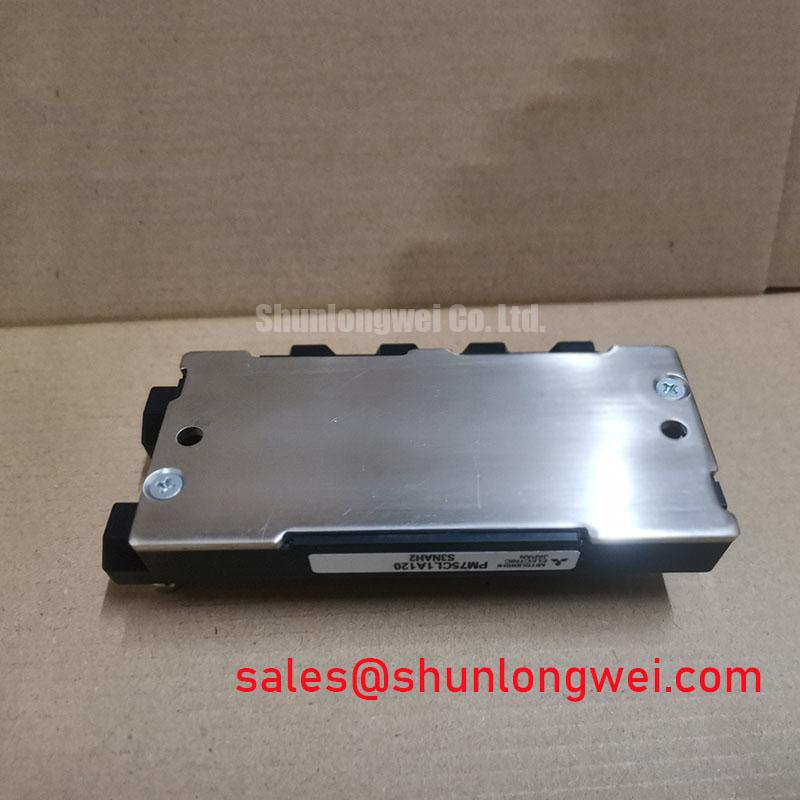
For effective heat dissipation, the module’s baseplate must be mounted to a heatsink with a flatness tolerance specified in the datasheet. A thermal compound should be applied evenly to the contact surface to minimize the contact thermal resistance (Rth(c-f)). The datasheet specifies a typical case-to-fin thermal resistance of 0.05 °C/W with thermal grease applied, which is a critical value for thermal calculations.
What does the fault output (Fo) signal indicate?
The Fo pin provides a status signal to the system’s microcontroller. It is an open-collector output that goes low to indicate a fault condition, such as a short-circuit, over-temperature, or a control supply under-voltage event on any of the six IGBT arms. This enables the control system to take immediate protective action.
What is the short-circuit protection capability?
The module includes short-circuit protection that detects excessive current and safely shuts down the IGBTs. The SC protection is rated for conditions up to VCC = 800V, VGE = 15V, and a starting junction temperature of 125°C, providing robust protection in demanding inverter applications.
Enabling Robust Power Conversion
The PM75CL1A120 delivers a highly integrated and protected power conversion solution. Its combination of 5th generation CSTBT™ IGBTs and comprehensive, built-in protection logic empowers engineers to develop more reliable, efficient, and compact motor control systems. This module is a strategic component choice for accelerating development time and enhancing the operational integrity of industrial power electronics.