A Technical Review of the Mitsubishi PMH200CS1D060 Intelligent Power Module
Mitsubishi PMH200CS1D060 H-Series Intelligent Power Module
Introduction & Core Highlights
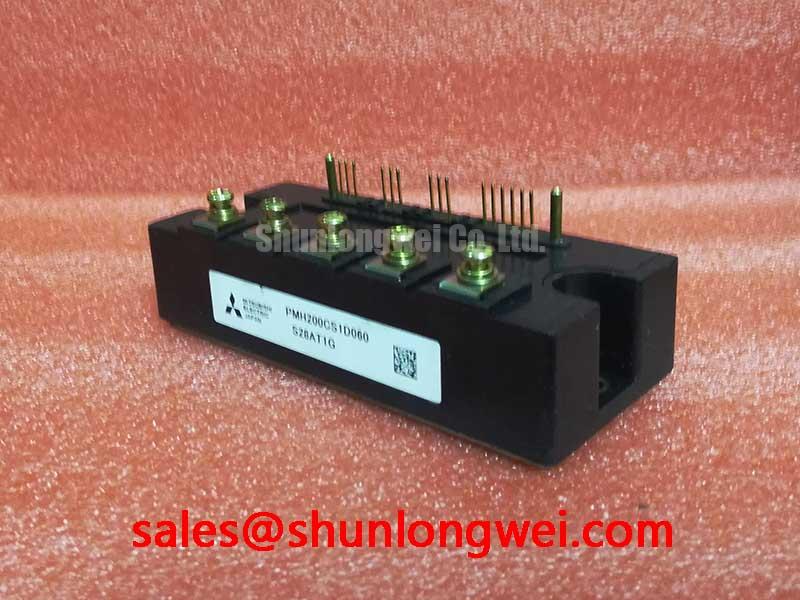
The Mitsubishi PMH200CS1D060 is a 600V, 200A H-Series Intelligent Power Module (IPM) that integrates a complete three-phase inverter power stage with dedicated gate drivers and comprehensive protection circuits. This high level of integration provides a robust solution engineered to reduce system complexity and improve the reliability of high-power inverter systems. By consolidating critical functions, this module allows designers to streamline development cycles and minimize the footprint of their power conversion hardware.
- Core Specifications: 600V | 200A | 2500Vrms Isolation
- Key Advantages: Simplifies gate drive and protection circuit design, enhances overall system reliability.
- Integrated Protection: Includes built-in safeguards against short-circuit, over-temperature, and control supply under-voltage events.
For detailed electrical and thermal characteristics, download the official PMH200CS1D060 datasheet (PDF).
Technical Analysis of Integrated Features
The core value of the PMH200CS1D060 lies in its integration of functionality that typically requires numerous external components. The built-in gate drive circuitry is optimized for the internal IGBTs, ensuring proper switching characteristics while minimizing parasitic inductance that can cause voltage overshoots. This is a critical factor in achieving reliable performance, as explored in guides on robust gate drive design. The module accepts direct 3.3V or 5V logic-level control signals, which simplifies the interface with standard microcontrollers and FPGAs.
Comprehensive On-Board Protection
A key engineering advantage of this IPM is its suite of self-protection functions. It includes circuitry for detecting short-circuits (SC), over-temperature (OT) conditions via an internal L-VIC, and control supply under-voltage (UV). When a fault is detected, the module autonomously shuts down the corresponding IGBTs to prevent catastrophic failure and sends an alarm signal (Fo) back to the system controller. This integrated approach not only safeguards the module itself but also enhances the safety and longevity of the entire application, a concept central to preventing common IGBT failures.
Thermal Performance and Management
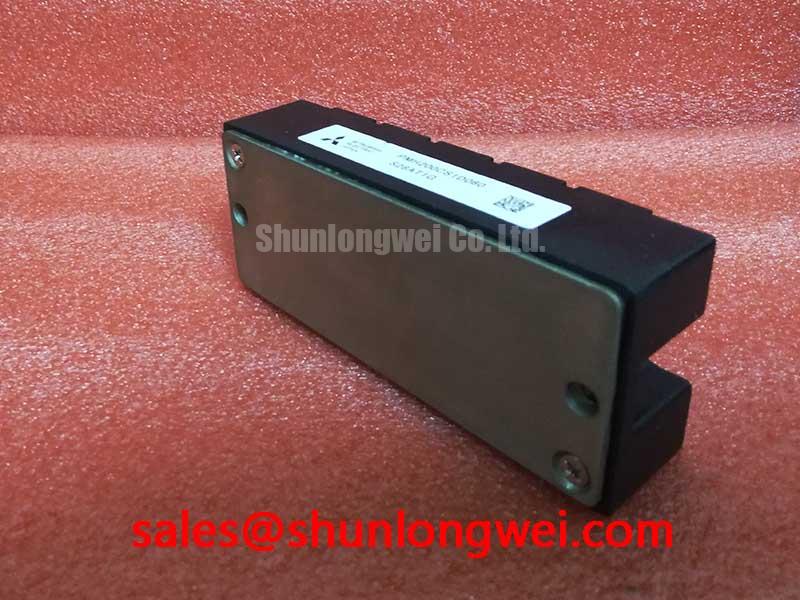
Efficient heat dissipation is crucial for high-power modules. The PMH200CS1D060 specifies a thermal resistance from junction to case (Rth(j-c)) for both the IGBT and the freewheeling diode. Think of thermal resistance as the width of a pipe for heat; a lower value means heat can flow out more easily. The specified Rth(j-c) of 0.25 °C/W for the IGBTs indicates an effective thermal path to the baseplate, allowing for efficient cooling. Proper thermal management, including an appropriately sized heatsink and thermal interface material, is essential to operate the module within its specified junction temperature limits.
Optimized Application Scenarios
- Industrial Motor Drives: The module’s 200A capability and integrated protection make it ideal for AC induction and permanent magnet motor controllers, where overload and short-circuit conditions are potential risks.
- Servo Amplifiers: High-speed switching characteristics and precise control afforded by the integrated driver are beneficial for dynamic servo applications requiring high accuracy.
- Commercial HVAC Systems: The robust design and thermal efficiency support the demanding, continuous operation cycles of large-scale heating, ventilation, and air conditioning compressor drives.
- Uninterruptible Power Supplies (UPS): The high reliability stemming from the on-board protection is critical for UPS systems where uptime and resilience are paramount.
This module is best matched for three-phase inverter designs up to approximately 30 kW requiring a high degree of integration and operational reliability.
Key Specifications of the PMH200CS1D060
| Parameter | Symbol | Value | Unit |
|---|---|---|---|
| Absolute Maximum Ratings (Tj = 25°C unless otherwise noted) | |||
| Collector-Emitter Voltage | VCES | 600 | V |
| Collector Current (DC) | IC | 200 | A |
| Collector Current (Peak) | ICP | 400 | A |
| Collector Power Dissipation | PC | 500 | W |
| Operating Junction Temperature | Tj | -20 to +150 | °C |
| Isolation Voltage | VISO | 2500 | Vrms |
| Electrical Characteristics (Tj = 25°C, VCC=400V, VD=15V) | |||
| Collector-Emitter Saturation Voltage | VCE(sat) | 2.2 (Typ) / 2.7 (Max) | V |
| Control Supply Current | ID | 15 (Typ) / 30 (Max) | mA |
Engineer’s FAQ
1. What is the function of the alarm output (Fo) terminal?
The Fo (Fault Output) terminal is an open-collector output that signals a fault condition. It becomes active (low state) when the Short-Circuit (SC), Under-Voltage (UV), or Over-Temperature (OT) protection is triggered. This signal should be monitored by the system’s microcontroller to initiate a safe shutdown procedure.
2. What are the primary considerations for the thermal design using this IPM?
The main goal is to keep the junction temperature (Tj) below the 150°C maximum rating under all operating conditions. This requires selecting a heatsink with sufficiently low thermal resistance based on the calculated power losses (conduction and switching). Ensure a flat mounting surface and use a high-quality thermal interface material to minimize the case-to-heatsink thermal resistance (Rth(c-f)).
3. What is the required dead-time between high-side and low-side control signals?
The datasheet specifies a minimum dead-time (tdead) of 2.0µs for the input signals to prevent arm shoot-through. It is crucial for the control logic to enforce this timing to avoid cross-conduction, which can damage the module.
4. Can the control inputs be driven directly from a 3.3V microcontroller?
Yes. The input ON threshold voltage (Vth(on)) is typically 1.5V (max 2.0V), and the OFF threshold (Vth(off)) is typically 2.0V (min 1.3V). These levels are compatible with standard 3.3V and 5V CMOS/TTL logic, allowing for direct connection to microcontroller I/O pins, which greatly simplifies the interface hardware.
Design Enablement
The Mitsubishi PMH200CS1D060 IPM is a highly integrated power component that enables engineers to develop more compact, reliable, and efficient inverter systems. By offloading critical driver and protection tasks from the central controller, it allows design teams to focus on application-level software and system optimization, confident in the robustness of the power stage.