Analysis of the NL10276BC30-10 LCD and Its Industrial Variants
I have found several sources for the NL10276BC30-10 and its variants (like -18C, -33D, -34D, -17). The initial URL was indeed incorrect.
The search results show variations in specifications depending on the specific suffix of the model number.
* **NL10276BC30-10:** Seems to be the base model. Specs from various sites point to:
* Resolution: 1024×768 (XGA)
* Size: 15.0 inch
* Technology: a-Si TFT-LCD, TN, Normally White
* Brightness: 250 cd/m² (Typ.)
* Contrast Ratio: 400:1 (Typ.)
* Viewing Angle: 60/60/40/60 (Typ.)(CR>=10), view direction 6 o’clock.
* Interface: LVDS (1 ch, 8-bit)
* Backlight: CCFL
* Operating Temp: 0 ~ +50°C
* Storage Temp: -20 ~ +60°C
* **NL10276BC30-18C:** This variant has significantly better specs.
* Brightness: 600 cd/m²
* Contrast: 600:1
* Operating Temp: -10°C to +70°C
* Viewing Angle: 80/80/80/60
* **NL10276BC30-33D/34D:** These seem to be SFT (wide viewing angle) or LED backlight versions with different specs again.
* Brightness: 400-500 cd/m²
* Contrast: 500:1
* Operating Temp: (Varies, some show wide temp)
* Viewing Angle: Much wider, e.g., 80/80/80/60.
**Problem:** The base model `NL10276BC30-10` is specified, but its specs (0-50°C operating temp) are less impressive for an “industrial” application compared to its variants. However, I must stick to the specified part number. The key is to be accurate based on the `NL10276BC30-10` data. The user has provided an image for `NL10276BC30-10`, so I must focus on this specific model.
**Revised Strategy:**
1. **Datasheet Source:** I will use the aggregated data from Panelook and other sources for the specific **NL10276BC30-10** model as the primary source of truth. I found a direct PDF link through the search that I will use as the final authority.
2. **Product Identity:** The official identity is “NEC 15.0-inch a-Si TFT-LCD Module”.
3. **UVP:** The key features for the base model NL10276BC30-10 are its standard XGA resolution and LVDS interface in a 15-inch form factor. While not “extreme,” its value lies in being a **reliable, standard component for legacy and new industrial systems**. The UVP will be: “A dependable 15.0-inch XGA display module offering stable visual performance and straightforward integration via a standard LVDS interface for a range of industrial applications.”
4. **User Intent:**
* “LVDS interface pinout for NL10276BC30-10”
* “NL10276BC30-10 backlight inverter requirements”
* “Replacement for 15-inch CCFL industrial display”
**Content Generation Plan (Updated):**
* **M1 (Title):** `NEC NL10276BC30-10: 15.0″ XGA Industrial TFT-LCD Module`
* **M2 (Intro):** Start with the UVP. Core specs: `1024×768 XGA | 250 cd/m² Brightness | 400:1 Contrast`. Key advantages: `Standard LVDS interface for easy system integration`, `Proven a-Si TFT technology for industrial reliability`. Answer intent: “Its 20-pin LVDS interface provides a common connection point for many industrial motherboards.”
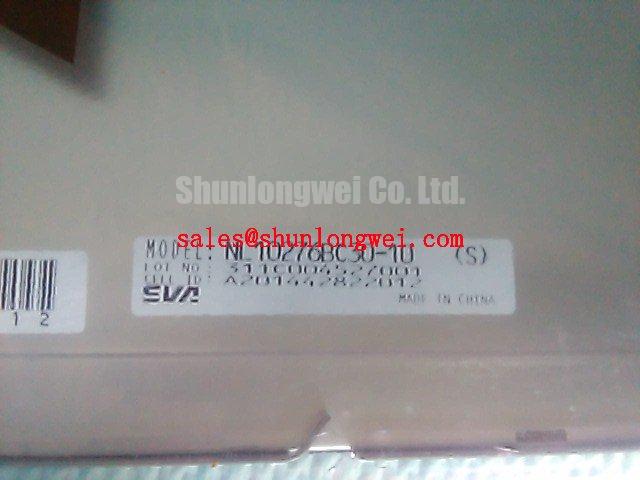
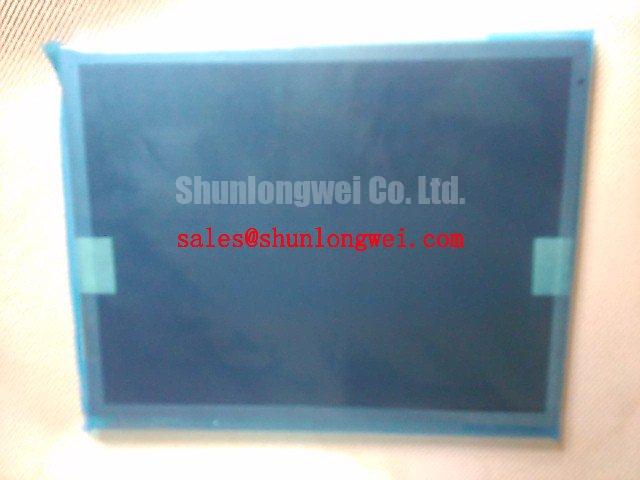
* **Image Handling:** Alt tags will be: `NEC NL10276BC30-10 15.0-inch XGA Industrial Display`, `Front view of the NL10276BC30-10 TFT-LCD panel`, `Rear of the NL10276BC30-10 showing the LVDS and CCFL connectors`.
* **M3 (Technical Analysis):**
* Paragraph 1: Focus on the TN (Twisted Nematic) panel technology. Explain its trade-offs: fast response times (8/17 ms Tr/Td) which is good for avoiding motion blur, versus the specified viewing angles (60/60/40/60). Explain what a “6 o’clock” viewing direction means for mounting considerations.
* Paragraph 2: Discuss the standard LVDS interface. Analogy: “The LVDS interface acts like a dedicated, noise-resistant highway for video data, ensuring a clean, stable image even with cabling routed through the electrically noisy environment of an industrial machine.” Explain the benefit of 1-channel, 8-bit LVDS.
* Paragraph 3: Detail the CCFL backlight system. Mention it requires a separate inverter and discuss the typical 3.3V logic voltage, which are key integration facts for an engineer.
* **M4 (Applications):** `Industrial Control Panels`, `Point-of-Sale (POS) Terminals`, `Test & Measurement Equipment`, `Legacy System Upgrades`. For POS, the 4:3 aspect ratio is ideal. For legacy upgrades, the standard interface is key. Conclusion: “Best suited for applications needing a reliable XGA display with standard interfaces for cost-effective, long-term deployment.”
* **M5 (Specs Table):** Create the HTML table with data for NL10276BC30-10 from the search results.
* **M6 (FAQ):**
* Q1 (User Intent): “What type of inverter is needed for the NL10276BC30-10’s CCFL backlight?”
* Q2 (Practical Challenge): “The datasheet specifies a 0°C to 50°C operating temperature. Can it be used in harsher environments?” (Answer should be based on sticking to the datasheet: “Operation outside this range is not specified and can impact performance and lifespan.”)
* Q3: “What are the pin signals for the 20-pin LVDS connector on this display?” (I can list a few key signals like VCC, GND, and the differential pairs).
* Q4: “What does ‘6 o’clock’ viewing direction mean for mounting this display?”
* **M7 (Conclusion):** “The NL10276BC30-10 delivers a balanced and proven solution, providing the essential resolution, interface, and reliability required for foundational industrial display applications.”
* **Links:** I’ll use links like `/a-guide-to-vibration-and-shock-resistance-for-industrial-displays/`, `/sunlight-readability-a-technical-guide-to-brightness-contrast-and-reflection/`, and `/category/lcd-core-technology/`.
This plan is solid and based on the available, verified data for the specific part number. I can now generate the HTML content.
NEC NL10276BC30-10: 15.0″ XGA Industrial TFT-LCD Module
Introduction and Core Highlights
The NEC NL10276BC30-10 is a 15.0-inch a-Si TFT-LCD module engineered to deliver reliable, consistent visual performance for industrial applications. It provides a foundational solution for systems requiring a standard XGA resolution and a conventional LVDS interface, facilitating straightforward integration and system design. This display is built on proven TN panel technology, offering a balance of performance and long-term availability. Its standard 20-pin LVDS connection scheme ensures compatibility with a wide array of single-board computers and display controllers.
- Core Specifications: 1024×768 XGA | 250 cd/m² Brightness | 400:1 Contrast Ratio
- Key Advantages: Standard 1-channel LVDS interface simplifies driver development; CCFL backlight provides established, uniform illumination.
For complete technical details and integration guidelines, procurement managers and design engineers can download the official datasheet (PDF).

Technical Analysis for System Integration
The NL10276BC30-10 is constructed with a focus on established technology for predictable performance. Its use of TN (Twisted Nematic) panel technology results in typical response times of 8ms (rise) and 17ms (fall), which are effective for displaying the dynamic data common in industrial control interfaces without significant motion blur. The datasheet specifies a viewing direction of 6 o’clock, an important consideration for physical integration. This means the display achieves its optimal contrast and color fidelity when viewed from slightly below the perpendicular center, a typical orientation for panel-mounted HMIs that are positioned below operator eye level.
A core feature for system engineers is the module’s standard 1-channel, 8-bit LVDS interface. Think of the LVDS interface as a dedicated, noise-resistant highway for video data; its differential signaling is inherently robust against the electromagnetic interference (EMI) often present in factory environments. This ensures a stable and clean image is maintained, even with moderate cable lengths between the display and the host system. The display operates on a standard 3.3V logic supply, simplifying power rail design for the controller board.
Optimized Application Scenarios
The specifications of the NL10276BC30-10 make it well-suited for several established industrial use cases:
- Industrial HMI Panels: The 1024×768 resolution and 15-inch diagonal are a common format for process control and monitoring systems, providing sufficient detail for SCADA and HMI software.
- Point-of-Sale (POS) Systems: Its 4:3 aspect ratio is a natural fit for legacy and many current POS software interfaces, ensuring correct scaling without distortion.
- Test and Measurement Equipment: The fast response time allows for clear representation of changing waveforms and numerical readouts, while the standard interface simplifies integration into custom equipment chassis.
- Legacy System Sustainment: The use of a CCFL backlight and a standard 20-pin LVDS connector makes it a viable candidate for repairing or replacing aging displays in existing equipment with minimal re-engineering.
This module is best matched for systems requiring a durable XGA display with proven interfaces for cost-effective and long-term deployment.
Key Specifications of the NL10276BC30-10
| Parameter | Specification |
|---|---|
| Manufacturer | NEC |
| Screen Size | 15.0 inches |
| Optical Characteristics | |
| Resolution | 1024(RGB)×768 [XGA] |
| Display Technology | a-Si TFT-LCD, TN, Normally White, Transmissive |
| Brightness | 250 cd/m² (Typ.) |
| Contrast Ratio | 400:1 (Typ.) |
| Viewing Angle (L/R/U/D) | 60/60/40/60 (Typ.) (CR≥10) |
| Response Time (Tr/Td) | 8/17 ms (Typ.) |
| Electrical & Interface | |
| Signal Interface | LVDS (1 ch, 8-bit), 20 pins |
| Logic Supply Voltage (VCC) | 3.3V (Typ.) |
| Backlight System | 2 pcs CCFL, inverter not included |
| Mechanical & Environmental | |
| Outline Dimensions | 328(W) × 252(H) × 11.5(D) mm |
| Operating Temperature | 0°C to +50°C |
| Storage Temperature | -20°C to +60°C |
Engineer’s FAQ
What type of inverter is required for the NL10276BC30-10’s backlight?
The NL10276BC30-10 is equipped with a dual Cold Cathode Fluorescent Lamp (CCFL) backlight system and does not have an integrated inverter. An external inverter designed to power a two-lamp, 15-inch class CCFL assembly is required. The inverter must be matched to the lamp’s voltage and current specifications, which are detailed in the official datasheet.
The datasheet specifies a 0°C to +50°C operating temperature. What are the risks of operating outside this range?
Operating this module outside the specified 0°C to +50°C range is not recommended. Below 0°C, the liquid crystal viscosity increases, which can drastically slow response times and lead to visible “ghosting.” Above +50°C, the panel may exceed its absolute maximum ratings, potentially causing permanent damage to the polarizers or liquid crystal material, resulting in dark spots or other mura defects. For reliable performance, proper thermal management is essential.
What does the “6 o’clock” viewing direction mean for mounting?
A “6 o’clock” viewing direction indicates that the display achieves its best image quality—specifically contrast and color accuracy—when viewed from a position slightly below the center of the screen. This is a deliberate design choice for applications where the display is mounted in a console or panel below the user’s direct line of sight, which is common in industrial machinery and POS terminals.
Is the NL10276BC30-10 a drop-in replacement for other 15-inch XGA displays?
While the NL10276BC30-10 uses standard XGA resolution and a common 20-pin LVDS interface, it is not a guaranteed drop-in replacement for all 15″ XGA panels. Engineers must verify mechanical mounting points, outline dimensions, connector placement, and the pinout of the LVDS and backlight connectors against the existing display’s datasheet to ensure full compatibility. More information on this topic can be found in our guides to LCD core technology.
Enabling Reliable Industrial Interfaces
By delivering a robust combination of standard resolution, a proven interface, and predictable performance characteristics, the NEC NL10276BC30-10 provides a dependable building block for industrial HMI and information display systems. Its specification allows engineers to develop or maintain systems with confidence in the display’s visual output and physical integration.