Lumineq EL640.400-C2: A Rugged TFEL Display for Extreme Environments
Lumineq EL640.400-C2: Rugged 640×400 TFEL Industrial Display
Introduction and Core Highlights
The Lumineq EL640.400-C2 is a Thin Film Electroluminescent (TFEL) display engineered for absolute reliability in applications where conventional displays fail. Its core value is rooted in its solid-state construction, which delivers exceptional visual performance and survivability in extreme industrial, military, and transportation environments. This display provides consistent, readable data under severe shock, vibration, and a wide range of temperatures.
- Key Specifications: 640×400 Resolution | <1ms Response Time | 100 G Shock Resistance
- Core Engineering Advantages: Eliminates motion blur for clarity on moving platforms; Withstands extreme mechanical stress and harsh conditions.
Unlike liquid-crystal-based technologies, the EL640.400-C2 provides instantaneous, clear imagery across its entire operational range, making it a dependable choice for mission-critical systems. For detailed integration data, procurement managers and design engineers should reference the official manufacturer documentation.
Download Official Datasheet (PDF)
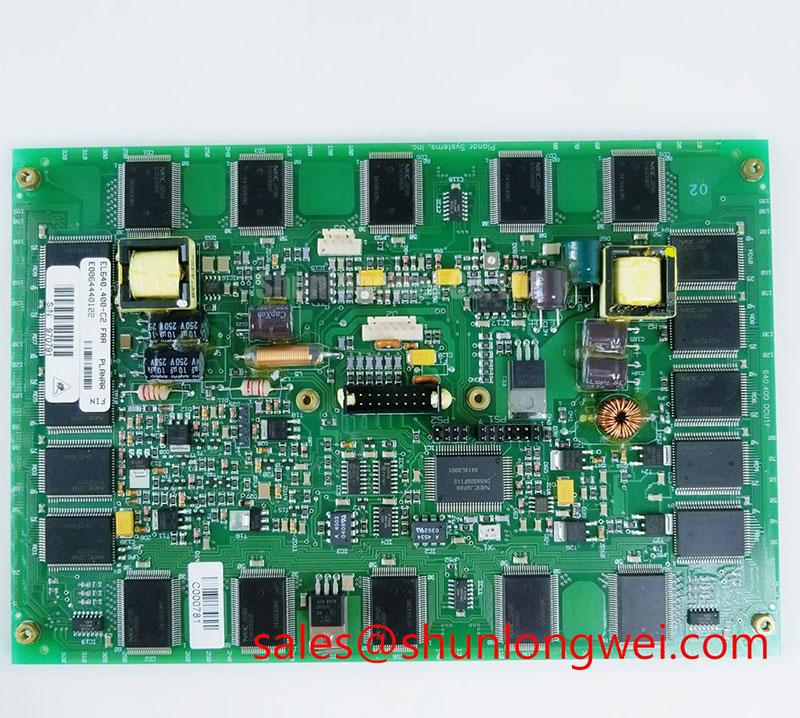
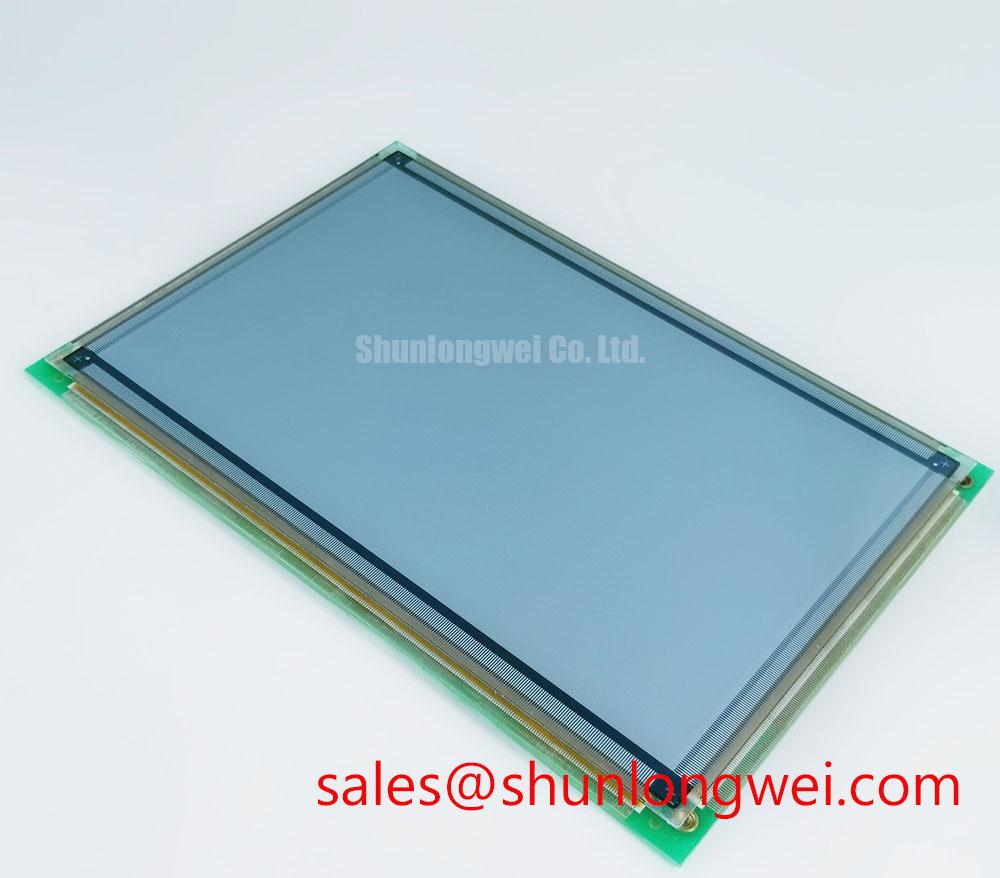
Technical Analysis: Unmatched Durability and Clarity
The engineering value of the EL640.400-C2 is defined by its TFEL technology. This all-solid-state design is fundamentally different from liquid crystal displays. Think of its structure like a solid piece of laminated glass, rather than a container of liquid. This inorganic build eliminates the mechanical failure points common in LCDs, such as seals and liquid that can freeze or boil. The result is a display capable of withstanding a 100 G shock, operating at high altitudes up to 15,000 meters, and providing a Mean Time Between Failures (MTBF) exceeding 50,000 hours. This inherent toughness removes the need for ancillary heaters or complex shock-absorbing mounts in many designs.
Visual performance is another key differentiator derived from its self-emissive pixels. Each pixel is its own light source, which provides two distinct advantages. First, it enables a sub-millisecond response time (<1 ms), completely eliminating the motion blur and ghosting that plagues slower LCD panels. This is critical for applications like avionics or vehicle-mounted systems where instrument readings must be instantly legible. Second, it produces a viewing cone greater than 179 degrees with no contrast or color degradation, ensuring readability from virtually any angle. The result is consistent, high-contrast imagery for any operator, in any position. For more on display technologies, explore LCD Core Technology.

Optimized Application Scenarios
The specific performance metrics of the EL640.400-C2 make it a superior choice for several demanding fields:
- Avionics and Defense Systems: Its documented 100 G shock resistance and 15 km altitude rating ensure it operates reliably in cockpits and tactical vehicles where failure is not an option.
- Marine and Naval Equipment: The >179-degree viewing angle and high contrast ratio (>50:1) provide exceptional readability on ship bridges and in engine control rooms with variable lighting and viewing positions.
- Heavy Industrial Control: In environments like steel foundries or drilling rigs, its immunity to vibration (20 to 500 Hz at 0.05 g²/Hz) and solid-state construction prevent the failures common to mechanical-stress-prone LCDs.
- Medical and Scientific Instrumentation: The blur-free, <1 ms response time ensures that critical waveform and numerical data is displayed with precision and without artifacts.
This display is the optimal solution where systems require unwavering readability and operational survivability under extreme mechanical and environmental stress.
Key Specifications of the EL640.400-C2
| Display Performance | |
|---|---|
| Technology | Thin Film Electroluminescence (TFEL) |
| Resolution | 640 x 400 pixels |
| Active Area | 195 x 121.8 mm (9.1″ Diagonal) |
| Typical Luminance | 50-53 cd/m² |
| Contrast Ratio | > 50:1 |
| Response Time | < 1 ms |
| Viewing Angle | > 179° (Symmetry) |
| Display Color | Monochrome (Amber/Yellow) |
| Environmental Ratings | |
| Operating Temperature | 0°C to +55°C |
| Storage Temperature | -40°C to +85°C |
| Shock Resistance | 100 g, 4 ms (half-sine wave) |
| Vibration Resistance | 20-500 Hz, 0.05 g²/Hz random |
| Operating Altitude | Up to 15,000 m (50,000 ft) |
| Electrical & Interface | |
| Supply Voltages | 5V (VCC1) and 11V to 30V (VCC2) |
| Power Consumption (Typ.) | 11 W @ 70 Hz |
| Interface | 4-bit LCD-type (LVCMOS) |
| MTBF | > 50,000 hours |
Engineer FAQ
Why choose an EL640.400-C2 over an LCD for an environment with high vibration?
The EL640.400-C2 is entirely solid-state, with no liquid crystal layer or fragile backlight assemblies. Its inorganic TFEL structure is inherently resistant to mechanical stress, rated to withstand 100g shock and significant random vibration (0.05 g²/Hz), whereas an LCD’s liquid-filled cells and mechanical layers are susceptible to damage and image distortion under similar conditions. Further analysis on display durability is available in our guide to vibration and shock resistance for industrial displays.
What are the power supply requirements for this display?
The unit requires a dual voltage supply: a stable +5V for logic (VCC1) and a wider-range +11V to +30V for the high-voltage drive electronics (VCC2). Typical power consumption is approximately 11 watts, though this can vary with frame rate and displayed content. A low power mode can reduce this to around 7W.
How is the EL640.400-C2’s brightness controlled?
Luminance can be adjusted through several methods, including analog dimming or by modulating the duty cycle of the display enable signal (a form of PWM). This flexibility allows for easy integration into systems requiring day/night modes or other operator-controlled brightness levels.
What signal interface is needed to drive the EL640.400-C2?
It uses a 4-bit LVCMOS digital interface, commonly known as an “LCD-type” interface. This requires signals including a pixel clock (VCLK), horizontal sync (HS), vertical sync (VS), display enable (DE), and the 4 data lines. It is designed to be compatible with many standard graphics controllers. For further reading, see our resources on rugged connectivity for displays.
Enabling Designs for Demanding Real-World Conditions
The EL640.400-C2 provides a direct engineering solution for Human-Machine Interfaces (HMIs) that must operate without fault in physically demanding settings. Its TFEL technology delivers the optical clarity and proven durability needed to build systems that prioritize long-term reliability and operator safety. This display empowers engineers to achieve consistent, readable data presentation where other display technologies present a significant operational risk. Exploring topics like extreme reliability engineering can provide further context on designing for such environments.